





"Your competitors will be different than they are today. You, too, need to become more innovative."
Perry: Trucking Conditions Still Good, but Clouds on Horizon
FTR transportation expert Noel Perry told an audience at the AmericQuest Symposium that trucking currently is outperforming the broader economy, and there are both good and bad economic indicators at play.
February 12, 2016
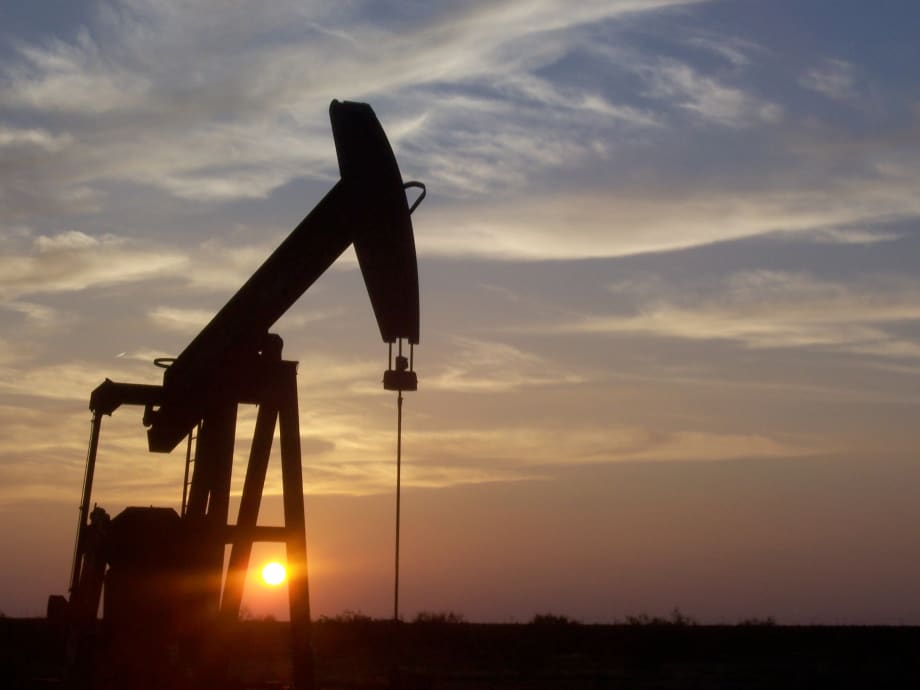
Perry predicted oil prices could go as low as $20 a barrel but will head back up.
5 min to read
“Something permanent has happened in our economy, and we have to understand that the economy is not growing as rapidly as it used to. There is no sign that trend will reverse itself in the next five years.”
So said Noel Perry, truck and transportation expert for FTR, speaking at the 2016 AmeriQuest Symposium Feb. 11 in Orlando, Fla. Perry told the audience that FTR forecasts 2016 to show the same slow economic growth we saw in 2015.
However, he added, “Although the economy is slow, trucking is strong.” The company’s forecast calls for trucking to grow at about 3.2% for 2016. He told audience members to “stop complaining. This has been a good recovery.”
However, Perry says he is not sure how much longer the recovery will last, and if freight is flat, GDP growth could slow to 1.6%. The main reason for concern is weakness in the manufacturing sector. He believes by 2017 there could be very slow growth. “The risk bias will slowly shift downward as the time frame matures,” he said. “The chance of [conditions] being better than the forecast is less likely the further out you go.”
Yet there are reasons to be optimistic, according to Perry. Savings rates are up, which means consumers are paying down debt. Crude oil prices are way down, with Perry projecting the price for a barrel of benchmark West Texas Intermediate crude likely will hit bottom in the next few months before rising back to $30 or $40 a barrel by the end of the year. Consumer expenditures tend to peak late in a recovery, he said, and consumer confidence is still high.
Counting Down to the Next Recession
It is likely that a recession will occur sometime in the next three years, Perry said, noting that only three other recoveries since WWII have lasted longer than the current one. “In your three-year plans, you have to throw in a recession and it will require you to adapt,” Perry told audience members. Volumes and profits levels will go down, but “the stress of the recession causes market innovations and changes. Your competitors will be different than they are today. You, too, need to become more innovative,” he advised.
The world economy is another factor that will likely cause the U.S. economy to go into a recession before 2020. “China is 100% likely to have a recession,” Perry said. He added that China inflates its economic growth rate by 50%, saying the country’s industrial economy is already in a recession. There are also concerns about the economies of Brazil, Argentina, Spain, Greece and Russia.
“The rate of global trade growth has slowed dramatically, so the boost we get from trade will go negative in the next three to four years,” according to Perry.
He believes that there is a 35% probability that the U.S. economy will be flat or in a recession by the end of the year because of global forces.
The increased volatility in the truck market will put pressure on relationships between shippers and carriers. “The ability to form collaborative relationships between carriers and shippers is increasingly going to be a factor in their ability to find excellence in their own business,” Perry said. He believes a flattening of the hierarchy between business partners is going to be important as we go into 2020.
Perry also touched on the struggling energy sector, explaining that the cost of drilling is what sets the price of oil over time. “OPEC is not the arbiter of oil prices, except they control inventories. In the very short term, oil prices are determined by what’s bring produced.”
For the supply and demand of oil to be in equilibrium, 1.5 million barrels a day need to be produced, he said. From 2011 to 2013, production was lower than that, so prices were higher. “Since 2014 we went way over that,” he said. “In 2015 oil production was at 5 million barrels a day.” The extra oil production went into inventory. “When people have inventory they want to get rid of it so they cut the price. It is possible we will go as low as $20 a barrel.”
However, he added that since production has slowed, we are consuming inventory that will not be replaced, meaning prices will go up in the future.
He said $60 to $70 a barrel is the equilibrium point, but “by later this year or early next year we could see oil back at $100 a barrel temporarily. But prices will level out at about $50 a barrel.”
Trucking status report
Turning from the economy to trucking specifically, Perry noted that demographics are making it harder and harder for companies to recruit drivers.
“There will not be enough people for you to continue to hire people you have traditionally hired. The growth in the U.S. workforce is approaching zero unless we allow immigration,” Perry said.
In addition, he believes regulatory drag from things such as mandatory electronic logs, speed limiters and the drug and alcohol database will increase the need for drivers. The climax of this regulatory drag will occur in 2018.
“Fleets won’t be able to keep up [with the demand for drivers] and will fall behind unless the economy goes into recession,” Perry says. “In 2018 we will have the mother of all driver shortages.”
He said that there is no surge capacity left in the market. “We can’t even handle a weather crisis and we have a bad weather event every 1.5 years.”
In the long term, Perry said, “We are on the cusp of the biggest event since super highways were built in the 1950. Digital tools have an astonishing impact on the demand for trucks.”
He said digital tools reduce risks, reduce fuel costs, and reduce driver costs. “The result will be a reduction in the demand for drivers by 20% to 30%, and a reduction in the number of vehicles needed to haul freight.”
Many of these technologies are already in use on trucks, with others in prototype stages, and others expected to be mandated. “By 2025 can you imagine FMCSA not requiring automatic braking?” Perry asked the audience.
In concluding his remarks, Perry said, “Market conditions will change radically. The next four years will be about finding capacity without making permanent investments. In 2016 we are on the edge of the precipice.”
More Fleet Management

How Innovative Trucking Leaders Turn Change Into an Advantage
As the pace of change accelerates in trucking, the fleets that adapt best have more than the latest technology. They have cultures that embrace improvement.
Read More →
Freight Broker Bonds Just Got Harder to Get. Here's What That Means for Your Fleet.
When it gets harder for a freight broker to prove they are financially sound, the ones who cannot clear that bar get pushed out of the market. And those are exactly the brokers who used to leave motor carriers holding the bag.
Read More →
Long-Awaited Canadian Border Bridge to Open in Detroit
For trucking, the bridge opening should offer immediate improvements in efficiency and reliability, with new customs facilities, expanded inspection capacity, and direct freeway-to-freeway connections.
Read More →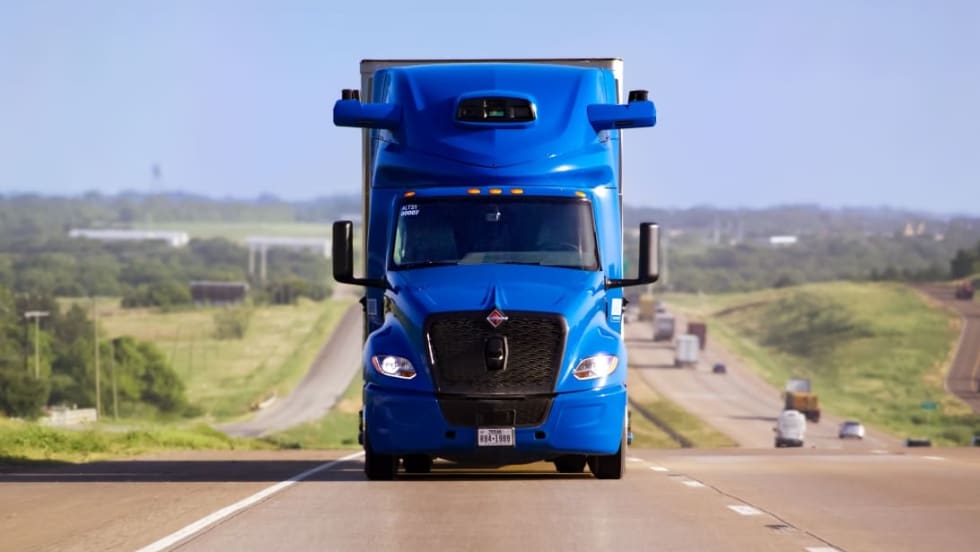
Aurora Rolls Out Next Generation of Driverless Trucks for Commercial Freight
Aurora's latest autonomous trucks it's rolling out with International feature lower-cost hardware designed for a million miles as the company expands commercial driverless freight operations across the U.S. Sun Belt.
Read More →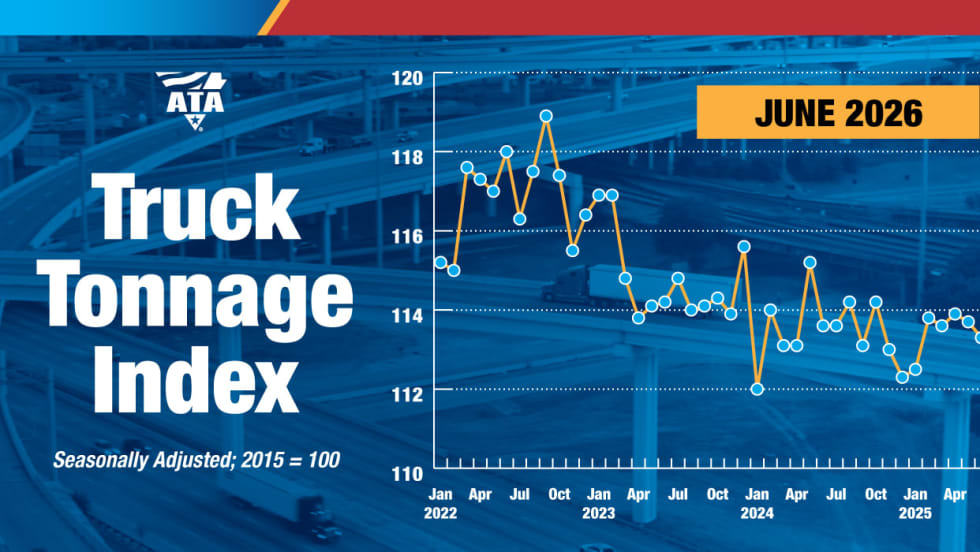
Freight Tonnage Down, Rates up, as Lower Capacity Powers Trucking Recovery
The recovery from the freight recession continues to be driven by reduction in capacity rather than by increased demand.
Read More →
Think Your Trucking Fleet Isn't Using Much AI? Think Again
Shadow AI — the use of unauthorized artificial intelligence tools at work — is becoming increasingly common, putting sensitive company data at risk. Learn how trucking fleets can protect sensitive data while embracing AI.
Read More →
ArcBest Consolidates Brands, Cuts Workforce
The company will bring three business units under the ArcBest brand, eliminate about 2% of positions, and expects the changes to generate $40 million in annual savings.
Read More →
Trucking Fleets Faced Record Operating Costs During Third Year of Freight Recession
ATRI's annual operational cost report shows carriers trimmed fleets, delayed equipment purchases, and ran older trucks as expenses continued to outpace freight rates.
Read More →
Michelin Adds AI Assistant to MyConnectedFleet Platform
Michelin’s new generative AI tool delivers instant fleet insights, helping managers analyze fuel use, tire maintenance, vehicle status, and operational performance without manually creating reports.
Read More →
LytxOne Platform Now Features AI, Compliance, and Asset Tracking Tools
New enhancements add AI-powered insights, asset tracking, compliance automation, and configurable privacy controls to Lytx's all-in-one fleet management platform.
Read More →