




Panama Canal Expansion Will Likely First Affect New York-to-Ohio-Valley Intermodal
Increased intermodal traffic from the New York/Baltimore area ports to the Ohio River Valley region will likely be the first effect when the Panama Canal opens its new, larger locks in late 2014, according to Scudder Smith, a consultant who has advised the U.S. Maritime Administration and the Panama Canal Authority
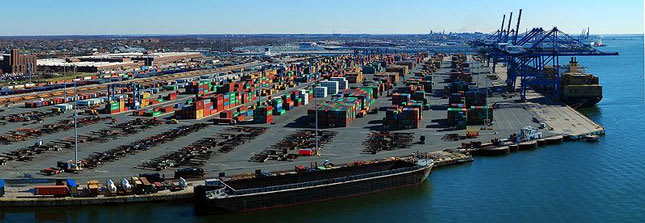
The Port of Baltimore may see increased container traffic from Asia after the Panama Canal starts accepting larger vessels. (Photo by Fatlouie/Wikimedia Commons)
Increased intermodal traffic from the New York/Baltimore area ports to the Ohio River Valley region will likely be the first effect when the Panama Canal opens its new, larger locks in late 2014, according to Scudder Smith, a consultant who has advised the U.S. Maritime Administration and the Panama Canal Authority.
In a conference call Friday sponsored by Stifel Nicolaus, Scudder explained that the new locks will accommodate ships roughly two and a half times larger than can currently go through the canal. Currently, the canal can's handle container ships with capacities larger than 5,000 TEUs (twenty-foot equivalent units). With the expansion, container ships approaching 13,000 TEUs in capacity will be able to travel through the canal.
Container shipping and dry bulk shipping will be the most likely services to benefit from the canal's expanded capacity.
The expansion may prompt some Asia-to-U.S. container traffic to go through the canal and deliver to East Coast ports, rather than delivering at the West Coast ports and shipping containers overland via train or truck. However, Scudder pointed out that the cost savings, about $100 per container, or 5%,, won't be enough to offset the extra two weeks for the transit through the canal for many types of freight.
Not all East Coast ports are yet able to handle the larger vessels. The ports in New York, Baltimore, and Norfolk will be the first, and are all within striking distance of the Ohio Valley. CSX and Norfolk Southern have been investing heavily in their intermodal routes between these ports and the Midwest, so at least at first, the coastal share shift that occurs will likely involve freight destined for the Ohio Valley, notes Stifel Nicolaus in its conclusions.
Later on, as the ports of Miami, Savannah, and perhaps Charleston finish deepening their channels, we may see more freight shift from the West Coast to these southern Atlantic ports in order to feed traffic into the Atlanta are, which generally serves as the major distribution center for the Southeast.
More Fleet Management

Nomination Deadline Extended for HDT Emerging Leaders
Just a few more days to nominate accomplished trucking fleet professionals under 40 who are making an impact and helping lead the industry forward for the HDT Emerging Leaders award. Deadline extended to October 20!
Read More →
What Will ATA’s New Leader Bring to Trucking's Table?
Incoming President and CEO Mark Colson’s record in Alabama offers clues about his priorities and approach following Chris Spear’s abrupt departure as the head of the American Trucking Associations.
Read More →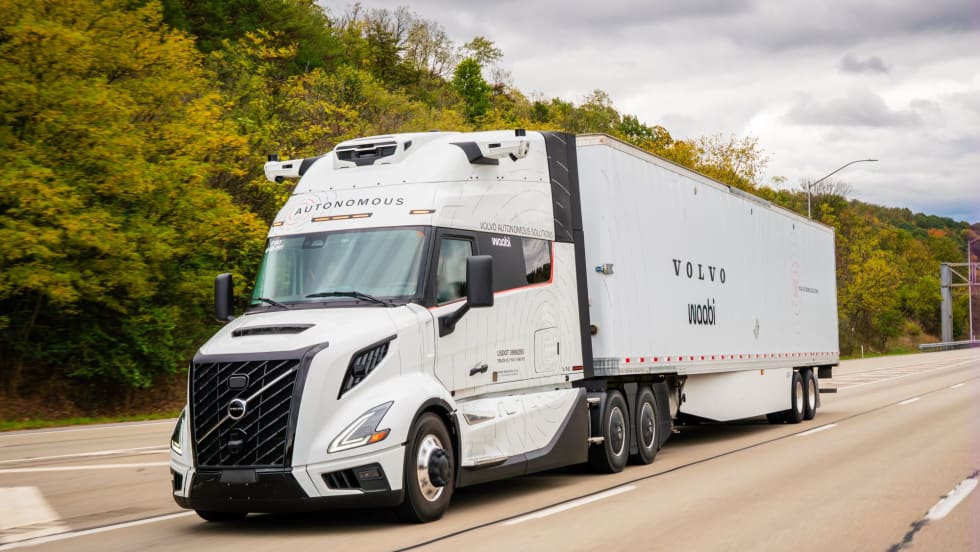
Volvo, Waabi Start Commercial Autonomous Operations in Texas
Volvo VNL Autonomous trucks, powered by the Waabi Driver, are hauling freight directly to third-party facilities for a customer in Texas.
Read More →
Samsara Launches Custom AI Agent Builder
Agent Studio lets fleets create AI tools for hours-of-service monitoring, reporting and driver support, including agents that communicate by phone.
Read More →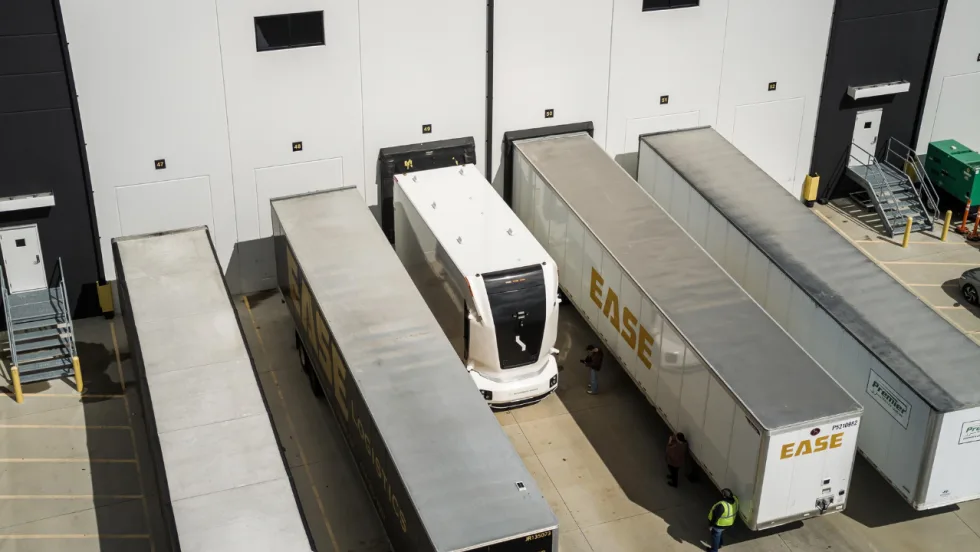
Einride Driverless Electric Trucks Begin Daily Freight Operations in Ohio
Two cabless electric trucks are hauling freight between EASE Logistics facilities in Marysville, Ohio, as part of a multi-state truck automation project.
Read More →
Geotab Links Fleet Card to Vehicle Data
The new card combines fuel discounts with telematics-based purchase controls. Geotab’s analysis also points to potential savings from choosing lower-priced fuel stops.
Read More →
How MFA Helps Protect Trucking Fleets
Multi-factor authentication adds protection when passwords are stolen. Here’s how it works and where fleets should start.
Read More →
How Better Freight Data Helps Trucking Teams Get Ahead of Disruption
Trucking and logistics teams have plenty of data. The problem is getting the right information in front of the right people soon enough to act. Better-connected data can help teams spot trouble earlier and make smarter decisions before small problems become big ones.
Read More →
Trimble: Taking Artificial Intelligence in Trucking Beyond Faster Tasks
At Insight 2026, Trimble executives argued that fleets may need to redesign workflows to get more from AI as it introduced new products and enhancements. AI’s value will depend on how fleets combine automation with their people's knowledge.
Read More →
Build a bulletproof fleet: Uniting ELDs and dash cams for total compliance
An ELD can prove compliance, but it cannot always prove what happened on the road. Discover how uniting accurate ELD data with AI-powered dash cam video can help your fleet strengthen compliance, defend against liability, protect drivers and reduce operational costs.
Read More →