




Owner-Operator Group Challenges EOBR Rule
The Owner-Operator Independent Drivers Association filed a petition seeking review of the final rule mandating electronic on-board recorders for motor carriers with chronic noncompliance with hours-of-service regulations
The Owner-Operator Independent Drivers Association filed a petition seeking review of the final rule mandating electronic on-board recorders for motor carriers with chronic noncompliance with hours-of-service regulations.
The Federal Motor Carrier Safety Administration earlier this year issued a final rule, which will go into effect June 1, 2012, requiring carriers that violate hours of service rules 10 percent of the time, based on single compliance review, to use electronic onboard recorders to track driver hours.
The association's core argument against mandating "black boxes" is that there is no proof the devices can accurately and automatically record a driver's hours of service and duty status. An EOBR can only track the movement and location of a truck; it requires human interaction to record any change of duty status.
OOIDA offers as an example the process of loading and unloading - time that should typically be logged as on-duty, not driving. However, without interaction from drivers indicating to the device that they are on-duty, the device is incapable of determining the actual duty status of drivers.
OOIDA also contends that the Federal Motor Vehicle Safety Administration ignored a federal statute to ensure that EOBRs will not be used to harass vehicle operators.
"Not one word appears in the EOBR rulemaking record identifying regulations containing safeguards to 'ensure that the devices are not used to harass vehicle operators,' " the brief states. "For this reason alone, the rules must be found to be arbitrary and capricious for the agency's failure to heed the specific statutory mandate."
A Regulatory Impact Analysis by FMCSA noted that "companies use EOBRs to enforce company policies and monitor drivers' behavior in other ways." OOIDA says this type of monitoring can be used to harass and improperly pressure drivers.
"Carrier harassment includes the use of technology to interrupt a driver during an off-duty rest period. Carriers can contact the driver and pressure him to get back on the road to maximize his on duty-time. Such power usurps the driver's discretion to get rest, take a break or sleep when he believes it is necessary even when he or she has time left on the clock to drive or work," OOIDA's brief states.
Another argument against the use of the electronic on-board tracking devices centers on the Fourth Amendment.
"The real-time, government mandated, 24-hour electronic surveillance of a driver's location and movements contemplated by the (notice of proposed rulemaking) is an unjustified and dangerous intrusion on drivers' right of privacy," the brief states.
The constitutional argument states that the constant monitoring constitutes a search of the driver within the meaning of the Fourth Amendment.
While warrantless searches have been granted in the workplace, numerous court decisions have prevented them on a citizen's home or private dwelling. Given the unique nature of the trucking industry and the fact that many drivers use their tractors as their "home away from home," the association argues that "a driver has such a reasonable expectation of privacy in his truck when he is not working."
"The mandated use of EOBRs subjects perfectly legal, private activity to public scrutiny, and potential sanction," the brief states.
OOIDA and the member plaintiffs are asking the court to vacate the rule and send it back to the agency for further consideration consistent with the court's findings.
The court has given FMCSA until Nov. 4 to file its reply briefs.
More Drivers

Samsara Launches Custom AI Agent Builder
Agent Studio lets fleets create AI tools for hours-of-service monitoring, reporting and driver support, including agents that communicate by phone.
Read More →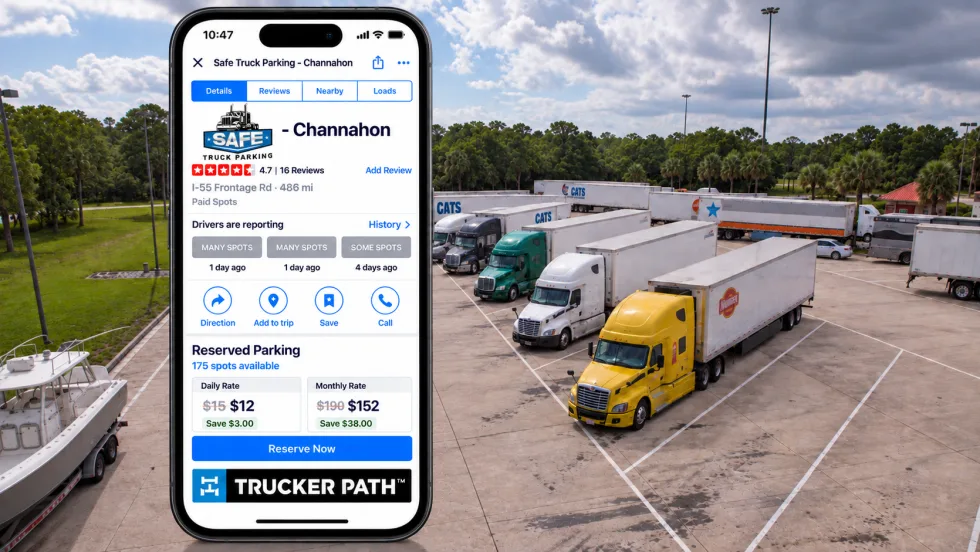
Trucker Path Expands Reserved Parking Network
Trucker Path has added close to 6,000 more truck parking spaces to its Trucker Path Reserved Parking Network with the addition of Safe Truck Parking.
Read More →
EEOC Sues Texas Trucking Company Over Driver Age Limits
The agency says Trancasa USA rejected applicants over 65 and applied tougher driving-record standards to those over 60.
Read More →
Nussbaum, Roehl Announce Second Driver Pay Increase This Year
This year has seen a swath of major truck driver pay increases as freight capacity has tightened.
Read More →
From One Generation to the Next: How Mentorship Builds Safer Truck Drivers
After three decades in trucking, Harold Perry shares what he's learned about driver safety, mentorship, and helping the next generation build confidence behind the wheel.
Read More →
Truck Drivers Need More Than Another Alert
Fleets have more visibility into truck health, safety events, and driver activity than ever. The next challenge is turning all that information into useful guidance for the person who has to decide what to do next.
Read More →
FMCSA Removes 110 Truck Driver Training Schools from Certified ELDT List
Federal regulators also are targeting more than 160 additional training providers and launching a nationwide audit of third-party CDL skills testers as part of a broader crackdown on trucking fraud.
Read More →
Hours of Service Pilot Programs: FMCSA Readies for 2027 Rollout
Two pilot programs could eventually reshape hours-of-service rules, giving truck drivers options to pause their 14-hour clock or use longer split sleeper rest periods.
Read More →
Medical Cards, English Proficiency Reshape Roadcheck Violations
Medical-card violations jumped to the top of the driver out-of-service list during CVSA’s 2026 International Roadcheck, while English-language proficiency violations appeared among the leading violations for the first time.
Read More →
Driver Trust Can Make or Break the Success of Fleet Safety Technology
New Teletrac Navman research suggests that onboarding, transparency about driver data, and positive feedback can play a significant role in how commercial drivers respond to safety and coaching technology.
Read More →