





Motor Carriers and Logistics Companies Offer Shippers More Options than Ever
Oway Uses AI to Help Carriers Fill Empty Trailer Space
Oway, an AI-driven marketplace that turns empty truck space into an ultra-efficient category of freight shipping, is adding a new feature for motor carriers.
September 22, 2025
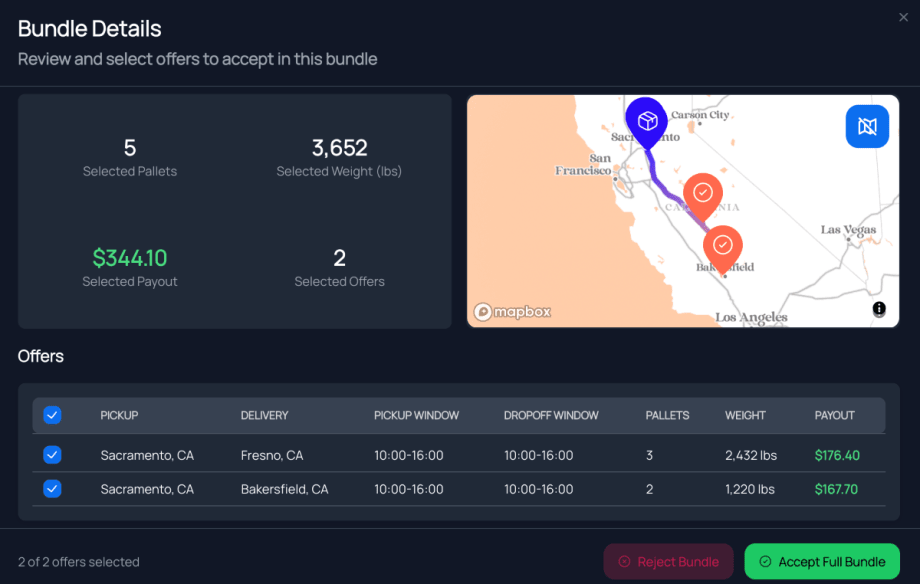
With a newly introduced Automatic Multi-Pick feature, carriers can now easily accept multiple partial shipments from one pallet up to 12.
Photo: Oway
2 min to read
Oway, an AI-driven marketplace that turns empty truck space into an ultra-efficient category of freight shipping, is adding a new feature for motor carriers.
Every year up to 50% of U.S. truck space goes unused, according to a news release. Oway uses artificial intelligence to automatically price, match, and sell that space in real time. This gives carriers the ability to seamlessly co-load one to 12 pallet partial shipments that are quick detours on their headhauls without impacting their existing delivery schedules.
With a newly introduced Automatic Multi-Pick feature, carriers can now easily accept multiple partial shipments from as little as one pallet all the way up to 12, automatically matched to their available live capacity during daily hauls.
How Does Oway Work?
Powered by dynamic AI schedule modeling, predictive algorithms, and live traffic data, Oway’s AI can add multiple low-friction shipments into existing truckload routes, each stop requiring only 15 minutes on average to load, according to the company.
Carriers receive instant, pre-priced offers aligned to their ELD schedules or API geolocation data, significantly reducing unused capacity on both headhauls and backhauls.
On average, carriers using Oway’s increase net revenues per lane by up to 30%, according to the company, without impacting existing delivery commitments.
The feature supports cross-country, mid-mile and last-mile runs, and is available to integrate directly into major fleet management systems.
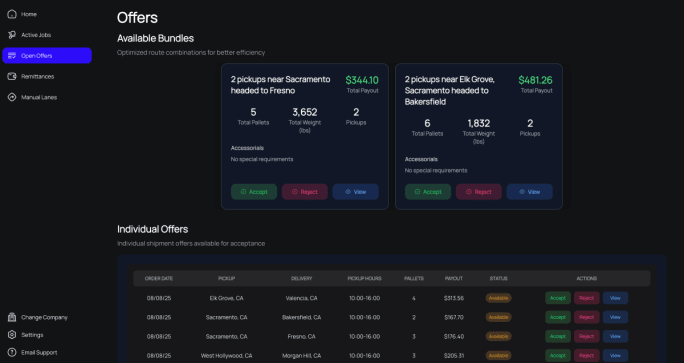
Powered by dynamic AI schedule modeling, predictive algorithms, and live traffic data, Oway’s AI can add multiple low-friction shipments into existing truckload routes.
Photo: Oway
“We're building the largest decentralized network of America’s empty truck space — a transparent infrastructure layer any shipper, broker, or carrier can plug into,” said Phillip Nadjafov, CEO of Oway, in a release.
For businesses, Oway enables the ability to ship LTL-style shipments at the speed and cost-per-pallet of FTL. This includes faster delivery times, lower damage rates, and significantly improved savings on shipping.
“Oway makes freight shipping as simple as ridesharing,” Nadjafov said. “Click a button, book a truck, and move goods at the true cost of available capacity.”
More Fleet Management

Sponsored•September 16, 2026
Color Match Smarter: Tools That Restore & Perform
For fleet managers and collision repair professionals keeping heavy-duty trucks on the road, getting the color right the first time isn't just about appearance — it's about efficiency, turnaround time, and bottom-line results. Discover how today's digital color tools are transforming the repair process from guesswork to precision.
Read More →
FMCSA Pauses Biennial-Update Enforcement Amid Motus Transition
Carriers whose updates were due on or after June 1 have more time, while FMCSA works to stabilize its new registration system and warns of phishing sites impersonating its new carrier registration system, Motus.
Read More →
Sponsored•September 14, 2026
2026 Blueprint for Countering Smarter Supply Chain Theft
Cargo theft is no longer just the cost of doing business. It's a multi-billion-dollar criminal enterprise exploiting vulnerabilities across your fleet, drivers, and supply chain.
Read More →


Sponsored•September 1, 2026
How Telematics Improves Visibility, Control, and Performance in Refrigerated Fleets
Explore how telematics help refrigerated fleets improve visibility, uptime, efficiency, compliance, and cargo protection across connected cold chain operations.
Read More →
What the U.S.-Canada Trade War Means for Trucking
Escalating U.S.-Canada tariffs could disrupt cross-border freight, reduce truck volumes, raise costs, and create new uncertainty for carriers on both sides of the border.
Read More →
What Are Trucking’s Top Concerns for 2026?
The American Transportation Research Institute wants to know what's worrying trucking fleet managers, drivers, and other stakeholders in its annual Industry Issues survey.
Read More →
American Trucking Associations Looks for a New Leader
ATA President and CEO Chris Spear abruptly left his job at the association on August 21, at a pivotal time for the trucking industry.
Read More →
Public Wi-Fi Cybersecurity Risks: How Truck Drivers and Fleets Can Protect Their Data
Public Wi-Fi can expose truck drivers and fleets to credential theft, malware, and other cyber threats. Here’s how to reduce the risk on the road.
Read More →
For Nicky Cupp, Fleet Innovation Starts With Frustration
HDT Truck Fleet Innovator Nicky Cupp turns everyday pain points at Fraley & Schilling into opportunities for better technology and smarter processes.
Read More →
Adam Buttgenbach’s Approach to Electric Trucks: Start With Where They Fit
HDT Truck Fleet Innovator Adam Buttgenbach helped PepsiCo build one of North America’s largest EV fleets by focusing on where electric trucks make operational sense.
Read More →