




Optimism Spurs Increased Heavy-Duty Truck Sales Predictions
There was a sense of optimism in the air at the Mid-America Trucking Show in Louisville, Kentucky, last week. As truck makers and suppliers made their presentations to the trucking press, many said thanks to solid economic indicators, truck orders are higher than they would have predicted just three to six months ago.


Photo: Deborah Lockridge
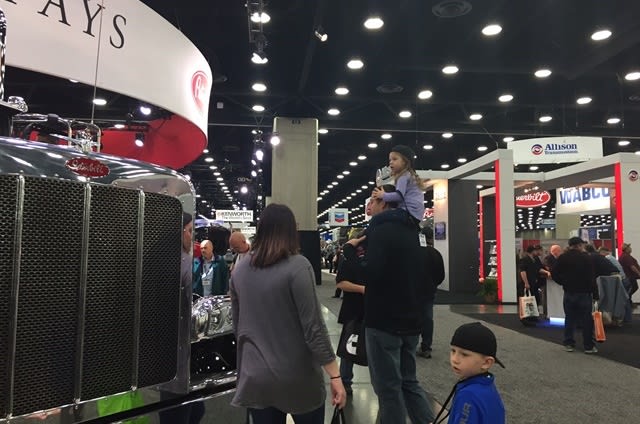
Photo: Deborah Lockridge
There was a sense of optimism in the air at the Mid-America Trucking Show in Louisville, Kentucky, last week. As truck makers and suppliers made their presentations to the trucking press, many said thanks to solid economic indicators, truck orders are higher than they would have predicted just three to six months ago.
Joe McAleese, chairman of Bendix Commercial Vehicle Systems, showed off a red-yellow-green stoplight type chart highlighting economic statistics, and it was largely green — but there were some yellow and even red items.
“We’ve seen a significant increase in Class 8 demand,” he told reporters. “Three months ago I would have said I’d expect this year to be down 5 or 10% in truck build, but today I’m expecting it to be up 5% over last year. We’ve seen this interesting change in dynamics in a very mixed environment. Overall I think the economy has turned for us in the trucking industry and we’re looking forward to a very good 2017.”
Kenworth, which reported a record Class 8 market share for 2016 of 15.1%, estimates 2017 to be a 190,000- to 220,000-unit market, and says current indications are that it will be on the high side of that.
“We’re seeing more activity,” said Kenworth General Manager Mike Dozier. “If you backed up three to six months, I think there wasn’t quite the level of optimism that there is now.”
Sister Paccar company Peterbilt also predicted the North American Class 8 truck build for 2017 will be somewhere between 190,000 and 220,000 units, with much of that strength coming from the vocational segment. Both Kenworth and Peterbilt noted a strong construction environment is expected to drive sales in that segment, as well as the energy sector being on the cusp of a resurgence.
Mack also reported improved market share and says it’s closing in on its goal of 10% share in Class 8, predicting a market of 215,000 units in 2017 compared to 243,000 in 2016. “All in all not a bad market,” said John Walsh, vice president of marketing.
However, ACT Research's commercial vehicle industry seminar in Columbus, Indiana, held just prior to MATS, left the transportation analysts with investment advisory firm Stifel feeling somewhat cautious.
“Despite the recent improvement in equipment orders the past few months that have caused both us and ACT to increase near-term forecasts,” they said in an email report to investors summarizing the conference, “we left with a bit of an uneasy feeling that there could easily be a mid-year lull in orders, given that the large fleets are not buying much equipment, and given the lack of increases in freight rates that would typically coincide with a period of sustained strength in equipment orders.”
Some of the driving factors behind an increase in orders, according to Stifel’s report from ACT, are:
Fleets chasing improvements in fuel mileage, with a national average still below 6 mpg, while fleets participating in a North American Council for Freight Efficiency survey are getting 7.5-9 mpg on some new trucks.
Used truck prices, which have been falling since early 2015, are declining at a slower rate and should show relative stability from here, so fleets may feel more confident they’ll be able to divest of their old equipment.
Many fleets are expecting some level of productivity loss and therefore tighter capacity from the upcoming mandate to install electronic logging devices come December.
More Fleet Management

Nomination Deadline Extended for HDT Emerging Leaders
Just a few more days to nominate accomplished trucking fleet professionals under 40 who are making an impact and helping lead the industry forward for the HDT Emerging Leaders award. Deadline extended to October 20!
Read More →
What Will ATA’s New Leader Bring to Trucking's Table?
Incoming President and CEO Mark Colson’s record in Alabama offers clues about his priorities and approach following Chris Spear’s abrupt departure as the head of the American Trucking Associations.
Read More →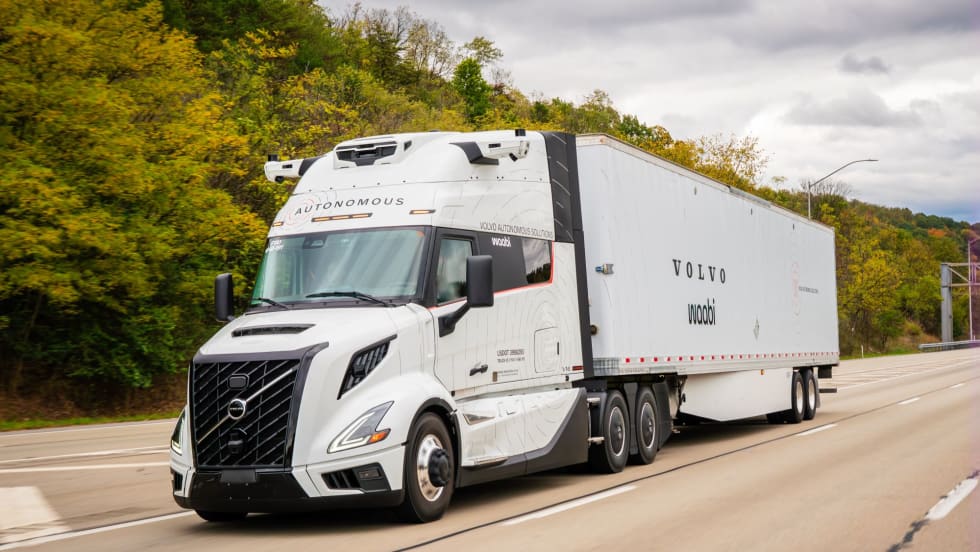
Volvo, Waabi Start Commercial Autonomous Operations in Texas
Volvo VNL Autonomous trucks, powered by the Waabi Driver, are hauling freight directly to third-party facilities for a customer in Texas.
Read More →
Samsara Launches Custom AI Agent Builder
Agent Studio lets fleets create AI tools for hours-of-service monitoring, reporting and driver support, including agents that communicate by phone.
Read More →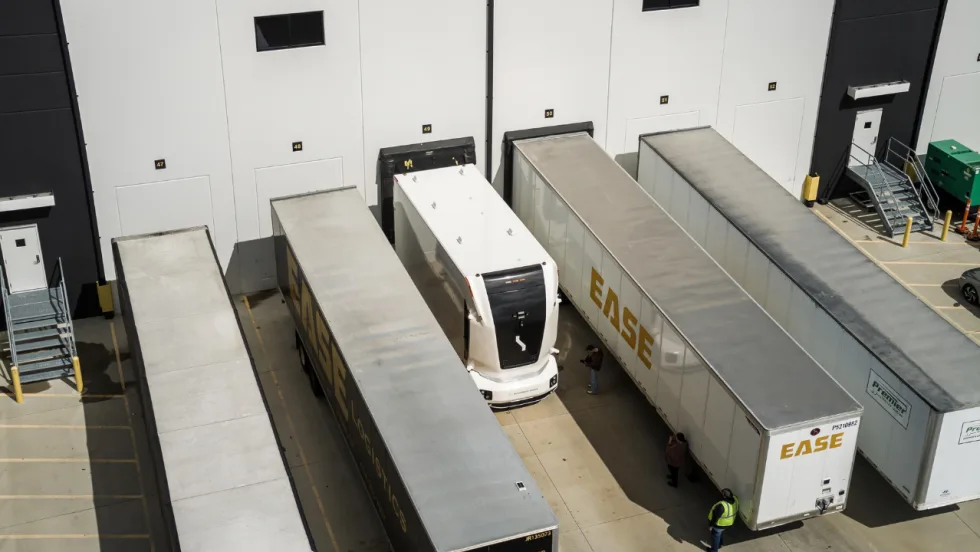
Einride Driverless Electric Trucks Begin Daily Freight Operations in Ohio
Two cabless electric trucks are hauling freight between EASE Logistics facilities in Marysville, Ohio, as part of a multi-state truck automation project.
Read More →
Geotab Links Fleet Card to Vehicle Data
The new card combines fuel discounts with telematics-based purchase controls. Geotab’s analysis also points to potential savings from choosing lower-priced fuel stops.
Read More →
How MFA Helps Protect Trucking Fleets
Multi-factor authentication adds protection when passwords are stolen. Here’s how it works and where fleets should start.
Read More →
How Better Freight Data Helps Trucking Teams Get Ahead of Disruption
Trucking and logistics teams have plenty of data. The problem is getting the right information in front of the right people soon enough to act. Better-connected data can help teams spot trouble earlier and make smarter decisions before small problems become big ones.
Read More →
Trimble: Taking Artificial Intelligence in Trucking Beyond Faster Tasks
At Insight 2026, Trimble executives argued that fleets may need to redesign workflows to get more from AI as it introduced new products and enhancements. AI’s value will depend on how fleets combine automation with their people's knowledge.
Read More →
Build a bulletproof fleet: Uniting ELDs and dash cams for total compliance
An ELD can prove compliance, but it cannot always prove what happened on the road. Discover how uniting accurate ELD data with AI-powered dash cam video can help your fleet strengthen compliance, defend against liability, protect drivers and reduce operational costs.
Read More →