




OOIDA Says Mexican Border Deal Cost American Jobs, Provides No Reciprocal Benefits
The Owner-Operator Independent Drivers Association responded to the Obama Administration's overture to the Mexican truckers saying if the proposed deal goes through, American drivers will lose work to Mexican carriers who do not bear similar compliance costs
The Owner-Operator Independent Drivers Association responded to the Obama Administration's overture to the Mexican truckers saying if the proposed deal goes through, American drivers will lose work to Mexican carriers who do not bear similar compliance costs.
"With so much focus in Washington on creating jobs, it's a bit shocking that the administration would pursue a program that can only rob U.S. drivers of their jobs," said Todd Spencer, Executive Vice-President of the Owner-Operator Independent Drivers Association.
OOIDA notes that the primary objective of NAFTA is to ensure the North American nations enjoy the prosperity that would result from the free flow of goods across borders. In order to achieve this end, the agreement seeks to ensure that each country affords the others access to economic opportunity. OOIDA contends that under current conditions in Mexico there is little opportunity or willingness on the part of U.S. truckers to compete there.
"Until the Mexican government is able to significantly diminish the rampant crime and violence within its borders, commits to addressing its deteriorated infrastructure, and promulgates regulations that significantly improve its trucking industry, U.S. truckers will be unable to benefit from the anticipated reciprocity," said Spencer. "If a new cross-border trucking program were implemented in the near future, U.S. truckers would be forced to forfeit their own economic opportunities while companies and drivers from Mexico, free from equivalent regulatory burdens, take over their traffic lanes."
According to Spencer, Mexico has been bullying the U.S. government into allowing their trucking companies to have full access to U.S. markets while refusing to raise regulatory standards in its own trucking industry. Mexico's regulatory standards aren't even remotely equivalent to what we have in the U.S., he notes.
"Every year, U.S. truckers are burdened with new safety, security and environmental regulations. Those regulations come with considerable compliance costs," said Spencer. "Mexico-domiciled trucking companies do not contend with a similar regime nor must they contend with the corresponding costs."
OOIDA contends that to ensure the safety and security of U.S. citizens, Mexico-domiciled trucking companies and truck drivers must be required to comply with the same level of safety, security and environmental standards that apply to their U.S.-based counterparts, not only while they are operating in the U.S., but also in their home country. To date, Mexico has failed to institute regulations and enforcement programs that are even slightly similar to those in the United States.
"While we appreciate that the administration is proposing to allow Congress and the public to weigh in on a future trucking program with Mexico, they seem to be missing the main issue at hand," continued Spencer. "The onus is upon Mexico to raise their regulatory standards, not on the U.S. to lower ours to accommodate their trucking industry."
More Drivers
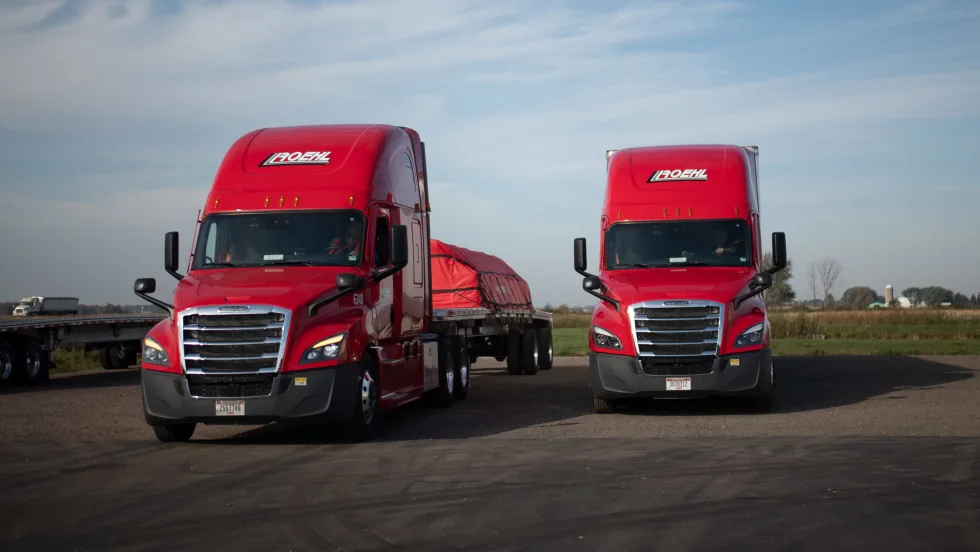
Roehl Offers Truck Drivers $10,000 Retention Incentive
Payments begin after the first load and continue in mileage-based installments for eligible experienced drivers joining the fleet.
Read More →
Platform Science Adds Dispatch and Safety Tools
Four additions to PS Fleet help fleets monitor loads, manage driver coaching, share truck locations and adjust video system settings.
Read More →
When Language Stops the Truck: The Return of ELP Out-of-Service Orders
English language proficiency rules for commercial drivers aren’t new, but renewed out-of-service enforcement has raised the stakes. Here’s what carriers need to know before a driver reaches a roadside inspection.
Read More →
Samsara Launches Custom AI Agent Builder
Agent Studio lets fleets create AI tools for hours-of-service monitoring, reporting and driver support, including agents that communicate by phone.
Read More →
Trucker Path Expands Reserved Parking Network
Trucker Path has added close to 6,000 more truck parking spaces to its Trucker Path Reserved Parking Network with the addition of Safe Truck Parking.
Read More →
EEOC Sues Texas Trucking Company Over Driver Age Limits
The agency says Trancasa USA rejected applicants over 65 and applied tougher driving-record standards to those over 60.
Read More →
Nussbaum, Roehl Announce Second Driver Pay Increase This Year
This year has seen a swath of major truck driver pay increases as freight capacity has tightened.
Read More →
From One Generation to the Next: How Mentorship Builds Safer Truck Drivers
After three decades in trucking, Harold Perry shares what he's learned about driver safety, mentorship, and helping the next generation build confidence behind the wheel.
Read More →
Truck Drivers Need More Than Another Alert
Fleets have more visibility into truck health, safety events, and driver activity than ever. The next challenge is turning all that information into useful guidance for the person who has to decide what to do next.
Read More →
FMCSA Removes 110 Truck Driver Training Schools from Certified ELDT List
Federal regulators also are targeting more than 160 additional training providers and launching a nationwide audit of third-party CDL skills testers as part of a broader crackdown on trucking fraud.
Read More →