




NY Truckers Prevail in DERA Battle
Appellate Division of the New York Supreme Court has ruled unanimously that contractors engaged in state sponsored work are not required to abide by the requirements of that state's Diesel Emissions Reduction Act regulations
Appellate Division of the New York Supreme Court has ruled unanimously that contractors engaged in state sponsored work are not required to abide by the requirements of that state's Diesel Emissions Reduction Act regulations.
According to the wording of the DERA, passed by the New York legislature in 2006, diesel powered heavy-duty vehicles "owned by, operated by or on behalf of, or leased by" state agencies and certain public authorities were to be required to use ultra low sulfur diesel fuel, and the best available retrofit technology in order to reduce the emission of air pollutants.
With ULSD now widely available, that portion of the regulation is no longer a concern, but the retrofitting requirements of DERA would have meant a considerable financial burden for groups of small fleets and owner-operators working on state contracts.
When the Legislature passed the underlying legislation, it intended to require new emission control systems for state-owned trucks because federal money was available to pay for retrofits. Private industry, however, did not have federal money to pay for such retrofits. The NY Department of Environmental Conservation expanded the legislative intent of the law to include private-sector heavy-duty trucks. If the DEC mandate remained unchallenged, experts estimated that it would have cost billions of dollars to the state economy.
The DEC took the definition to mean practically any truck doing business with the state, even at sub-sub-contractor level. The New York Construction Materials Association challenged the mandate saying the "on behalf of state agencies" term was too broad a definition. The group took their case to court last spring. The Saratoga County Supreme Court dismissed NYCMA's application to have the DEC requirement declared unconstitutional, and annul certain regulations promulgated by DEC.
After several appeals, the Appellate court ruled on April 21 that the "on behalf of" wording could not have initially been intended to include contractor, sub-contractors and the like. In its judgment, the court said, citing previous examples of inclusionary language, that if it was the intention of the legislature to include contractors, they would have -- as in the past -- specifically mentioned them in the language of the regulation.
In its judgment, the court noted, "We find nothing in the language of DERA, construed as a whole, indicating that the Legislature intended it to extend beyond prime contractors. The statute's grandfathering provision refers to vehicle[s] subject to a lease or public works contract, but makes no reference to subcontractors or other private suppliers with indirect relationships to the state. DERA similarly limits DEC's reporting requirements to vehicles "owned or operated" by state agencies and authorities."
At a very minimum, subcontractors and materials suppliers in New York will not be subject to the retrofitting requirements of DERA.
More Drivers
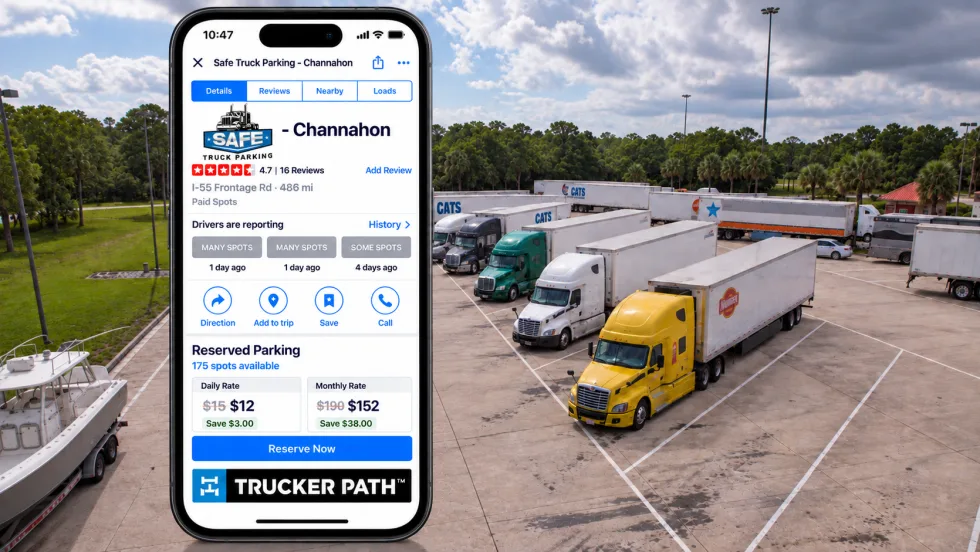
Trucker Path Expands Reserved Parking Network
Trucker Path has added close to 6,000 more truck parking spaces to its Trucker Path Reserved Parking Network with the addition of Safe Truck Parking.
Read More →
EEOC Sues Texas Trucking Company Over Driver Age Limits
The agency says Trancasa USA rejected applicants over 65 and applied tougher driving-record standards to those over 60.
Read More →
Nussbaum, Roehl Announce Second Driver Pay Increase This Year
This year has seen a swath of major truck driver pay increases as freight capacity has tightened.
Read More →
From One Generation to the Next: How Mentorship Builds Safer Truck Drivers
After three decades in trucking, Harold Perry shares what he's learned about driver safety, mentorship, and helping the next generation build confidence behind the wheel.
Read More →
Truck Drivers Need More Than Another Alert
Fleets have more visibility into truck health, safety events, and driver activity than ever. The next challenge is turning all that information into useful guidance for the person who has to decide what to do next.
Read More →
FMCSA Removes 110 Truck Driver Training Schools from Certified ELDT List
Federal regulators also are targeting more than 160 additional training providers and launching a nationwide audit of third-party CDL skills testers as part of a broader crackdown on trucking fraud.
Read More →
Hours of Service Pilot Programs: FMCSA Readies for 2027 Rollout
Two pilot programs could eventually reshape hours-of-service rules, giving truck drivers options to pause their 14-hour clock or use longer split sleeper rest periods.
Read More →
Medical Cards, English Proficiency Reshape Roadcheck Violations
Medical-card violations jumped to the top of the driver out-of-service list during CVSA’s 2026 International Roadcheck, while English-language proficiency violations appeared among the leading violations for the first time.
Read More →
Driver Trust Can Make or Break the Success of Fleet Safety Technology
New Teletrac Navman research suggests that onboarding, transparency about driver data, and positive feedback can play a significant role in how commercial drivers respond to safety and coaching technology.
Read More →
EEOC Sues KLLM Over Alleged Sex Discrimination in Driver Training
KLLM is facing a federal sex-discrimination lawsuit over policies the EEOC alleges put female truck driver trainees at a disadvantage.
Read More →