





Related: Safety Managers Talk Improving Safety with Technology
NTSB Report Finds Value in On-Board Video Systems
An NTSB report has concluded that on-board video systems can “provide valuable information for evaluating the circumstances leading to a crash,” if the cameras are positioned properly and if the systems are adequate for recording in low light.
May 1, 2015
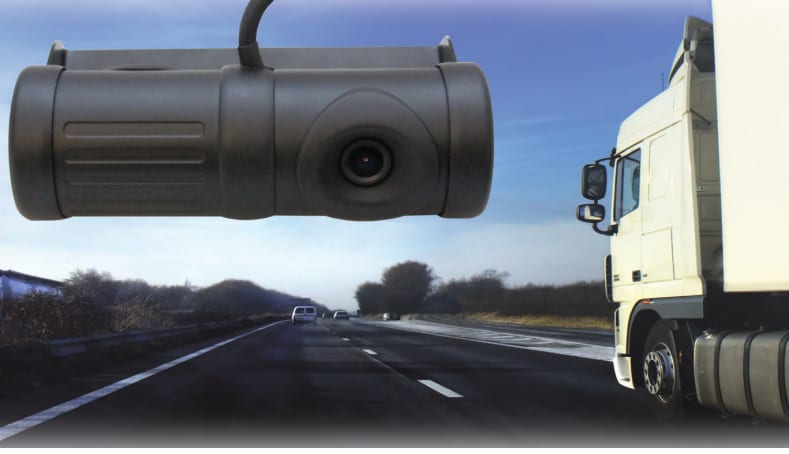
Photo via MiX Telematics
2 min to read
Photo via MiX Telematics
A National Traffic Safety Board report has concluded that onboard video systems – both continuous and event-based – can “provide valuable information for evaluating the circumstances leading to a crash,” if the cameras are positioned properly and if the systems are adequate for recording in low light.
NTSB looked at two specific crashes – one in 2012 involving a school bus in Port Lucie, Fla., and the 2011 crash of a motor coach near Kearney, Neb.
Although the report focused on buses, the board's recommendations also encompassed the trucking industry.
The school bus was equipped with a continuous-recoding system – meaning the video records continuously while the vehicle’s ignition is in the on position. (Many school bus operators use continuous systems to monitor student security, passenger and driver behavior.)
The motor coach involved in the Nebraska crash was equipped with an event-based recording system, which captures video immediately before, during and after an event such as a crash, hard-braking, or sudden lane departure.
While NTSB said both systems in the crashes studied provided valuable information, there were problems with camera placement, low-light recording and other issues. In the case of the school bus, the continuous-recording system, which was using four cameras, provided video from before, during and after the crash, but not all passenger seats were observable.
With the system deployed in the motor coach, the video provided video just prior to the collision, but not during or after due to damage the system sustained in the crash.
In its conclusions, NTSB said that both types of systems, in conjunction with a driver feedback program can provide long-term safety benefits.
In addition, NTSB said the use of a continuous video system in school buses that provides video of driver and passenger activity, seat-belt use and detailed injury data “can serve as the foundation for a multidisciplinary approach to improving transportation safety.”
As a result of its investigation, NTSB urged the National Highway Traffic Safety Administration to included video information in their existing crash database – along with appropriate access controls and procedures for collecting and using video data.
The board also recommended that the American Trucking Association and various bus and motor coach associations urge their members to make sure that the onboard video systems they deploy can provide visibility of the driver and each occupant seating location as well as visibility forward of the vehicle. The board also recommended the systems have optimized frame rates and low-light recording capability.
Video system manufacturers were urged to develop installation guidelines and maintenance guidance for their systems and to publish these documents on their websites and in future owner’s manuals.
To find the safety report online, go to: http://ntsb.gov/safety/safety-studies/Documents/SR1501.pdf.
More Fleet Management

Geotab Links Fleet Card to Vehicle Data
The new card combines fuel discounts with telematics-based purchase controls. Geotab’s analysis also points to potential savings from choosing lower-priced fuel stops.
Read More →
How MFA Helps Protect Trucking Fleets
Multi-factor authentication adds protection when passwords are stolen. Here’s how it works and where fleets should start.
Read More →
How Better Freight Data Helps Trucking Teams Get Ahead of Disruption
Trucking and logistics teams have plenty of data. The problem is getting the right information in front of the right people soon enough to act. Better-connected data can help teams spot trouble earlier and make smarter decisions before small problems become big ones.
Read More →

Trimble: Taking Artificial Intelligence in Trucking Beyond Faster Tasks
At Insight 2026, Trimble executives argued that fleets may need to redesign workflows to get more from AI as it introduced new products and enhancements. AI’s value will depend on how fleets combine automation with their people's knowledge.
Read More →
Sponsored•September 28, 2026
Build a bulletproof fleet: Uniting ELDs and dash cams for total compliance
An ELD can prove compliance, but it cannot always prove what happened on the road. Discover how uniting accurate ELD data with AI-powered dash cam video can help your fleet strengthen compliance, defend against liability, protect drivers and reduce operational costs.
Read More →
Nominations Open for HDT Emerging Leaders
Heavy Duty Trucking is looking for accomplished trucking fleet professionals under 40 who are making an impact and helping lead the industry forward.
Read More →
Why Private Fleets Are Taking More Freight
Private fleets are putting their own trucks on demanding customers and high-cost lanes as companies seek greater control over service, costs, and capacity.
Read More →
Sponsored•September 16, 2026
Color Match Smarter: Tools That Restore & Perform
For fleet managers and collision repair professionals keeping heavy-duty trucks on the road, getting the color right the first time isn't just about appearance — it's about efficiency, turnaround time, and bottom-line results. Discover how today's digital color tools are transforming the repair process from guesswork to precision.
Read More →
FMCSA Pauses Biennial-Update Enforcement Amid Motus Transition
Carriers whose updates were due on or after June 1 have more time, while FMCSA works to stabilize its new registration system and warns of phishing sites impersonating its new carrier registration system, Motus.
Read More →
Sponsored•September 14, 2026
2026 Blueprint for Countering Smarter Supply Chain Theft
Cargo theft is no longer just the cost of doing business. It's a multi-billion-dollar criminal enterprise exploiting vulnerabilities across your fleet, drivers, and supply chain.
Read More →