




Safety Managers Talk Improving Safety with Technology
Participants in a panel at the Omnitracs Outlook User Conference shared some of the ways they have used technology to improve their CSA scores and overall safety performance.

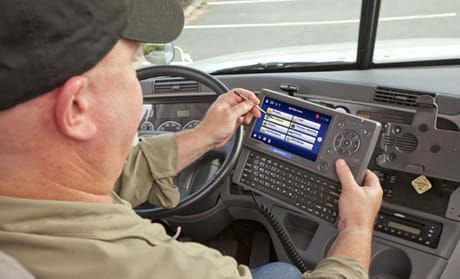
Photo via Omnitracs
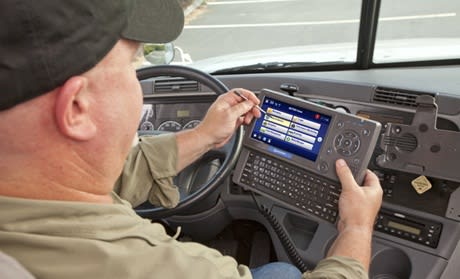
Photo via Omnitracs
Participants in a panel at the Omnitracs Outlook User Conference shared some of the ways they have used technology to improve their CSA scores and overall safety performance. The conference was held in Dallas Feb. 8–11.
Since its introduction in 2010, the Federal Motor Carriers Association’s Compliance, Safety, Accountability program has prompted many fleets to seek ways to lower their CSA scores.
Automated driver logs have had a major impact on scores for Swift Transportation and FedEx Custom Critical. Victor Malchesky, director of safety and compliance for Swift, said his company had been using automated logs for two years. Given the size of the fleet, “it was a big endeavor,” he said. But the company had seen results in lower CSA scores.
FedEx Custom Critical is 100% independent contractors, with 2,500 drivers and 1,250 power units. The units are all equipped with Omnitracs’ MCP200 in-cab devices, with automated logging applications. “We saw our CSA scores improve within six months," said Scott McCahan, senior manager safety and contractor relations. "The drivers love it."
In fact, he noted that most of the company's contractors saw a gain in available hours with the electronic logs. They also used electronic driver vehicle inspection reports.
The company validates roadside inspections against the DVIRs to ensure their contractors are performing the inspections. CSA prompted FedEx to bring on a field safety liaison who travels the country visiting with contractors and checking out their vehicles.
Connecting with drivers
Another tool these carriers have found useful is the Media Manager application from Omnitracs, which allows them to send multi-media content to their drivers through their in-cab devices.
Malchesky said Swift's staff sends out in-cab training videos and other messages on regular basis. Since the company has such a disconnected workforce, the videos provide a way “to improve our relationship with the drivers.” He noted that whenever he travels, a driver will approach and say, “You’re the guy in the video.” He said the videos have allowed the company to make a connection with drivers it didn’t have in the past.
McCahan said his company sends out video messages via Media Manager. Contractors who have been on board for 20 years who have never been to their home office are now kept in the loop as to company policy and other information.
John Feskanin, manager logistics engineering implementation, Penske Logistics, said his company also has videos available for drivers to access. These include KPI (key performance indicators) reporting so drivers can monitor their performance. In addition, Penske uses driver scorecards.
“We feel that peer pressure works,” he said, noting that some fleet managers use the scorecards as incentives, with drivers competing against each other. "We use the top 10 performers to help the bottom 10." Feskanin said the company is evaluating putting in-cab video system in its trucks.
Critical event reporting is another applications Swift uses to track driver performance. Malchesky said the CER apps were the “first window into the cab of the truck and that the window is opening wider.” The company is also looking at adding other safety technologies.
As for getting independent contractors on board with deploying safety equipment, McCahan said the company offers incentives to its owner-operators to get them to add safety equipment to their trucks. "We want them to see the benefits,” he said.
At Swift, which uses 5,000 owner-operators, installing Omnitracs units in their trucks is part of their lease agreement, Malchesky said. Part of deploying such systems is to get the drivers onboard. And while the panelists reported little pushback from drivers, Malchesky said the key in adding a new technology, such as navigation, for instance, is educating the drivers – “getting them to trust the new tools,” while allowing them to provide feedback.
More Drivers
Platform Science Adds Dispatch and Safety Tools
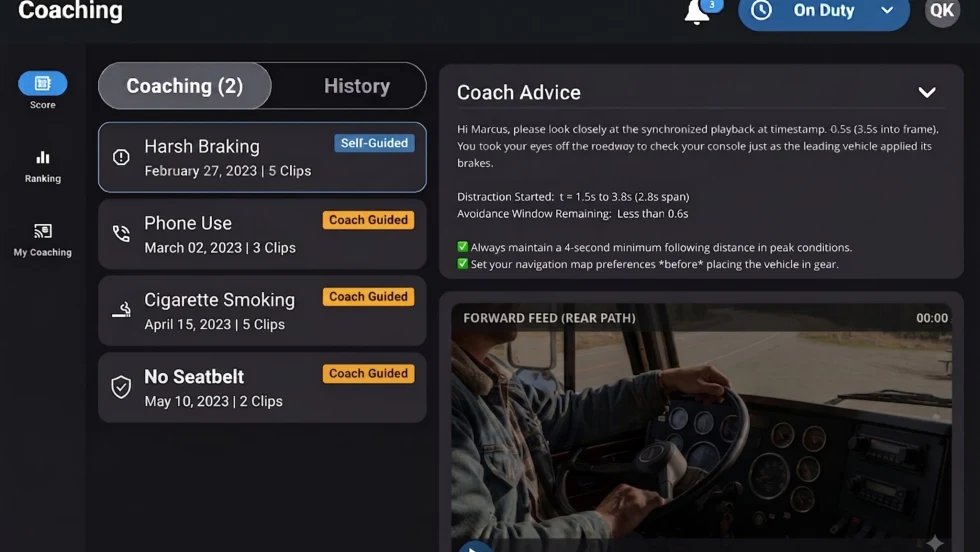
Four additions to PS Fleet help fleets monitor loads, manage driver coaching, share truck locations and adjust video system settings.
Read More →
When Language Stops the Truck: The Return of ELP Out-of-Service Orders
English language proficiency rules for commercial drivers aren’t new, but renewed out-of-service enforcement has raised the stakes. Here’s what carriers need to know before a driver reaches a roadside inspection.
Read More →
Samsara Launches Custom AI Agent Builder
Agent Studio lets fleets create AI tools for hours-of-service monitoring, reporting and driver support, including agents that communicate by phone.
Read More →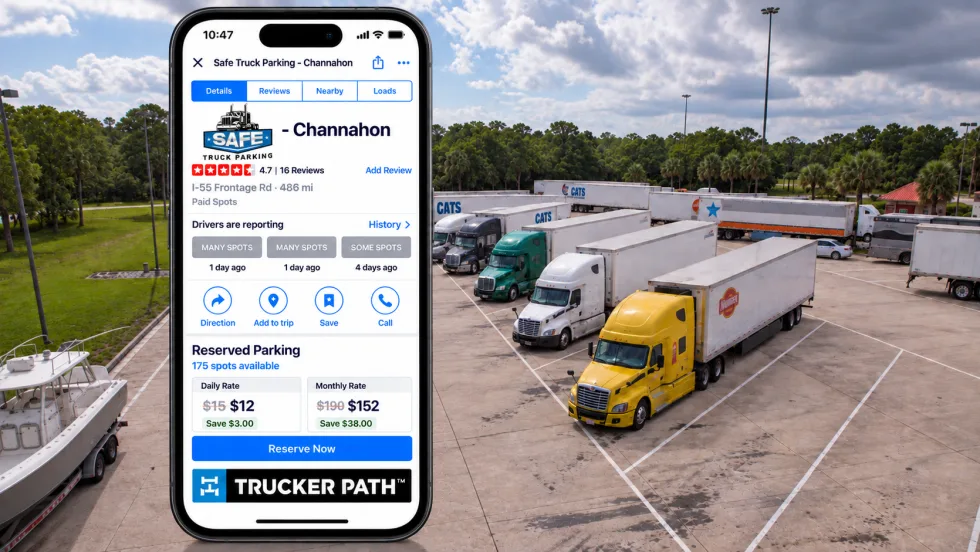
Trucker Path Expands Reserved Parking Network
Trucker Path has added close to 6,000 more truck parking spaces to its Trucker Path Reserved Parking Network with the addition of Safe Truck Parking.
Read More →
EEOC Sues Texas Trucking Company Over Driver Age Limits
The agency says Trancasa USA rejected applicants over 65 and applied tougher driving-record standards to those over 60.
Read More →
Nussbaum, Roehl Announce Second Driver Pay Increase This Year
This year has seen a swath of major truck driver pay increases as freight capacity has tightened.
Read More →
From One Generation to the Next: How Mentorship Builds Safer Truck Drivers
After three decades in trucking, Harold Perry shares what he's learned about driver safety, mentorship, and helping the next generation build confidence behind the wheel.
Read More →
Truck Drivers Need More Than Another Alert
Fleets have more visibility into truck health, safety events, and driver activity than ever. The next challenge is turning all that information into useful guidance for the person who has to decide what to do next.
Read More →
FMCSA Removes 110 Truck Driver Training Schools from Certified ELDT List
Federal regulators also are targeting more than 160 additional training providers and launching a nationwide audit of third-party CDL skills testers as part of a broader crackdown on trucking fraud.
Read More →
Hours of Service Pilot Programs: FMCSA Readies for 2027 Rollout
Two pilot programs could eventually reshape hours-of-service rules, giving truck drivers options to pause their 14-hour clock or use longer split sleeper rest periods.
Read More →