




NTSB Recommendations Include Video Recorders, Collision Prevention
Tucked away in the same document in which the National Transportation Safety Board recommended cell phone bans for all drivers was a reiteration of previous recommendations to require video event recorders in heavy trucks, look at mandating collision avoidance systems, and other truck-specific issues
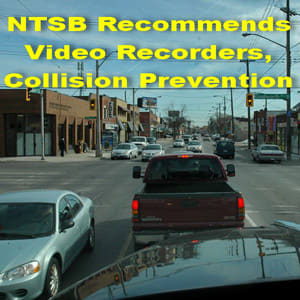
Tucked away in the same document in which the National Transportation Safety Board recommended cell phone bans for all drivers was a reiteration of previous recommendations to require video event recorders in heavy trucks, look at mandating collision avoidance systems, and other truck-specific issues.
This week, the NTSB released its report on an August 2010 accident on Interstate 44 in Gray Summit, Mo. A pickup truck ran into the back of a bobtail truck-tractor that had slowed for a construction zone. The pickup truck, in turn, was struck from behind by a school bus. That school bus was then hit by a second school bus that had been following. Two people died and 38 were injured.
The NTSB's investigation revealed that the pickup driver sent and received 11 text messages in the 11 minutes preceding the accident. The last text was received moments before the pickup struck the tractor-trailer.
There has been a lot of coverage of the board's recommendation in that report to ban driver use of "personal electronic devices," such as cell phones, while operating a motor vehicle. But there were many more recommendations, as well, some targeting commercial vehicles. These are only recommendations; NTSB rulings do not have the force of law.
The board recommended that the Federal Motor Carrier Safety Administration require all heavy commercial vehicles to be equipped with video event recorders that capture data in connection with the driver and the outside environment and roadway in the event of a crash or sudden deceleration event.
The board also wants FMCSA to require motor carriers to "review and use video event recorder information in conjunction with other performance data to verify that driver actions are in accordance with company and regulatory rules and procedures essential to safety."
Had the Volvo tractor, the two school buses, and the motorcoach been required to have video event recorders, the events leading up to this accident could have been more definitively assessed, noted the board. In addition, the use of video event recorder data for managing driver behavior could assist school bus operators in identifying driver performance issues before they lead to accidents.
Also in the recommendations to the FMCSA: Develop a comprehensive medical oversight program for interstate commercial drivers that combats the "inappropriate issuance" of medical certificates for drivers. This is an area where the agency is already making progress. A final rule setting up a National Registry of Certified Medical Examiners will probably be published before the end of the year. It's also in the process of drafting a proposal to update rules on conditions ranging from cardiovascular disease to sleep disorders.
It also reiterated a previous recommendation to the National Highway Traffic Safety Administration to look at mandating collision warning systems with adaptive cruise control, active braking and electronic stability control systems for commercial vehicles. It noted that forward collision warning systems on the two accident buses -- and possibly on the GMC pickup -- could have prevented the accident or at least mitigated its severity.
NHTSA is well along on a proposal to require electronic stability control on heavy trucks, with a proposal likely to be published by the end of February.
More Drivers

EEOC Sues Texas Trucking Company Over Driver Age Limits
The agency says Trancasa USA rejected applicants over 65 and applied tougher driving-record standards to those over 60.
Read More →
Nussbaum, Roehl Announce Second Driver Pay Increase This Year
This year has seen a swath of major truck driver pay increases as freight capacity has tightened.
Read More →
From One Generation to the Next: How Mentorship Builds Safer Truck Drivers
After three decades in trucking, Harold Perry shares what he's learned about driver safety, mentorship, and helping the next generation build confidence behind the wheel.
Read More →
Truck Drivers Need More Than Another Alert
Fleets have more visibility into truck health, safety events, and driver activity than ever. The next challenge is turning all that information into useful guidance for the person who has to decide what to do next.
Read More →
FMCSA Removes 110 Truck Driver Training Schools from Certified ELDT List
Federal regulators also are targeting more than 160 additional training providers and launching a nationwide audit of third-party CDL skills testers as part of a broader crackdown on trucking fraud.
Read More →
Hours of Service Pilot Programs: FMCSA Readies for 2027 Rollout
Two pilot programs could eventually reshape hours-of-service rules, giving truck drivers options to pause their 14-hour clock or use longer split sleeper rest periods.
Read More →
Medical Cards, English Proficiency Reshape Roadcheck Violations
Medical-card violations jumped to the top of the driver out-of-service list during CVSA’s 2026 International Roadcheck, while English-language proficiency violations appeared among the leading violations for the first time.
Read More →
Driver Trust Can Make or Break the Success of Fleet Safety Technology
New Teletrac Navman research suggests that onboarding, transparency about driver data, and positive feedback can play a significant role in how commercial drivers respond to safety and coaching technology.
Read More →
EEOC Sues KLLM Over Alleged Sex Discrimination in Driver Training
KLLM is facing a federal sex-discrimination lawsuit over policies the EEOC alleges put female truck driver trainees at a disadvantage.
Read More →
FMCSA Moves to Codify English Language Requirements for Commercial Drivers
By changing regulations on English-language proficiency requirements for commercial drivers, rather than relying on a guidance memo, the FMCSA said future administrations won't be able to walk back the Trump administration's stricter enforcement with just a memo.
Read More →