





HDT Equipment Editor Jim Park took a deep dive into Nikola's plans in August, shortly before the Republic deal was announced:
Nikola Could Roll Electric Trucks Off the Line by Late 2021
Nikola, Republic Services End Electric Refuse Truck Collaboration
Nikola’s plans for producing zero-emission commercial vehicles has been dealt another setback, as it ends a collaboration with Republic Services to develop electric refuse trucks.
December 23, 2020
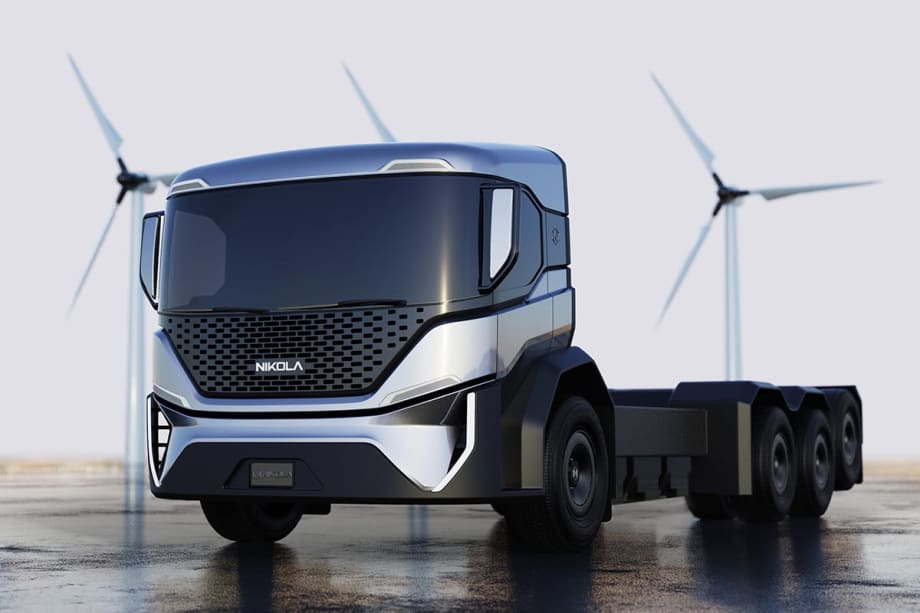
A version of the Nikola Tre that likely would have been used as a basis for the electric refuse truck.
Photo: Nikola
3 min to read
Nikola’s plans for producing zero-emission commercial vehicles has been dealt another setback, as it ends a collaboration with Republic Services to develop electric refuse trucks.
The companies were looking to develop a fully integrated refuse truck with a battery-electric drive and body, while also integrating new systems.
Nikola announced Dec. 23 that both companies determined that the new technologies and design concepts would take longer to develop than expected and result in “unexpected costs.” A previously announced vehicle order for 2,500 units has been canceled.
“This was the right decision for both companies given the resources and investments required,” said Nikola CEO Mark Russell in a statement. “We support and respect Republic Services’ commitment to achieving environmentally responsible, sustainable solutions for their customers. Nikola remains laser-focused on delivering on our battery-electric and fuel-cell electric commercial truck programs, and the energy infrastructure to support them.”
The plans, announced in August, had been for Nikola and Republic to work together to develop a vehicle with an anticipated range of 150 miles on a residential refuse collection routes of up to 1,200 stops or commercial collection of 140 stops per day. In a tweet to announce that deal, former CEO Trevor Milton tweeted that the order was guaranteed, with the option of doubling the order to 5,000 trucks.
In what both companies called an industry first, Nikola was going to deliver a complete truck to the customer — chassis, powertrain, and body — all assembled at Nikola’s Coolidge, Arizona, plant. The bodies would have been licensed from existing suppliers and installed by Nikola. At the time of the August announcement, Milton said that by more closely integrating the design and installation of the various components on the Nikola Tre chassis, significant savings in cost and complexity could have been achieved.
Not giving up on electrification
Republic Services operates 18,000 refuse and recycling collection trucks in the U.S. and is second only to Waste Management in size. A 2020 HDT Top Green Fleet, it recently took delivery of its first Mack LR Electric waste collection truck. It also runs a portion of its fleet on natural gas, and has been increasing its use of renewable natural gas.
When the two companies announced the deal in August, Republic Services President Jon Vander Ark pointed out that it wasn’t putting all its eggs in one truck-maker basket. "I think if you look at us, if you look at any player in the space, they have multiple OEM partners going forward. We are pro-electrification, and we want everybody to get there, even providers that we don’t buy from, because I think that creates a cleaner future for everybody.”
Refuse is seen as one of the applications where electrification has early promise, because refuse trucks return to a home base every night where they can charge, and recouping energy from regenerative braking can extend range.
Nikola’s ongoing problems
Nikola’s stock price took a dive following the announcement. Republic wasn’t the first partner to pull back from an agreement recently.
Just last month, General Motors abandoned plans to take an 11% stake in Nikola and produce the Badger electric pickup truck, and instead introduced a non-binding Memorandum of Understanding to integrate GM Hydrotec fuel cell systems into Nikola Class 7 and 8 vehicles. Initial prototypes of that equipment are scheduled for next year, with the beta prototypes to follow in the first half of 2022. In the process, Nikola announced that it was returning all deposits on its promised Badger pickup truck.
In September, Nikola found itself responding to a damning report by Hindenburg Research, a short seller that accused Nikola of fraud in its portrayal of its battery-electric and hydrogen fuel cell technology. Founder Trevor Milton left the company later that month.
The company says it plans to begin delivering battery-electric Nikola Tre tractors next year, and also break ground on its first commercial hydrogen station. Fuel-cell-electric trucks are scheduled to be produced in Arizona beginning in 2023.
More Fuel Smarts

How Volvo Updated Its D13 for EPA 2027 [Watch]
Volvo’s updated D13 promises lower emissions without sacrificing performance or fuel economy. Take a closer look at what changed inside the engine in this HDT Spotlight video.
Read More →
Diesel Price Spike Shortens Payback for Natural Gas Trucks, Report Says
Energy Vision estimates fleets could recover the higher purchase price of an RNG-fueled Class 8 tractor in 1.3 to 2.8 years under current fuel-price scenarios.
Read More →
Calstart Becomes Catalyst Mobility, Reflecting Broader Focus
Calstart is now Catalyst Mobility, reflecting the nonprofit’s growing national role in clean transportation, including zero-emission trucks, infrastructure and incentive programs.
Read More →

Record Diesel Prices Squeeze Trucking Fleets
Average U.S. diesel prices have climbed to nearly $6 a gallon, surpassing the 2022 record as tight refinery capacity and Middle East disruptions keep fuel costs elevated.
Read More →
Sponsored•September 9, 2026
How Fuel Delivery Shapes Engine Performance
Fuel delivery depends on more than what happens at the injector. For fleet, maintenance and technical professionals, looking at the full path from pump to injector can provide useful context for understanding engine performance.
Read More →
East Coast Port Launches $45M Electric Truck Push
The Port Authority of New York and New Jersey announced millions in incentives for zero-emission drayage trucks, yard tractors, and new charging hubs near the port.
Read More →
California Bill Could Shed Light on Electric Truck Prices
Why do battery-electric Class 8 trucks remain so expensive? A California bill headed to Gov. Gavin Newsom would give fleets and state agencies more visibility into what manufacturers charge.
Read More →
Detroit Opens Orders for EPA 2027 Engines
Detroit isn’t starting from scratch to meet EPA 2027 diesel emissions standards. Its Gen 6 DD13 and DD15 engines keep much of today’s platform while updating the fuel and aftertreatment systems.
Read More →
Zero-Emission Truck Corridor Planned for West Coast
California, Oregon, Washington, British Columbia and Baja California are coordinating plans for truck charging and hydrogen fueling from Canada to Mexico.
Read More →
A Closer Look at Kenworth’s Electric T880E Vocational Truck [Video]
Learn more about Kenworth's T880E battery-electric vocational truck at the Paccar Technical Center, including its range, applications, upfitting considerations, and PTO options, in this HDT Spotlight video.
Read More →