




NHTSA: Traffic Deaths Up 7.7%
Preliminary data released by the National Highway Traffic Safety Administration on July 1 shows a 7.7% rise in motor-vehicle traffic deaths last year. NHTSA said an estimated 35,200 people died in 2015, up from the 32,675 reported fatalities in 2014.

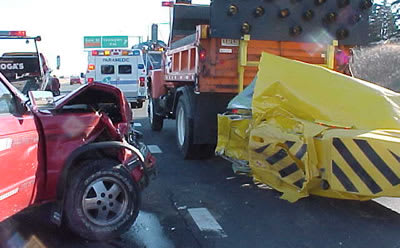
Image: Minnesota DOT; photo by Julie Bottolfson
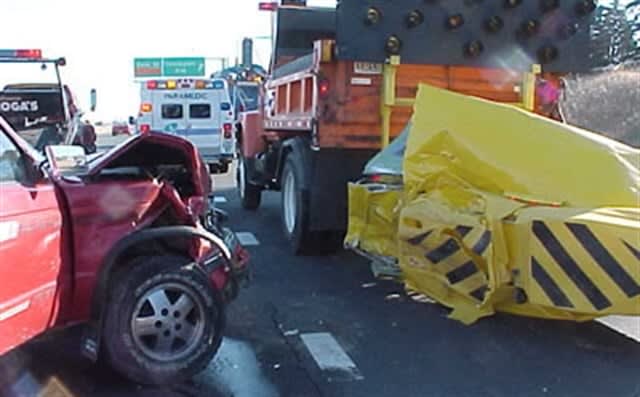
Image: Minnesota DOT; photo by Julie Bottolfson
Preliminary data released by the National Highway Traffic Safety Administration on July 1 shows a 7.7% rise in motor-vehicle traffic deaths last year.
NHTSA said an estimated 35,200 people died in 2015, up from the 32,675 reported fatalities in 2014. The agency said that if these projections hold, fatalities will be at their highest level since 2008, when 37,423 fatalities were reported.
Noting that preliminary data reported by the Federal Highway Administration shows that vehicle miles traveled (VMT) in 2015 increased by about 107.2 billion miles, or by about 3.5%, NHTSA said the fatality rate for 2015 increased to 1.12 fatalities per 100 million VMT. That’s up from 1.08 fatalities per 100 million VMT in 2014.
“The fourth quarter of 2015 represents the fifth consecutive quarter with year-to-year increases in fatalities as well as the fatality rate,” said NHTSA. “The magnitude of the increases has also been rising up to the 11% increase in the third quarter of 2015. Fatalities are projected to have increased by 4.7% during the fourth quarter of 2015.”
While emphasizing that the data is preliminary and requires additional analysis, the agency said that early estimates based on the data coded thus far into its Fatality Analysis Reporting System for 2015 indicate most of the country incurred “significant increases” in motorcyclist (9%), pedestrian (10%) and pedal-cyclist fatalities (13% increase).
In addition, fatalities to drivers and passengers also went up (6% and 7%, respectively). Fatalities in crashes involving large trucks also rose, but by a smaller amount, 4%.
NHTSA said it is continuing to gather data on crash fatalities for 2014 and 2015 using information from police crash reports and other sources.
“It is too soon to speculate on the contributing factors or potential implications of any changes in deaths on our roadways,” the agency stated. “The final data for 2014 as well as the annual file for 2015 will be available later in 2016, which usually results in the revision of fatality totals and the ensuing rates and percentage changes.”
In response to early estimates showing fatality increases, NHTSA said it convened a series of six regional safety summits with key stakeholders back in February and March.
As a result of those summits, the agency said it is “working to develop new tools that could improve behavioral challenges, including drunk, drugged, distracted and drowsy driving; speeding; failure to use safety features such as seat belts and child seats; and new initiatives to protect vulnerable road users such as pedestrians and cyclists.”
In addition, when the final dataset is released later this summer, the Department of Transportation said it will issue a “call to action to safety partners, state and local elected officials, technologists, data scientists and policy experts to join the department in searching for more definitive answers and developing creative, open data-driven solutions to improve safety and reduce deaths caused by motor vehicles.”
DOT also said it is “pressing forward” with new guidance to promote the development of automated safety technologies, aimed to greatly decreasing the number of crashes. That guidance is expected to be issued later this summer.
NHTSA and FHWA are also working on implementing new safety-performance measures, which require states and metropolitan areas to set targets for reducing deaths among motorized and non-motorized road users.
“As the economy has improved and gas prices have fallen, more Americans are driving more miles,” said NHTSA Administrator Mark Rosekind. “But that only explains part of the increase. Ninety-four percent of crashes can be tied back to a human choice or error, so we know we need to focus our efforts on improving human behavior while promoting vehicle technology that not only protects people in crashes, but helps prevent crashes in the first place.”
More Fleet Management

Color Match Smarter: Tools That Restore & Perform
For fleet managers and collision repair professionals keeping heavy-duty trucks on the road, getting the color right the first time isn't just about appearance — it's about efficiency, turnaround time, and bottom-line results. Discover how today's digital color tools are transforming the repair process from guesswork to precision.
Read More →
FMCSA Pauses Biennial-Update Enforcement Amid Motus Transition
Carriers whose updates were due on or after June 1 have more time, while FMCSA works to stabilize its new registration system and warns of phishing sites impersonating its new carrier registration system, Motus.
Read More →
2026 Blueprint for Countering Smarter Supply Chain Theft
Cargo theft is no longer just the cost of doing business. It's a multi-billion-dollar criminal enterprise exploiting vulnerabilities across your fleet, drivers, and supply chain.
Read More →


How Telematics Improves Visibility, Control, and Performance in Refrigerated Fleets
Explore how telematics help refrigerated fleets improve visibility, uptime, efficiency, compliance, and cargo protection across connected cold chain operations.
Read More →
What the U.S.-Canada Trade War Means for Trucking
Escalating U.S.-Canada tariffs could disrupt cross-border freight, reduce truck volumes, raise costs, and create new uncertainty for carriers on both sides of the border.
Read More →
What Are Trucking’s Top Concerns for 2026?
The American Transportation Research Institute wants to know what's worrying trucking fleet managers, drivers, and other stakeholders in its annual Industry Issues survey.
Read More →
American Trucking Associations Looks for a New Leader
ATA President and CEO Chris Spear abruptly left his job at the association on August 21, at a pivotal time for the trucking industry.
Read More →
Public Wi-Fi Cybersecurity Risks: How Truck Drivers and Fleets Can Protect Their Data
Public Wi-Fi can expose truck drivers and fleets to credential theft, malware, and other cyber threats. Here’s how to reduce the risk on the road.
Read More →
For Nicky Cupp, Fleet Innovation Starts With Frustration
HDT Truck Fleet Innovator Nicky Cupp turns everyday pain points at Fraley & Schilling into opportunities for better technology and smarter processes.
Read More →
Adam Buttgenbach’s Approach to Electric Trucks: Start With Where They Fit
HDT Truck Fleet Innovator Adam Buttgenbach helped PepsiCo build one of North America’s largest EV fleets by focusing on where electric trucks make operational sense.
Read More →