




NHTSA Proposes New Minimum Sound Requirements for Hybrid and Electric Vehicles
As required by the bipartisan Pedestrian Safety Enhancement Act of 2010, the U.S. Department of Transportation's National Highway Traffic Safety Administration is proposing that hybrid and electric vehicles meet minimum sound standards in order to help make all pedestrians more aware of the approaching vehicles
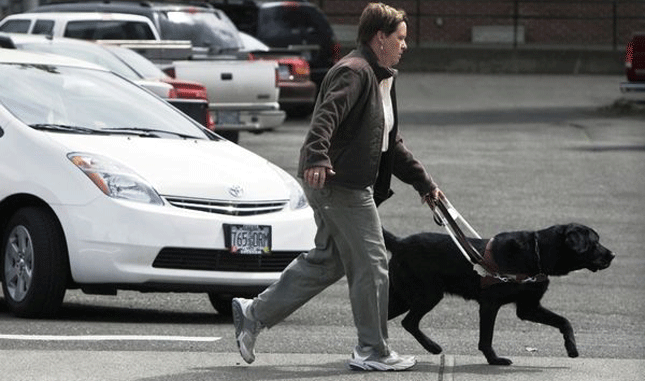
As required by the bipartisan Pedestrian Safety Enhancement Act of 2010, the U.S. Department of Transportation's National Highway Traffic Safety Administration is proposing that hybrid and electric vehicles meet minimum sound standards in order to help make all pedestrians more aware of the approaching vehicles.
"Safety is our highest priority, and this proposal will help keep everyone using our nation's streets and roadways safe, whether they are motorists, bicyclists or pedestrians, and especially the blind and visually impaired," said U.S. Transportation Secretary Ray LaHood.
Electric and hybrid vehicles do not rely on traditional gas or diesel-powered engines at low speeds, making them much quieter and their approach difficult to detect.
The proposed standard, Federal Motor Vehicle Safety Standard No. 141, would fulfill Congress' mandate in the Pedestrian Safety Enhancement Act that hybrid and electric vehicles meet minimum sound requirements so that pedestrians are able to detect the presence, direction and location of these vehicles when they are operating at low speeds.
"Our proposal would allow manufacturers the flexibility to design different sounds for different makes and models while still providing an opportunity for pedestrians, bicyclists and the visually impaired to detect and recognize a vehicle and make a decision about whether it is safe to cross the street," said NHTSA Administrator David Strickland.
The sounds would need to be detectable under a wide range of street noises and other ambient background sounds when the vehicle is traveling under 18 miles per hour. At 18 miles per hour and above, vehicles make sufficient noise to allow pedestrians and bicyclists to detect them without added sound.
Each automaker would have a significant range of choices about the sounds it chooses for its vehicles, but the characteristics of those sounds would need to meet certain minimum requirements. In addition, each vehicle of the same make and model would need to emit the same sound or set of sounds.
NHTSA estimates that if this proposal were implemented there would be 2,800 fewer pedestrian and pedalcyclist injuries over the life of each model year of hybrid cars, trucks and vans and low speed vehicles, as compared to vehicles without sound.
The proposal is now open to public comment for the next 60 days.
According to an article by the Motor & Equipment Manufacturers Association, there are a number of companies that have already begun working on adding technology so as to emit sounds at low speeds. These companies include the Chevrolet Volt, the Nissan Leaf and the Toyota Prius.
The cost of adding the speakers and technology is approximately $30, according to the MEMA article.
More Drivers

From One Generation to the Next: How Mentorship Builds Safer Truck Drivers
After three decades in trucking, Harold Perry shares what he's learned about driver safety, mentorship, and helping the next generation build confidence behind the wheel.
Read More →
Truck Drivers Need More Than Another Alert
Fleets have more visibility into truck health, safety events, and driver activity than ever. The next challenge is turning all that information into useful guidance for the person who has to decide what to do next.
Read More →
FMCSA Removes 110 Truck Driver Training Schools from Certified ELDT List
Federal regulators also are targeting more than 160 additional training providers and launching a nationwide audit of third-party CDL skills testers as part of a broader crackdown on trucking fraud.
Read More →
Hours of Service Pilot Programs: FMCSA Readies for 2027 Rollout
Two pilot programs could eventually reshape hours-of-service rules, giving truck drivers options to pause their 14-hour clock or use longer split sleeper rest periods.
Read More →
Medical Cards, English Proficiency Reshape Roadcheck Violations
Medical-card violations jumped to the top of the driver out-of-service list during CVSA’s 2026 International Roadcheck, while English-language proficiency violations appeared among the leading violations for the first time.
Read More →
Driver Trust Can Make or Break the Success of Fleet Safety Technology
New Teletrac Navman research suggests that onboarding, transparency about driver data, and positive feedback can play a significant role in how commercial drivers respond to safety and coaching technology.
Read More →
EEOC Sues KLLM Over Alleged Sex Discrimination in Driver Training
KLLM is facing a federal sex-discrimination lawsuit over policies the EEOC alleges put female truck driver trainees at a disadvantage.
Read More →
FMCSA Moves to Codify English Language Requirements for Commercial Drivers
By changing regulations on English-language proficiency requirements for commercial drivers, rather than relying on a guidance memo, the FMCSA said future administrations won't be able to walk back the Trump administration's stricter enforcement with just a memo.
Read More →
Drivers Put Western Star Trucks to the Test at Star Nation Experience
Watch to get an inside look at the Western Star trucks, technology, and community behind the Star Nation Experience 2026!
Read More →
Trump Administration Looks to Put More Veterans Behind the Wheel
The Freedom Haulers program pulls together existing and expanded programs at several federal agencies to recruit veterans to drive commercial heavy-duty trucks and cut the red tape for them to get a CDL, training, and employment.
Read More →