




New Version of Jason's Law Revised to Appeal to New Congress
U.S. Reps Paul Tonko (D-NY) and Erik Paulsen (R-MN) have introduced a revised version of Jason's Law, which would create a grant program to help alleviate the parking shortages and pay for safety improvements at existing rest areas
U.S. Reps Paul Tonko (D-NY) and Erik Paulsen (R-MN) have introduced a revised version of Jason's Law, which would create a grant program to help alleviate the parking shortages and pay for safety improvements at existing rest areas.
Tonko and Paulsen had previously introduced Jason's Law in the U.S. House to address the truck parking shortage and improve conditions at current truck parking facilities. The new bill was announced Wednesday at a press conference in Washington, D.C.
The law is named for truck driver Jason Rivenburg, who was murdered during an attempted robbery while parked at an abandoned gas station in South Carolina. Due to a lack of adequate truck parking, the gas station was the only place to stop and comply with the hours-of-service regulations.
The new Jason's Law bill, H.R. 1803, would provide $20 million annually for six years for a number of initiatives to improve access to truck parking across the country, ranging from construction of new parking capacity and improvements to existing commercial parking areas, to technology to track open parking spaces and improvements to existing noncommercial parking facilities to accommodate large trucks.
Not the same bill
In an interview on "The Lockridge Report" on Sirius XM's Road Dog trucking channel Wednesday, Tonko explained that changes have been made to help improve the likelihood of the bill's passage. Last session, it died in committee.
"We have made some changes, and they came about because we've been communicating with the new Republican majority in the House," Tonko said. "Our goal here is to get this done ... because we truly believe that this safety issue for truckers shouldn't be denied because of petty partisan differences or geographic boundaries or income strata that come into the mix."
One of the changes, in a Congress that has vowed no new spending, is that the funding will come from an existing congestion mitigation air quality account. "We have been working hand and glove with [the House Transportation and infrastructure Committee], and they thought this pot of money would be a better guarantee" that the bill would pass, Tonko explained.
This version of the bill would offer more opportunities for public-private partnerships, and projects would have to be approved by the Department of Transportation.
The grants would provide funding for several purposes:
* Construction of safety rest areas that include parking for commercial motor vehicles
* Constructing commercial motor vehicle parking facilities next to commercial truckstops and travel plazas
* Opening existing facilities for commercial motor vehicle parking, including inspection and weigh stations and park-and-ride facilities
* Promoting the availability of publicly or privately provided commercial motor vehicle parking on the National Highway System
* Constructing turnouts along the National Highway System for commercial motor vehicles
* Making capital improvements to public commercial motor vehicle parking facilities currently closed on a seasonal basis
* Improving the geometric design of interchanges on the National Highway System to improve access to commercial motor vehicle parking facilities
* Maintaining existing facilities
It also would provide funding for anti-idling technologies. When asked by "The Lockridge Report" host Evan Lockridge about how this addresses the question of safe truck parking, Tonko responded, "I think what you have here is an opportunity to link with other agencies; the DOE is looking at energy efficiencies. .... I think looking from it in a big picture perspective, where we can provide comfort for drivers and a benefit for society at the same time."
Priority would be given to grant applicants that can demonstrate a severe shortage of commercial motor vehicle parking, who have consulted with affected government agencies, community groups, and private companies, and demonstrate that the projects would have positive effects on highway safety, traffic congestion, and air quality.
The bill has been referred to the House Transportation and Infrastructure Committee.
Industry Support
The American Trucking Associations and the Owner Operator Independent Drivers Association announced statements indicating their support of the bill.
"America's professional truck drivers need access to safe and legal parking in order to get the rest they need to safely transport the nation's essential goods and comply with federal hours-of-service rules," Mary Phillips, ATA senior vice president of legislative affairs said at the press conference. "Our drivers shouldn't be forced into the 'no-win' situation of choosing between continuing to drive to find safe parking or parking on the shoulder or ramp or other location that puts themselves or other motorists at risk."
"The fact that states have been considering closing existing parking facilities in order to address their budget shortfalls underscores the need for this legislation," Phillips said. "If left unaddressed, the lack of truck parking will reach a crisis stage; over the next 9 years, we will add nearly 2 million more trucks to our roads to meet our nation's freight demand."
"The trucking industry faces a litany of issues, and the least we can do is to make sure drivers have a safe place to rest while delivering the nation's goods," said Todd Spencer, executive vice President of OOIDA.
The National Association of Truck Stop Operators, the Commercial Vehicle Safety Alliance and the American Moving & Storage Association also support the bill.
More Drivers
Trucker Path Expands Reserved Parking Network
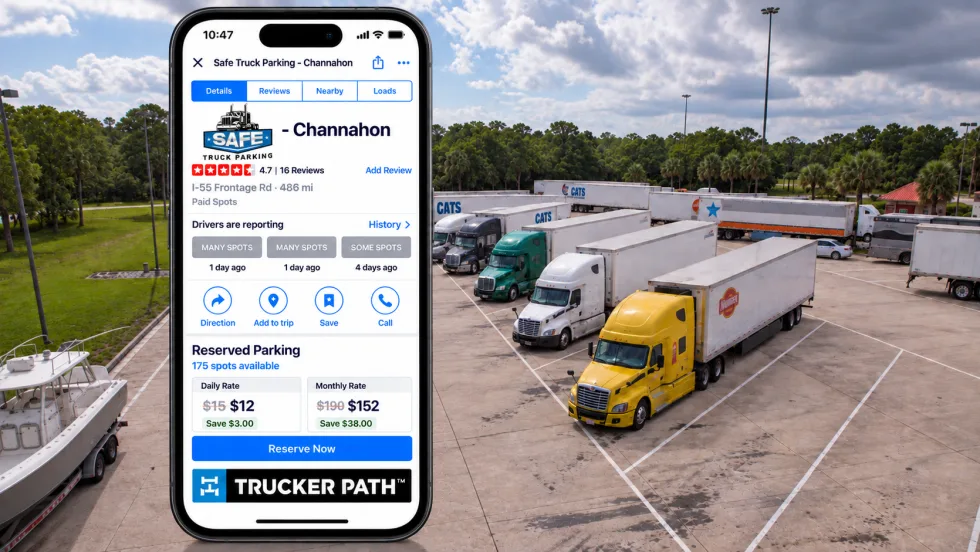
Trucker Path has added close to 6,000 more truck parking spaces to its Trucker Path Reserved Parking Network with the addition of Safe Truck Parking.
Read More →
EEOC Sues Texas Trucking Company Over Driver Age Limits
The agency says Trancasa USA rejected applicants over 65 and applied tougher driving-record standards to those over 60.
Read More →
Nussbaum, Roehl Announce Second Driver Pay Increase This Year
This year has seen a swath of major truck driver pay increases as freight capacity has tightened.
Read More →
From One Generation to the Next: How Mentorship Builds Safer Truck Drivers
After three decades in trucking, Harold Perry shares what he's learned about driver safety, mentorship, and helping the next generation build confidence behind the wheel.
Read More →
Truck Drivers Need More Than Another Alert
Fleets have more visibility into truck health, safety events, and driver activity than ever. The next challenge is turning all that information into useful guidance for the person who has to decide what to do next.
Read More →
FMCSA Removes 110 Truck Driver Training Schools from Certified ELDT List
Federal regulators also are targeting more than 160 additional training providers and launching a nationwide audit of third-party CDL skills testers as part of a broader crackdown on trucking fraud.
Read More →
Hours of Service Pilot Programs: FMCSA Readies for 2027 Rollout
Two pilot programs could eventually reshape hours-of-service rules, giving truck drivers options to pause their 14-hour clock or use longer split sleeper rest periods.
Read More →
Medical Cards, English Proficiency Reshape Roadcheck Violations
Medical-card violations jumped to the top of the driver out-of-service list during CVSA’s 2026 International Roadcheck, while English-language proficiency violations appeared among the leading violations for the first time.
Read More →
Driver Trust Can Make or Break the Success of Fleet Safety Technology
New Teletrac Navman research suggests that onboarding, transparency about driver data, and positive feedback can play a significant role in how commercial drivers respond to safety and coaching technology.
Read More →
EEOC Sues KLLM Over Alleged Sex Discrimination in Driver Training
KLLM is facing a federal sex-discrimination lawsuit over policies the EEOC alleges put female truck driver trainees at a disadvantage.
Read More →