




New EU Rule Aims to Boost Transparency of Truck MPG
A new European Union procedure for determining emissions of the greenhouse gas CO2 from new trucks has won praise from a key industry group for its expected positive impact on transparency.

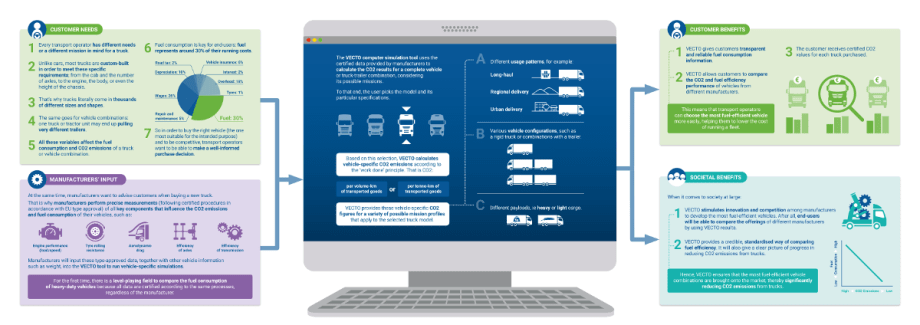
Infographic lays out how EU’s Vecto computer simulation tool functions. Image: ACEA

A new European Union procedure for determining emissions of the greenhouse gas CO2 from new trucks has won praise from a key industry group for its expected positive impact on transparency.
The European Automobile Manufacturers’ Association said it “welcomes [the procedure] as an important step to introduce more transparency to the market – ultimately leading to reduced fuel consumption and lower CO2 emissions” from commercial vehicles.
The European Automobile Manufacturers’ Association (ACEA) is the Brussels, Belgium-based trade association of the 15 major car, van, truck and bus producers in Europe. Its membership includes DAF Trucks, Daimler Trucks, Iveco, MAN Truck & Bus, Scania, Volkswagen Commercial Vehicles, and Volvo Group.
The new regulation, approved in May by member states in the EU’s regulatory committee, will require CO2 emissions from new trucks to be calculated per “harmonized and certified procedures.” EAMA said the European Commission has developed a computer calculation tool, called Vecto, to model CO2 emissions from a wide variety of complete truck and trailer configurations using various heavy-duty vehicle cycles.
“Using Vecto data, the EU legislation on the calculation of CO2 from trucks will require a declaration of CO2 values for each vehicle produced for the EU market,” EAMA said in a statement. This will in turn provide “a credible, standardized way of comparing fuel efficiency across all brands.”
“This will be a major game-changer, as it will help transport operators choose the most fuel-efficient vehicle more easily, thereby significantly reducing CO2,” said ACEA Secretary General Erik Jonnaert. “It will also lead to increased transparency and competition among manufacturers to develop the most fuel-efficient vehicles, driving the market uptake of the cleanest vehicles.”
Jonnaert pointed out that the EU market is diverse and complex, with “trucks usually tailor-made to customers’ specific orders or ... custom-built for a specific mission." Yet he said the Vecto tool “can reflect that complexity, as it takes the variables into account that affect CO2 emissions, such as various usage patterns, vehicle configurations or different payloads.
“In order to set the direction for future CO2 reduction policy, we need to have a clear understanding of the baseline,” he added.
On the other hand, ACEA noted that truck manufacturers have concerns about whether the proposed lead time between the “entry into force of the regulation and the start of the first step of the CO2 declaration, now tied to the date of vehicle registration rather than production, is sufficient to perform the necessary certification activities.”
More Equipment
Behind the Wheel of the New Mack Anthem [Video]
HDT takes the new Mack Anthem around Mack’s Pennsylvania test track to see how its driver-focused design, technology, visibility and handling perform from behind the wheel.
Read More →
DTNA Plans New U.S. Truck Plant as Manufacturing Footprint Shifts
Daimler Truck North America is evaluating sites for a new assembly plant expected to open in 2029 while winding down operations at its longtime Portland manufacturing facility.
Read More →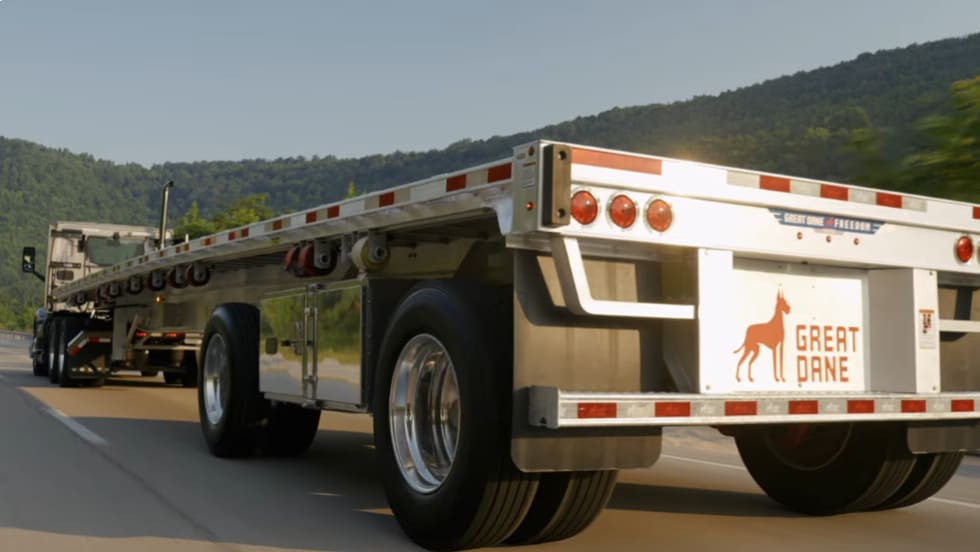
Great Dane Flatbed Trailer Offers Light Weight and Strength
Freedom Ultra is designed for a wide range of open-deck applications, including building materials, lumber, machinery, steel products, industrial freight, and coil hauling.
Read More →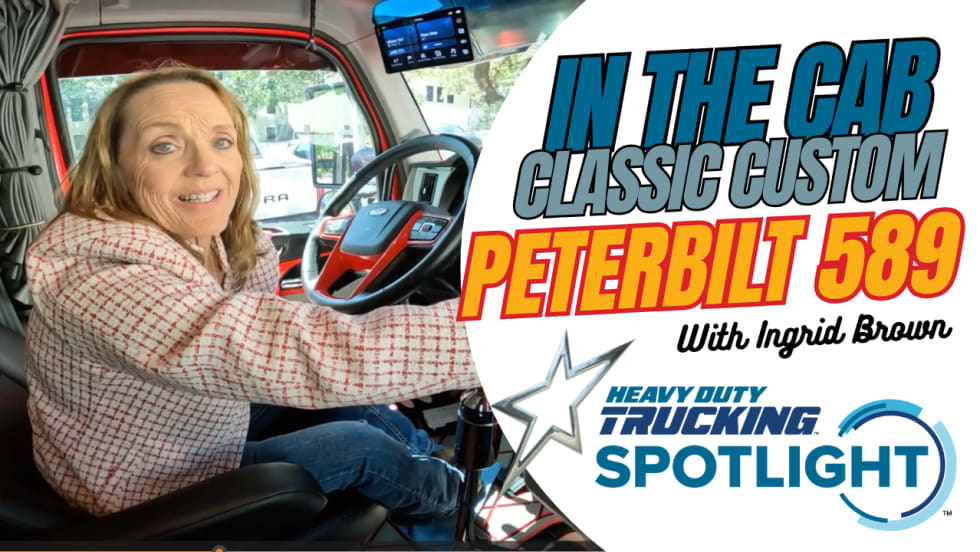
What It's Like Inside this Custom 2025 Peterbilt 589?
Take a driver's-eye tour of this customized 2025 Peterbilt 589 in this video, as longtime driver Ingrid Brown explains its features, compares it to previous models, and shares plenty of personality along the way.
Read More →
Drivers Put Western Star Trucks to the Test at Star Nation Experience
Watch to get an inside look at the Western Star trucks, technology, and community behind the Star Nation Experience 2026!
Read More →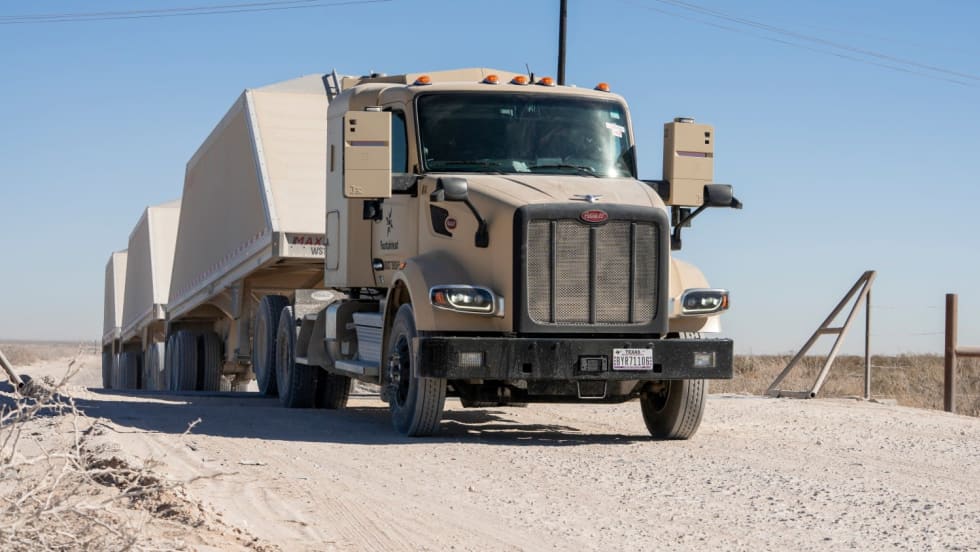
Atlas Expands Kodiak Driverless Truck Fleet in Permian Basin
Atlas Energy Solutions is expanding autonomous frac sand hauling in the Permian Basin with a second load-out location and plans for 100 driverless trucks by mid-2027.
Read More →
Putting Mack’s Command Steer to the Test
A test drive of Mack’s Command Steer active steering system evaluates how it can make truck driving easier and less tiring.
Read More →
Mack, Volvo Expand DEF Derate Software Updates
The updated software gives Mack and Volvo truck owners more time to address DEF-related issues before the engine derates or the vehicle goes into reduced-speed inducement, following new EPA guidance.
Read More →
Rush, MCT Team Up to Grow Refrigeration Service Network
The joint venture will operate MCT's network of Carrier Transicold dealerships and mobile service locations, with the companies promising greater service capacity and uptime for refrigerated fleets.
Read More →
Cummins Adjusts 2027 Engine Rollout After EPA Proposal
The engine maker will gradually introduce its new Model Year 2027 diesel engines while continuing to offer current models during the transition, citing the EPA's proposed emissions rule changes.
Read More →