





Related: A Video Tour of Navistar's International LT Driver-Centric Interior
Navistar Reveals Customer-Centric Aftersales Strategy
Aiming to set itself apart from its competitors, Navistar International Corp. is embarking jointly with its dealer network on “a clear path” to be the “most customer-centric, innovative, and value-creating truck and bus solutions provider in the Americas.”
August 7, 2019
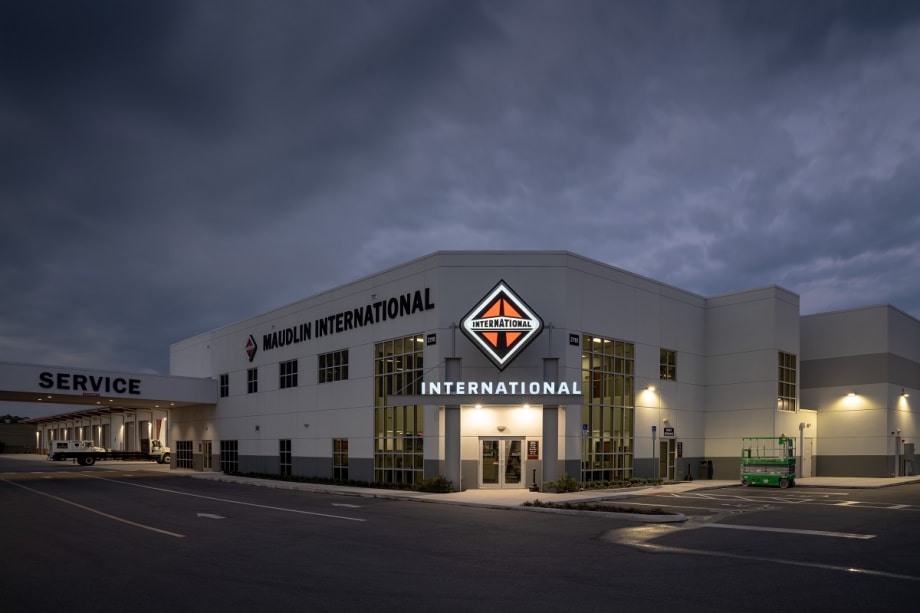
Aiming to set itself apart from its competitors, Navistar International Corp. is embarking jointly with its dealer network on “a clear path” to be the “most customer-centric, innovative, and value-creating truck and bus solutions provider in the Americas.”
Photo courtesy Navistar
4 min to read
Aiming to set itself apart from its competitors, Navistar International Corp. is embarking jointly with its dealer network on “a clear path” to be the “most customer-centric, innovative, and value-creating truck and bus solutions provider in the Americas.”
That path is laid out in a strategic plan, dubbed Vision 2025, that was developed and is being directed by a working committee of Navistar executives and dealer principals, the company explained at an Aug. 6 media briefing in Boulder, Colo.
Elements of the strategy touch on every conceivable aspect of what should be studied and improved upon “to drive best-in-class service operations across the entire network” with the goal of making the company “the OEM of choice for trucking customers” in North America, according to a Navistar statement.
“Vision 2025 reflects a new level of company-dealer collaboration, one that’s built on transparency, trust and shared goals,” said Friedrich Baumann, Navistar’s president, Aftersales and Alliance Management. “While many future actions are still in the works, the foundation of Vision 2025 is already in place, and is starting to provide significant benefits to our customers, who are at the center of this strategic direction.”
The strategy was hammered out back in the spring by a committee comprised of members of Navistar’s Executive Leadership Team and the OEM’s Executive Dealer Council. Baumann said the committee was charged with working together to differentiate the International Truck network from all others in the industry. The Vision 2025 Committee has eight members; half represent Navistar and the remaining half represent the dealer network.
Navistar also recently established its Aftersales business division, which Baumann was tapped to lead in March. He also continues to serve as the liaison with Germany’s Traton Group, which has a partnership agreement with Navistar. Before taking over the Aftersales unit, Baumann was named Navistar’s senior vice president, Strategy and Planning, in April 2018. Prior to that, he spent six years as senior vice president of Daimler Trucks North America's aftermarket business.
Aftersales, as Navistar defines it, manages every facet of the business after the sale of the truck, including oversight of parts sales and distribution operations, customer service and technology, uptime and total cost of ownership and integrated warranty programs, as well as dealer network management and development.
“Vision 2025 has created a solid foundation between Navistar and its dealer body to become the OEM of choice for customers – changes that are owned jointly by Navistar and the dealers,” Baumann explained. He said the strategic plan is meant to “establish trust, alignment and commitment between ourselves and our dealers in order to deliver best-in-class value to our shared customers.”
Not surprisingly, given its scope, it’s a plan with many touchstones. During the briefing, several Navistar executives and two top dealer principals discussed the thinking behind Vision 2025 in detail—including by way of an interactive workshop session that attempted to show journalists how the plan came together.
Baumann and the other executives on hand also pointed to two other concrete developments that support pillars of the Vision 2025 strategy:
Several speakers pointed to examples of fruit born of the Vision 2025 plan that are already in the works, including improving the company’s dealer parts inventory system to better ensure there are “parts on the shelves” when trucks need repairs and initiatives aimed at reducing total cost of ownership.
Baumann and the other executives on hand also pointed to two other concrete developments that support pillars of the Vision 2025 strategy:
As of August 1, Navistar’s partnership with Love’s Travel Stops is fully operational. Per Navistar, this deal “establishes the commercial transportation industry’s largest service network, with more than 1,000 locations in North America.” Under the agreement, most Love’s and Speedco service locations are authorized to perform standard, extended and used warranty work with service repair times of three hours or less for all International Class 6-8 trucks.
New Memphis Parts Distribution Center, opening August 26. This 300,000-square-foot parts distribution center in Olive Branch, Miss., will serve regional dealer with stock and emergency orders, and due to its centralized location and proximity to the FedEx World Hub in Memphis enables next-day parts delivery to more than 95% of its dealers’ service locations while extending order cut-off times to 11 p.m. Eastern.
“These new initiatives reflect the impact of Vision 2025 and the company-dealer collaboration it represents,” said Terry Minor, CEO of Cumberland International Trucks and Vision 2025 dealer channel committee member.
“These powerful new steps,” he added, “and many others to come, are key to the successful implementation of our joint vision for the future to better serve our shared customer.”
More Fleet Management

Sponsored•September 16, 2026
Color Match Smarter: Tools That Restore & Perform
For fleet managers and collision repair professionals keeping heavy-duty trucks on the road, getting the color right the first time isn't just about appearance — it's about efficiency, turnaround time, and bottom-line results. Discover how today's digital color tools are transforming the repair process from guesswork to precision.
Read More →
FMCSA Pauses Biennial-Update Enforcement Amid Motus Transition
Carriers whose updates were due on or after June 1 have more time, while FMCSA works to stabilize its new registration system and warns of phishing sites impersonating its new carrier registration system, Motus.
Read More →
Sponsored•September 14, 2026
2026 Blueprint for Countering Smarter Supply Chain Theft
Cargo theft is no longer just the cost of doing business. It's a multi-billion-dollar criminal enterprise exploiting vulnerabilities across your fleet, drivers, and supply chain.
Read More →


Sponsored•September 1, 2026
How Telematics Improves Visibility, Control, and Performance in Refrigerated Fleets
Explore how telematics help refrigerated fleets improve visibility, uptime, efficiency, compliance, and cargo protection across connected cold chain operations.
Read More →
What the U.S.-Canada Trade War Means for Trucking
Escalating U.S.-Canada tariffs could disrupt cross-border freight, reduce truck volumes, raise costs, and create new uncertainty for carriers on both sides of the border.
Read More →
What Are Trucking’s Top Concerns for 2026?
The American Transportation Research Institute wants to know what's worrying trucking fleet managers, drivers, and other stakeholders in its annual Industry Issues survey.
Read More →
American Trucking Associations Looks for a New Leader
ATA President and CEO Chris Spear abruptly left his job at the association on August 21, at a pivotal time for the trucking industry.
Read More →
Public Wi-Fi Cybersecurity Risks: How Truck Drivers and Fleets Can Protect Their Data
Public Wi-Fi can expose truck drivers and fleets to credential theft, malware, and other cyber threats. Here’s how to reduce the risk on the road.
Read More →
For Nicky Cupp, Fleet Innovation Starts With Frustration
HDT Truck Fleet Innovator Nicky Cupp turns everyday pain points at Fraley & Schilling into opportunities for better technology and smarter processes.
Read More →
Adam Buttgenbach’s Approach to Electric Trucks: Start With Where They Fit
HDT Truck Fleet Innovator Adam Buttgenbach helped PepsiCo build one of North America’s largest EV fleets by focusing on where electric trucks make operational sense.
Read More →