




NATSO, ATA Call for Increased Driver Access to Truckstops
NATSO and the American Trucking Associations are calling on state and local governments to carefully define social distancing guidelines regarding truckstops and travel plazas.

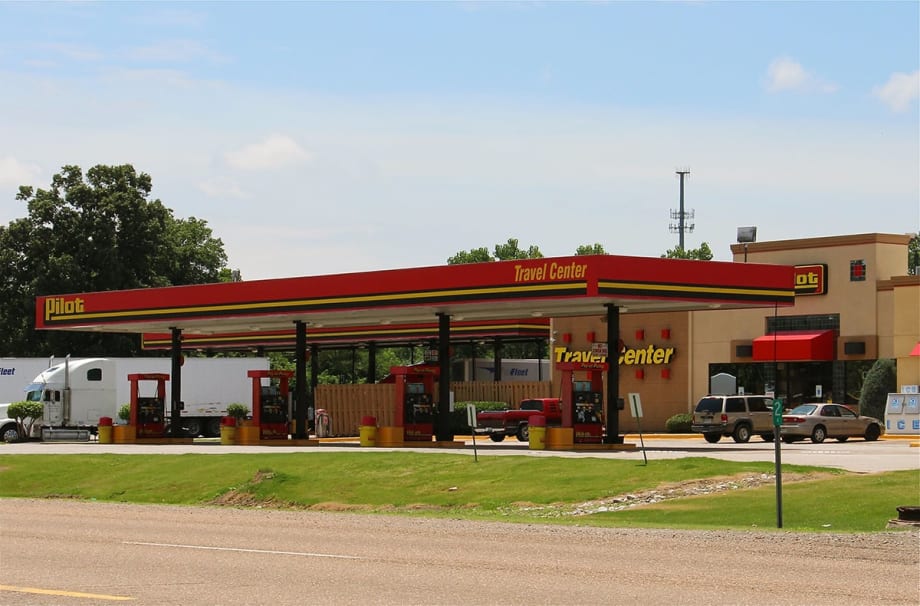
Photo: Jim Park
NATSO and the American Trucking Associations are calling on state and local governments to carefully define social distancing guidelines regarding truckstops and travel plazas. With both serving the needs commercial drivers while they deliver critical emergency relief supplies during the COVID-19 pandemic, some local officials are delaying these drivers by implementing strict occupancy limits at travel centers, according to the associations.
Occupancy limits of as few as 5-10 people, including employees, in certain parts of the country can result in drivers waiting in long lines to enter nearly empty truckstops to purchase food and fuel, or use the facilities.
“What should be 20-minute stops are turning into more than two-hour layovers. It is imperative that local enforcement officials enforce occupancy caps in truckstops in a manner that adheres to CDC social distancing guidelines without unnecessarily disrupting the efficient movement of essential supplies throughout the country,” said NATSO President and CEO Lisa Mullings.
NATSO and ATA expressed their concerns in a letter to the National Association of Counties; National Association of County and City Health Officials; the National League of Cities; and the United States Conference of Mayors.
“We urge officials at all levels of government to help our industry keep those deliveries rolling by keeping facilities open and accessible for drivers to use in a safe and efficient manner,” said ATA President and CEO Chris Spear.
Recently, Boise Stage Stop President Robert L. French wrote a letter to Idaho Governor Brad Little after he issued a statewide “stay at home” order, closing dine-in restaurant areas throughout state. The letter asked for an exemption from the order so French’s team could continue serving the trucking community with dine-in service.
“…in looking at the regulations and what functions are ‘essential,’ we believe that the care of truck drivers, so that they can complete their very necessary function of bringing virtually everything that this society needs is equally important to the mission of hospitals. Therefore, we believe that our food operations are integral to our function of being supportive of our country’s transportation system, and as a “gas station” are totally, and completely exempt from the Governor’s order,” wrote French.
Unfortuantely, French was not given an exemption, and the Boise Stage Stop now only offers take-out meals.
More Drivers

Truck Drivers Need More Than Another Alert
Fleets have more visibility into truck health, safety events, and driver activity than ever. The next challenge is turning all that information into useful guidance for the person who has to decide what to do next.
Read More →
FMCSA Removes 110 Truck Driver Training Schools from Certified ELDT List
Federal regulators also are targeting more than 160 additional training providers and launching a nationwide audit of third-party CDL skills testers as part of a broader crackdown on trucking fraud.
Read More →
Hours of Service Pilot Programs: FMCSA Readies for 2027 Rollout
Two pilot programs could eventually reshape hours-of-service rules, giving truck drivers options to pause their 14-hour clock or use longer split sleeper rest periods.
Read More →
Medical Cards, English Proficiency Reshape Roadcheck Violations
Medical-card violations jumped to the top of the driver out-of-service list during CVSA’s 2026 International Roadcheck, while English-language proficiency violations appeared among the leading violations for the first time.
Read More →
Driver Trust Can Make or Break the Success of Fleet Safety Technology
New Teletrac Navman research suggests that onboarding, transparency about driver data, and positive feedback can play a significant role in how commercial drivers respond to safety and coaching technology.
Read More →
EEOC Sues KLLM Over Alleged Sex Discrimination in Driver Training
KLLM is facing a federal sex-discrimination lawsuit over policies the EEOC alleges put female truck driver trainees at a disadvantage.
Read More →
FMCSA Moves to Codify English Language Requirements for Commercial Drivers
By changing regulations on English-language proficiency requirements for commercial drivers, rather than relying on a guidance memo, the FMCSA said future administrations won't be able to walk back the Trump administration's stricter enforcement with just a memo.
Read More →
Drivers Put Western Star Trucks to the Test at Star Nation Experience
Watch to get an inside look at the Western Star trucks, technology, and community behind the Star Nation Experience 2026!
Read More →
Trump Administration Looks to Put More Veterans Behind the Wheel
The Freedom Haulers program pulls together existing and expanded programs at several federal agencies to recruit veterans to drive commercial heavy-duty trucks and cut the red tape for them to get a CDL, training, and employment.
Read More →
Putting Mack’s Command Steer to the Test
A test drive of Mack’s Command Steer active steering system evaluates how it can make truck driving easier and less tiring.
Read More →