




Trucking-Related Manufacturers Idle Production Facilities Due to COVID-19
A number of truck makers and suppliers are choosing to temporarily idle production facilities as part of a national effort to help slow the spread of the COVID-19 pandemic in the United States.

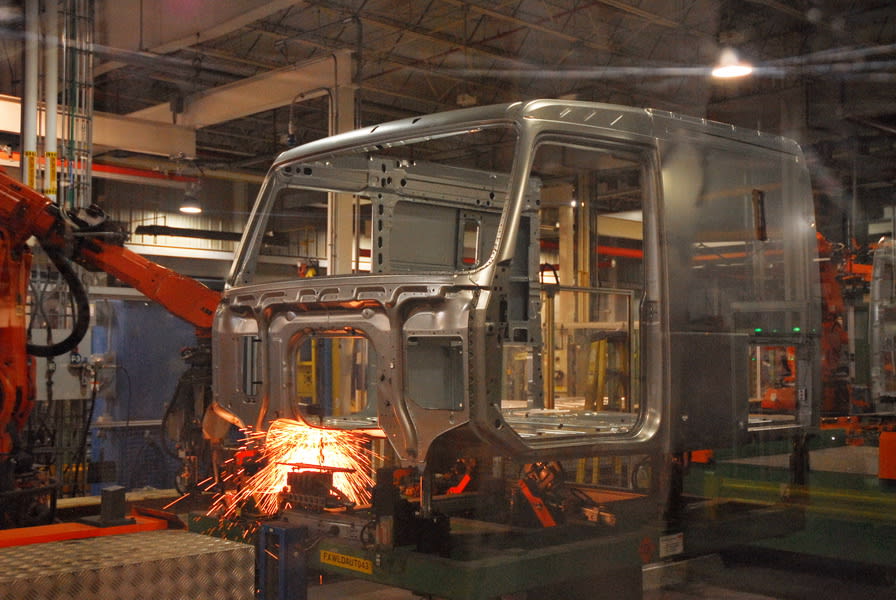
More trucking OEMs and suppliers are choosing to temporarily idle production facilities as part of a national effort to help stop the spread of the COVID-19 virus in the United States.
Photo: Jim Park
One of the strongest signals the country would begin the process of temporarily shuttering “non-essential” businesses and manufacturing operations to help contain the spread of COVID-19 came on March 18, when General Motors, FiatChrysler and Ford, as well as a host of foreign automakers, all announced they would suspend car and light truck production for two weeks.
Since then, many U.S. states and major cities have made announcements of either mandatory shutdowns or “shelter-in-place” ordinances in related efforts to limit the number of new patients infected by the COVID-19 virus. Other major corporations have followed suit, including Goodyear, Bridgestone and Michelin suspending production.
As of March 23, several trucking OEMs and suppliers had announced plans to idle production facilities in order to keep workers home in order to combat COVID-19.
OEMs Idle Their Plants
Volvo Trucks North America and Mack Trucks announced that both OEMs would be suspending production of new trucks for the immediate future. In a statement to HDT, a Volvo spokesperson said:
Although we have no reason to believe we have any cases of COVID-19 at our Volvo Trucks or Volvo Group powertrain manufacturing facilities, we have decided to temporarily suspend production as part of the effort to slow the spread of the virus in our communities. Effective today, Monday, March 23, we will suspend production through Friday, March 27; moving forward, we will monitor the situation and communicate additional decisions on a weekly basis. During this suspension, we will be exploring new ways of working and possible approaches to production that would allow for increased social distancing in the facility. The health and safety of our employees and communities will be our primary concern as we work to make the most informed decisions we can during this uncertain time.
A similar statement from Mack Trucks expressed the same overall theme, but noted that Mack production idled on March 19, and will continue until March 27.
On March 23, International announced it would suspend production at its truck assembly plant in Springfield, Ohio, for two weeks. The company said in a press release that the main issue it is dealing with are “disruptions to Navistar's supply chain that are resulting from the evolving COVID-19 pandemic.”
On March 20, Cummins announced that it would suspend production at its Midrange Engine Plant in Walesboro, Indiana, for two weeks in response to the decision by its customer Fiat Chrysler Automobiles to shut down pickup truck assembly until at least the end of March. Cummins noted that this move is a “consequence of the coronavirus pandemic.” For the moment, that is the only production facility the company is idling, as it noted in a press statement. "Possible causes for further shutdowns include changes in customer demand, shortfalls in supplier deliveries and the impact of government regulations or mandates.”
Daimler Trucks North America was forced to close its Detroit Powertrain campus in Redford, Michigan, after an employee tested positivefor the COVID-19 virus, the company said in an update sent out to trucking industry media outlets. But, a company spokesperson said, after cleaning and disinfecting the plant, it was scheduled to be back online on in production on March 23.
That statement also reaffirmed DTNA’s commitment to support its customers and dealers, with a media relations officer telling HDT that the OEM will “continue production at our truck plants across North America as long as possible.”
Daimler also noted that the U.S. Department of Homeland Security designated transportation equipment manufacturing as part of the nation’s Critical Manufacturing Sector. “As well," the statement noted, “the president’s coronavirus directive stresses the need for employees in companies such as ours to continue to work to support critical infrastructure as defined by the Department of Homeland Security.”
Moreover, Daimler said, “Our vehicles are used to support and maintain our country’s electrical, water treatment and wastewater treatment systems. Our vehicles are used to pick up and haul garbage from residential communities and commercial establishments. In summary, across the country, our trucks are needed to maintain our society. Our vehicles and their operations are critical.”
And late in the day on March 23, Paccar said it would suspend truck and engine production at its factories worldwide from March 24 until April 6. The company said it will review future actions on a regular basis and will continue to provide aftermarket support to its customers.
Editor’s note: This story has been updated to include the latest information from Paccar.
More Equipment

How Volvo Updated Its D13 for EPA 2027 [Watch]
Volvo’s updated D13 promises lower emissions without sacrificing performance or fuel economy. Take a closer look at what changed inside the engine in this HDT Spotlight video.
Read More →
Michelin Tire Improves Efficiency and Durability for Regional Fleets
The Michelin X Multi Energy D2 is a regional haul drive tire engineered to help fleets improve fuel efficiency, durability and traction in demanding stop-and-go operations.
Read More →
ZF Expands Commercial Vehicle Push in North America
ZF is expanding its North American commercial-vehicle presence with new transmission applications, electrification, trailer technology and autonomous-driving systems.
Read More →
Tesla Wants a Self-Driving Semi. Are Cameras Enough?
Could Tesla’s camera-only autonomous driving technology work on an 80,000-pound Semi? In this commentary, HDT's Deborah Lockridge takes a look at Tesla, Cybercab, and how autonomous trucks see the road.
Read More →
Kodiak: Driverless Long-Haul Truck Launch on Track for 2026
Kodiak AI says its driverless long-haul safety case is 93% complete and it remains on track to begin commercial operations by year-end 2026.
Read More →
What DOT’s Automated Vehicle Strategy Means for Trucking
The U.S. Department of Transportation issued a new automated-vehicle strategy that outlines plans for driverless-truck regulations, cross-state freight corridors, and federal safety standards.
Read More →
East Coast Port Launches $45M Electric Truck Push
The Port Authority of New York and New Jersey announced millions in incentives for zero-emission drayage trucks, yard tractors, and new charging hubs near the port.
Read More →
PlusAI Going Public to Fund Autonomous Truck Launch
A SPAC deal could provide PlusAI with up to $300 million as it works toward a 2027 commercial launch of factory-built autonomous trucks.
Read More →
NHTSA Moves to Rewrite Truck Fuel-Economy Rules
The National Highway Traffic Safety Administration says it lacks authority to regulate medium- and heavy-duty truck engines separately from complete vehicles, but the existing standards have not yet been eliminated.
Read More →
Detroit Opens Orders for EPA 2027 Engines
Detroit isn’t starting from scratch to meet EPA 2027 diesel emissions standards. Its Gen 6 DD13 and DD15 engines keep much of today’s platform while updating the fuel and aftertreatment systems.
Read More →