




Mexico Raises Ante in Cross-Border Trucking Dispute
Mexico escalated the fight over cross-border trucking this week by imposing import tariffs on an expanded list of U.S. products in retaliation for the U.S.'s failure to produce a plan to open the border
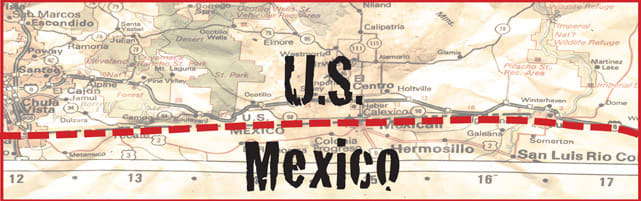
Mexico escalated the fight over cross-border trucking this week by imposing import tariffs on an expanded list of U.S. products in retaliation for the U.S.'s failure to produce a plan to open the border.
The move, which drew fire from Teamsters and owner-operators opposed to Mexican trucks providing long-haul service in the U.S., is apparently an attempt to put pressure on the Obama administration to act on its commitment to open the border.
"Mexico will continue to avail itself of all legal means to achieve full compliance by the United States under its commitments under the (North American Free Trade Agreement)," said the Mexican Embassy in a statement. At the same time, the statement continued, Mexico will continue to work with the administration and Congress to find a solution.
Last March Mexico imposed import tariffs on about 89 U.S. agricultural and industrial products after Congress cut off funds for a demonstration program in which a limited number of U.S. and Mexican carriers were permitted to engage in the trade. On Monday, Mexico announced it will revise and expand the list to 99 products.
DOT's Progress
Transportation Secretary Ray LaHood has been working on a plan to revive cross-border trucking but so far nothing has emerged. He said last May that the White House was vetting a plan he hoped take to Congress for clearance in June.
Yesterday DOT spokeswoman Olivia Alair said that the U.S. remains committed to working with Congress and Mexico to find a way forward.
"We believe we can find a solution that both addresses the concerns voiced by some in the U.S. Congress, and keeps us compliant with our international trade obligations. The U.S. Department of Transportation is developing a new proposal that will meet congressional concerns as well as our NAFTA commitments."
DOT does not have a schedule for when it will be able to announce the proposal, Alair said.
Mexico did not name the products added to the tariff list but among them is pork, according to the National Pork Producers Council.
Mexico bought $762 million worth of U.S. pork last year, the trade group said.
"Mexico's retaliation against U.S. pork will have negative economic consequences for America's pork producers," said NPPC President Sam Carney.
"We are extremely disappointed that our top volume export market has taken this action, but we're more disappointed that the United States is not living up to its trade obligations. That failure not only has hurt dozens of U.S. industries economically, but it could prompt other countries to think twice about entering into trade deals with the United States."
Other Reactions
U.S. Trade Representative Ron Kirk said in a statement that the U.S. is disappointed by the Mexican move.
"Mexico is an important U.S. export market and President Obama understands the economic pain that these tariffs cause for American farmers, companies and workers," Kirk said. "We are committed to continuing to work with members of Congress and our counterparts in Mexico to resolve the dispute and end these duties."
The Teamsters union wants the U.S. to challenge the Mexican tariffs, according to a statement by General President Jimmy Hoffa. The solution to the impasse, he said, is not to open the border but to renegotiate NAFTA.
The Owner-Operator Independent Drivers Association called on the administration to stand up to Mexican "bullying."
"If the U.S. Trade Representative had called out Mexico for their illegal tariffs more than a year ago, we would not be in this situation," said OOIDA Executive Vice President Todd Spencer in a statement. "It was irresponsible to allow it to go on for this long."
The Ongoing Battle
This is the latest development in a fight that has been going on for a decade.
Under NAFTA, the crossing was supposed to have been opened to border-state traffic in 1995 and to long-distance traffic in 2000. The opening was stalled until 2007 in part by difficult negotiations with Mexico but mainly by U.S. labor unions and owner-operator and citizen advocacy groups that oppose free trade, fear the loss of U.S. jobs and argue that Mexican trucks will not be safe.
In 2007 the Bush administration began a demonstration program under which a limited number of U.S. and Mexican carriers could conduct business across the border. The idea was to test the effectiveness of a safety management system devised by the Federal Motor Carrier Safety Administration, as a prelude to fully opening the border. This is the program that Congress killed last March.
The size and duration of the program did not permit a statistically valid assessment of Mexican safety capabilities, but an independent U.S. investigation in 2008 showed that the Mexican carriers in the program had not had any accidents and had much lower out-of-service rates for both drivers and trucks than U.S. carriers do.
More Equipment

ZF Expands Commercial Vehicle Push in North America
ZF is expanding its North American commercial-vehicle presence with new transmission applications, electrification, trailer technology and autonomous-driving systems.
Read More →
Tesla Wants a Self-Driving Semi. Are Cameras Enough?
Could Tesla’s camera-only autonomous driving technology work on an 80,000-pound Semi? In this commentary, HDT's Deborah Lockridge takes a look at Tesla, Cybercab, and how autonomous trucks see the road.
Read More →
Kodiak: Driverless Long-Haul Truck Launch on Track for 2026
Kodiak AI says its driverless long-haul safety case is 93% complete and it remains on track to begin commercial operations by year-end 2026.
Read More →
What DOT’s Automated Vehicle Strategy Means for Trucking
The U.S. Department of Transportation issued a new automated-vehicle strategy that outlines plans for driverless-truck regulations, cross-state freight corridors, and federal safety standards.
Read More →
East Coast Port Launches $45M Electric Truck Push
The Port Authority of New York and New Jersey announced millions in incentives for zero-emission drayage trucks, yard tractors, and new charging hubs near the port.
Read More →
PlusAI Going Public to Fund Autonomous Truck Launch
A SPAC deal could provide PlusAI with up to $300 million as it works toward a 2027 commercial launch of factory-built autonomous trucks.
Read More →
NHTSA Moves to Rewrite Truck Fuel-Economy Rules
The National Highway Traffic Safety Administration says it lacks authority to regulate medium- and heavy-duty truck engines separately from complete vehicles, but the existing standards have not yet been eliminated.
Read More →
Detroit Opens Orders for EPA 2027 Engines
Detroit isn’t starting from scratch to meet EPA 2027 diesel emissions standards. Its Gen 6 DD13 and DD15 engines keep much of today’s platform while updating the fuel and aftertreatment systems.
Read More →
Carrier Transicold Adds All-Electric TRU for Stationary Cold Storage
Carrier Transicold’s new Vector 8200 all-electric transport refrigeration unit gives fleets a diesel-free option for temporary refrigerated and frozen trailer storage.
Read More →
A Closer Look at Kenworth’s Electric T880E Vocational Truck [Video]
Learn more about Kenworth's T880E battery-electric vocational truck at the Paccar Technical Center, including its range, applications, upfitting considerations, and PTO options, in this HDT Spotlight video.
Read More →