




McLeod TMS Can Now Directly Manage Aurora Driverless Trucks
McLeod Software has integrated Aurora Driver into its proprietary transportation management system solution.

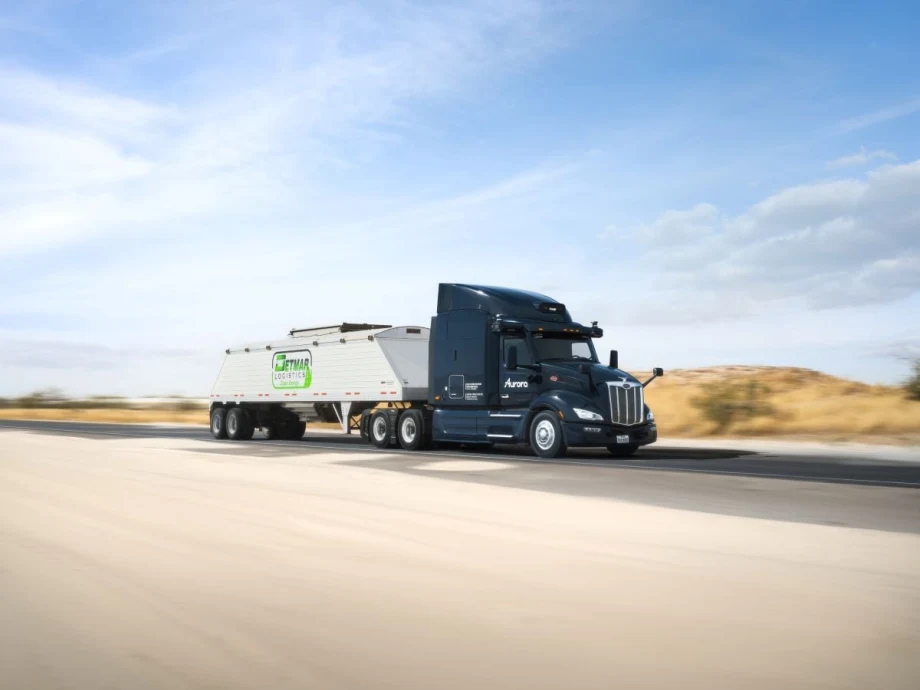
For eligible McLeod customers running version 21.1 or newer, Aurora autonomous capacity can now be tendered, tracked, and managed alongside conventional truckload operations.
Photo: Aurora
McLeod Software and Aurora Innovation have completed an API integration that allows carriers to book and manage driverless truck capacity directly within McLeod’s transportation management system.
According to the two companies, the integration embeds Aurora’s autonomous trucking service, powered by the Aurora Driver, into McLeod’s core workflow. This advance eliminates the need for separate portals or standalone tools.
For eligible McLeod customers running version 21.1 or newer, autonomous capacity can now be tendered, tracked, and managed alongside conventional truckload operations.
Smoother Autonomous Operations
According to McLeod, the move reflects a broader shift in how autonomous trucking technology is being commercialized. Autonomous operations are becoming less of a futuristic add-on and more of a capacity option fleets can deploy using the same tools they already rely on, the company said.
“In a market that demands constant innovation, we are proud to be the first TMS to put the power of autonomous trucking directly into the hands of our customers,” said Tom McLeod, founder and CEO of McLeod Software. He noted that the project was delivered ahead of schedule due to strong customer interest in accessing driverless truck capacity.
For Aurora, the integration is about removing friction at the operational level, the company said.
“We’ve turned driverless trucking technology into a practical, everyday service,” said Ossa Fisher, president of Aurora. “By embedding the Aurora Driver directly into the McLeod ecosystem, we are enabling carriers to easily adopt driverless trucks and immediately start optimizing their networks.”
From a fleet perspective, the key value proposition is simplicity, the companies said.
Dispatchers can tender autonomous loads from the same TMS screen they use for human-driven freight.
Once tendered, the Aurora Driver provides real-time location visibility, automated status updates, and delivery confirmation—mirroring the expectations fleets and shippers already have for conventional operations.
Minimizing Operational Disruptions
Russell Transport, an early adopter and longtime McLeod customer, is already using the integration to tender autonomous loads.
“The ability to tender autonomous loads through our existing McLeod dashboard has been a meaningful operational improvement,” said Rami Abdeljaber, executive vice president and chief operating officer at Russell Transport. “We are seeing efficiency gains without disrupting our operations. The integration is seamless, real-time, and operationally effective.”
That emphasis on minimizing disruption is critical, according to Abdeljaber. Many fleets remain cautious about autonomous trucks, not because of the technology itself, but because of the operational complexity involved in adopting it.
By keeping autonomous capacity inside established systems of record, McLeod and Aurora are addressing one of the industry’s biggest barriers to adoption.
The integration also underscores a larger trend in autonomous trucking. The success of this emerging technology increasingly depends on how well the technology fits into existing freight networks, not just how well it performs on the road.
Autonomous trucks still represent a small share of overall capacity, but tools like this are designed to make that capacity easier to deploy where it makes sense—particularly on repeatable lanes.
More Fleet Management

Color Match Smarter: Tools That Restore & Perform
For fleet managers and collision repair professionals keeping heavy-duty trucks on the road, getting the color right the first time isn't just about appearance — it's about efficiency, turnaround time, and bottom-line results. Discover how today's digital color tools are transforming the repair process from guesswork to precision.
Read More →
FMCSA Pauses Biennial-Update Enforcement Amid Motus Transition
Carriers whose updates were due on or after June 1 have more time, while FMCSA works to stabilize its new registration system and warns of phishing sites impersonating its new carrier registration system, Motus.
Read More →
2026 Blueprint for Countering Smarter Supply Chain Theft
Cargo theft is no longer just the cost of doing business. It's a multi-billion-dollar criminal enterprise exploiting vulnerabilities across your fleet, drivers, and supply chain.
Read More →


How Telematics Improves Visibility, Control, and Performance in Refrigerated Fleets
Explore how telematics help refrigerated fleets improve visibility, uptime, efficiency, compliance, and cargo protection across connected cold chain operations.
Read More →
What the U.S.-Canada Trade War Means for Trucking
Escalating U.S.-Canada tariffs could disrupt cross-border freight, reduce truck volumes, raise costs, and create new uncertainty for carriers on both sides of the border.
Read More →
What Are Trucking’s Top Concerns for 2026?
The American Transportation Research Institute wants to know what's worrying trucking fleet managers, drivers, and other stakeholders in its annual Industry Issues survey.
Read More →
American Trucking Associations Looks for a New Leader
ATA President and CEO Chris Spear abruptly left his job at the association on August 21, at a pivotal time for the trucking industry.
Read More →
Public Wi-Fi Cybersecurity Risks: How Truck Drivers and Fleets Can Protect Their Data
Public Wi-Fi can expose truck drivers and fleets to credential theft, malware, and other cyber threats. Here’s how to reduce the risk on the road.
Read More →
For Nicky Cupp, Fleet Innovation Starts With Frustration
HDT Truck Fleet Innovator Nicky Cupp turns everyday pain points at Fraley & Schilling into opportunities for better technology and smarter processes.
Read More →
Adam Buttgenbach’s Approach to Electric Trucks: Start With Where They Fit
HDT Truck Fleet Innovator Adam Buttgenbach helped PepsiCo build one of North America’s largest EV fleets by focusing on where electric trucks make operational sense.
Read More →