




Maxion Adds Lightweight Steel Wheel, Telematics, Shows Concept Steer Wheel Cover
Maxion unveiled several new commercial vehicle wheels and related innovations designed to tackle some of the challenges faced by North American fleets.

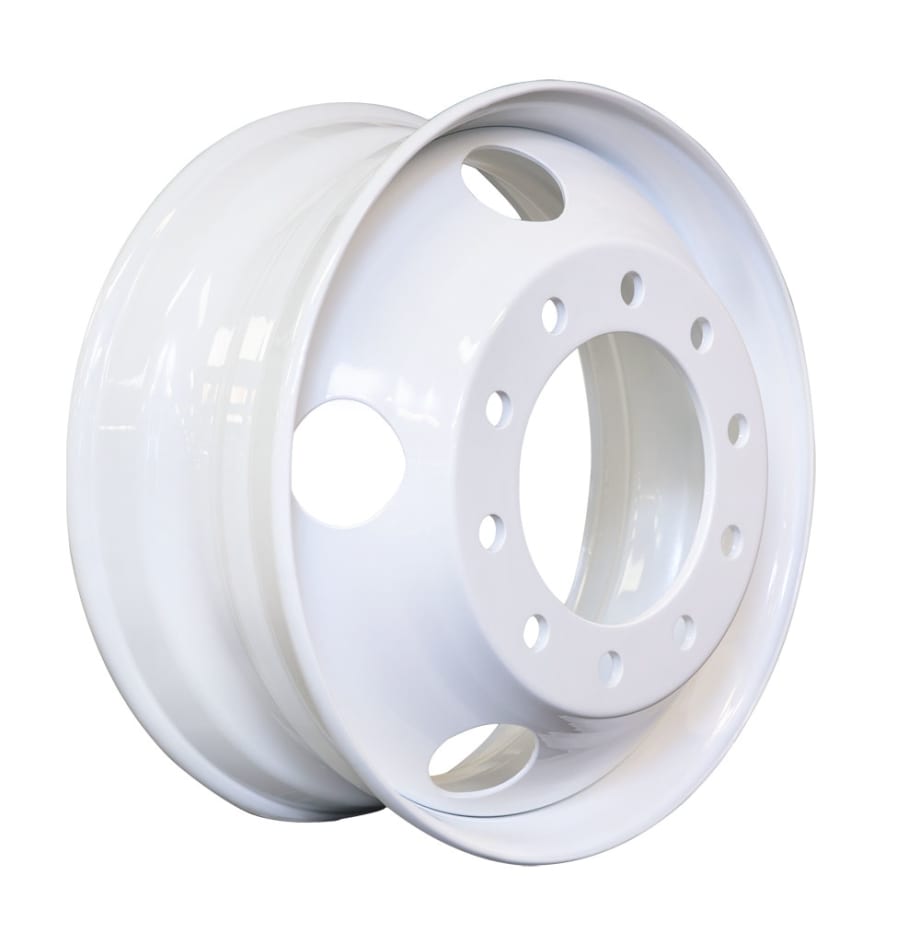
Maxion's latest steel wheel is lighter and stronger than before.
Photo: Maxion
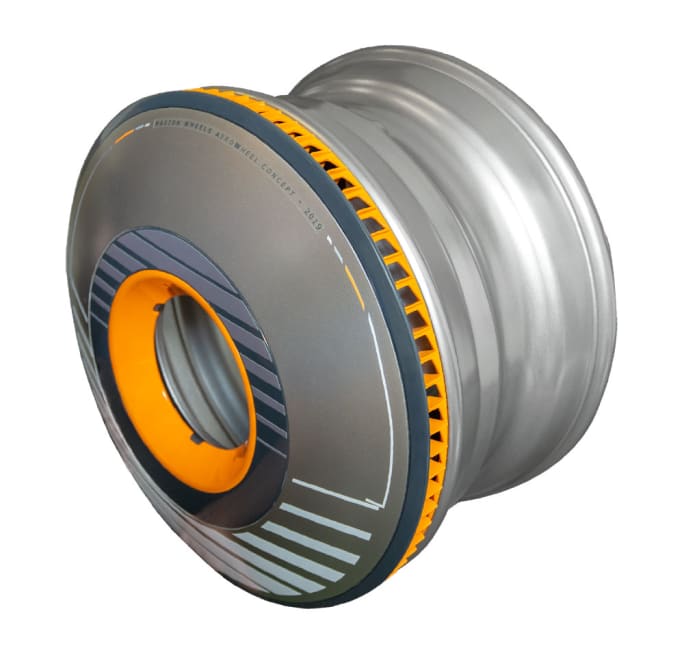
Maxion's concept aerodynamic wheel cover for the steer axle would allow for brake cooling.
Photo: Maxion
Maxion unveiled several new commercial vehicle wheels and related innovations designed to tackle some of the challenges faced by North American fleets.
Speaking to reporters at the North American Commercial Vehicle Show in Atlanta Oct. 29, Don Polk, president of Maxion’s Americas business unit, explained, “The trucking industry as we all know is a very dynamic one,” with operating costs continuing to rise, whether that be fuel costs, costs related to legislative mandates, or direct and indirect costs related to safety. “As well when you layer on top the future and all the unknowns related to it, including a tsunami of technologies... Maxion Wheels saw an opportunity. How can the wheel today be part of the solution for the challenges in our industry in the future?”
‘Tough and Light’ Steel Wheel
Weighing in at 64 pounds, Maxion Wheels’ newest truck wheel for North America is the “toughest and lightest” standard 22.5 x 8.25 commercial vehicle steel wheel in the market, according to company officials.
Available in 2020, the new wheel weighs less than its predecessor – yet is stronger as a result of optimized design, engineering and flow forming technologies.
With a 7,400-pound wheel load rating, the new wheel features a new circular hand hole shape, rather than the traditional Maxion Wheels’ D-shape. Changing the hand hole, combined with design optimization analysis, reduced wheel structural stresses by more than 10% for a more efficient and durable wheel.
“Improved fuel efficiency and fewer emissions are just two benefits that come from the lighter wheel,” Polk said.
Smart Wheel Connectivity
Maxion is collaborating with ZF Openmatics to develop what it says is the industry’s first fully integrated wheel connectivity solution. Initially targeting the commercial vehicle market, the multiservice sensor will capture, analyze and broadcast key data such as tire pressure and temperature, wheel load and other wheel and tire performance metrics to drivers, fleet managers, and infrastructure authorities.
The Smart Wheel Connectivity Solution combines Maxion Wheels’ MaxSmart wheel sensor technology with ZF Openmatics’ integrated TAG sensor platform. Mounted directly to each wheel rim of the vehicle, the durable Bluetooth tags track humidity, tire temperature, air pressure and vehicle load as well as wheel position, speed and vibration across nine axis.
Information is collected real time and wirelessly transmitted to the vehicle’s telematics onboard unit before being transferred to the ZF Cloud. The data can then be read and analyzed via PC, smart devices, or sent to a third-party system of the customer’s choice.
The new partnership plans to complete feasibility studies during the first half of 2020.
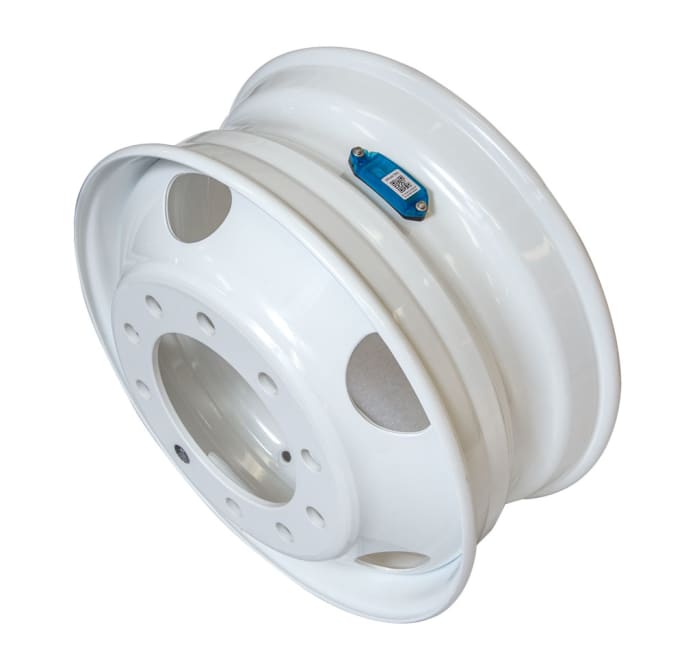
With a tag mounted on the wheel and a telematics partnership with ZF, Maxion will be able to give fleets real time data on their tires.
Photo: Maxion
Concept Steer Wheel Cover
Also showcased was a drag-reducing, patent-pending aerodynamic concept wheel cover for the steer axle, which Maxion is calling Aerowheel.
Using computational fluid dynamics, the cover will significantly reduce drag, improving fuel efficiency, while at the same time allowing for needed brake cooling.
Currently, aerodynamic wheel covers available on the market are limited to drive axle and trailer tires.
More Equipment

How Volvo Updated Its D13 for EPA 2027 [Watch]
Volvo’s updated D13 promises lower emissions without sacrificing performance or fuel economy. Take a closer look at what changed inside the engine in this HDT Spotlight video.
Read More →
Michelin Tire Improves Efficiency and Durability for Regional Fleets
The Michelin X Multi Energy D2 is a regional haul drive tire engineered to help fleets improve fuel efficiency, durability and traction in demanding stop-and-go operations.
Read More →
ZF Expands Commercial Vehicle Push in North America
ZF is expanding its North American commercial-vehicle presence with new transmission applications, electrification, trailer technology and autonomous-driving systems.
Read More →
Tesla Wants a Self-Driving Semi. Are Cameras Enough?
Could Tesla’s camera-only autonomous driving technology work on an 80,000-pound Semi? In this commentary, HDT's Deborah Lockridge takes a look at Tesla, Cybercab, and how autonomous trucks see the road.
Read More →
Kodiak: Driverless Long-Haul Truck Launch on Track for 2026
Kodiak AI says its driverless long-haul safety case is 93% complete and it remains on track to begin commercial operations by year-end 2026.
Read More →
What DOT’s Automated Vehicle Strategy Means for Trucking
The U.S. Department of Transportation issued a new automated-vehicle strategy that outlines plans for driverless-truck regulations, cross-state freight corridors, and federal safety standards.
Read More →
East Coast Port Launches $45M Electric Truck Push
The Port Authority of New York and New Jersey announced millions in incentives for zero-emission drayage trucks, yard tractors, and new charging hubs near the port.
Read More →
PlusAI Going Public to Fund Autonomous Truck Launch
A SPAC deal could provide PlusAI with up to $300 million as it works toward a 2027 commercial launch of factory-built autonomous trucks.
Read More →
NHTSA Moves to Rewrite Truck Fuel-Economy Rules
The National Highway Traffic Safety Administration says it lacks authority to regulate medium- and heavy-duty truck engines separately from complete vehicles, but the existing standards have not yet been eliminated.
Read More →
Detroit Opens Orders for EPA 2027 Engines
Detroit isn’t starting from scratch to meet EPA 2027 diesel emissions standards. Its Gen 6 DD13 and DD15 engines keep much of today’s platform while updating the fuel and aftertreatment systems.
Read More →