




Manufacturing, Other Economic Indicators Increase
Business within the nation’s manufacturing sector has expanded for the first time in 18 months, and there’s better news when it comes to consumer spending, personal income and construction spending
Business within the nation’s manufacturing sector has expanded for the first time in 18 months, and there’s better news when it comes to consumer spending, personal income and construction spending.
The Institute of Supply Management, formerly know as the National Association of Purchasing Management, released figures Friday morning showing its index of business activity rose to 54.7 in February from 49.9 in January. The orders index rose to 62.8 from 55.3 and the production index increased to 61.2 from 52.0. An index above 50 indicates expansion, while a figure below 50 shows contraction.
Newport Communications Senior Economist Jim Haughey says the numbers are consistent with previous reports of a big jump in January manufacturing sales and a much slower pace of manufacturing layoffs.
“The interpretation has to be that the manufacturing recession is over, although some high tech and capital goods industries have yet to recover.”
The ISM index for new export orders barely pushed above 50 in February, meaning the domestic economy is recovering quicker than the export economy, according to Haughey. However, the latest news from Asia is encouraging. Several countries have raised their official GDP estimates for 2002, and even sluggish Japan reported a 0.2% decline in the unemployment rate to 5.3%. However, the news from Europe is at best neutral, Haughey says. Inventories continue to decline as in the U.S., suggesting a manufacturing recovery beginning soon. But Europe lacks the booming consumer confidence and spending of the U.S. Retail sales rose only 1.3% in Europe last year with a 0.6% decline in December.
Haughey says carriers specialized to foreign trade will see recovery delayed several months, compared to carriers hauling domestic products on domestic routes.
Meantime, a separate report released from the University of Michigan showed consumers’ feelings about the economy were down slightly. The university's consumer sentiment index slipped to 90.7 from 93.0 in January, revised down slightly from a first reported 90.9 reading.
Haughey says the figure is disturbing but not critical. “It is probably due to the usual spread of layoffs at the end of a downturn from manufacturing to distribution, service, finance and government. These are much larger sectors of the economy. Improvements in confidence will be restrained through the summer as some business sectors and government feel the delayed impact of the recession through sharply lower profits and tax collections.”
However, consumers still appear to be spending rather freely. A U.S. Commerce Department report released Friday indicated consumer spending, which accounts for about two-thirds of the nations’ economy, increased 0.4% in January, its best showing since October. Personal income also rose 0.4%, the biggest increase in six months.
Much of this increase Haughey attributes to new lower income tax withholding rates and the annual inflation-based boost in federal wages and income support programs.
“The biggest gain was for non-durable goods,” says Haughey, “the key source of freight for dry vans.”
Lastly, another Commerce Department report on the same day showed spending on construction increased at its fastest rate in a year. The value of new construction in the United States jumped 1.5% in January, the biggest increase since January 2001's 2.5%.
Haughey says much of the increase was due to unseasonably warm weather permitting more work in the North.
“The weather remained warm in February, so another gain is likely next month. While strong construction spending, especially for housing, moderated the 2001 economic slowdown, there is little left to contribute to the recovery in 2002. Expect construction to lag the rest of the economy this year with only marginal growth. The spring may be the weakest period, because warm weather permitted some work to be advanced to the winter.”
More Fleet Management

What Trucking Events are Happening in 2026?
Looking for trucking-related conventions, expos, and other events? Heavy Duty Trucking has developed this list of national and larger regional trucking shows and events.
Read More →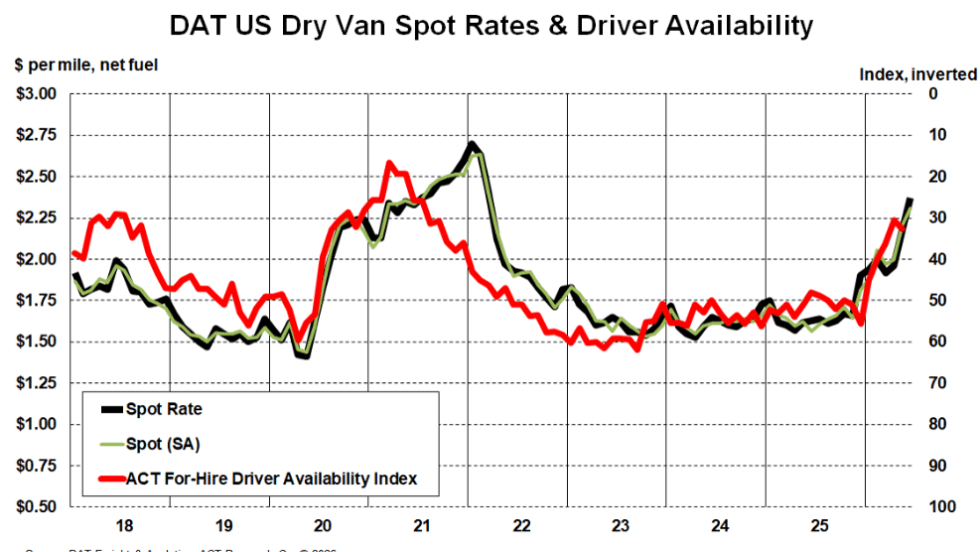
Truckload Rates Keep Rising as Tight Capacity Fuels Freight Market Recovery
Spot and contract rates continued climbing in May and June, not because freight demand is surging, but because fewer trucks and drivers are available.
Read More →
What Geotab's New AI Connector Means for Fleets
Fleets can now ask their usual AI assistants questions about maintenance, safety, fuel use, and vehicle performance, using their live Geotab data, and take action on the answers without leaving their preferred AI tool.
Read More →
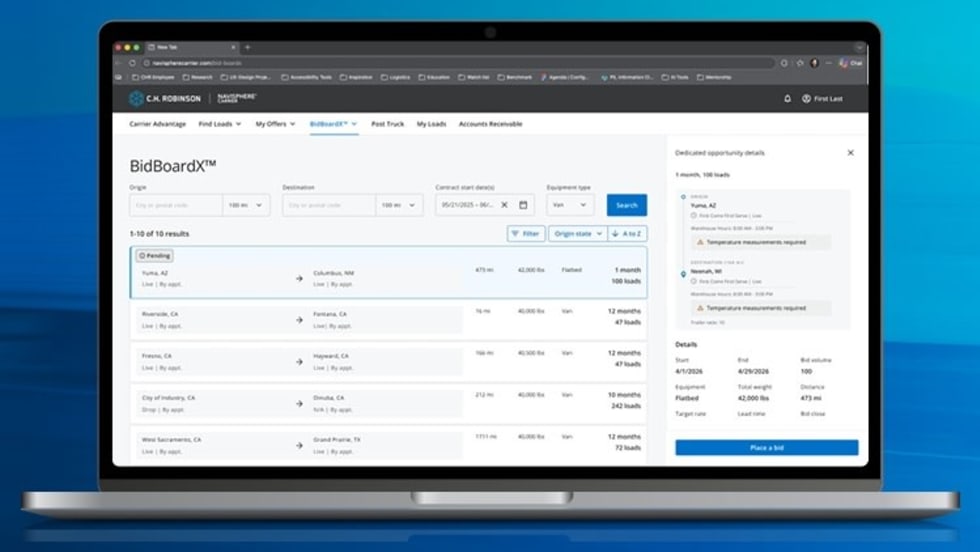
New C.H. Robinson Tool Opens Door to More Predictable Freight
BidBoardX lets carriers search, bid on, and secure committed freight opportunities through a single digital marketplace.
Read More →
New York City's Microhub Project is Delivering Results
Trucking, last-mile delivery companies, and environmental advocates like what they are seeing so far with New York's microhub program.
Read More →
Why Truck Detention Keeps Costing Fleets Time and Money
A 2024 ATRI study found detention affects nearly 40% of truckload stops and costs the industry more than $15 billion annually. Despite the toll on drivers, fleets, and supply chains, the problem remains stubbornly persistent.
Read More →
Time is Running Out to Apply for Exclusive HDT Event
Heavy Duty Trucking Exchange brings fleet managers and suppliers together for the deeper conversations that lead to ideas, partnerships, and solutions. Time is running out to apply for the September event.
Read More →
Amazon Launches Less-Than-Truckload Freight Offering for All Businesses
This launch is the latest addition to Amazon Supply Chain Services, a portfolio of supply chain capabilities from Amazon, including freight, distribution, fulfillment, and parcel shipping.
Read More →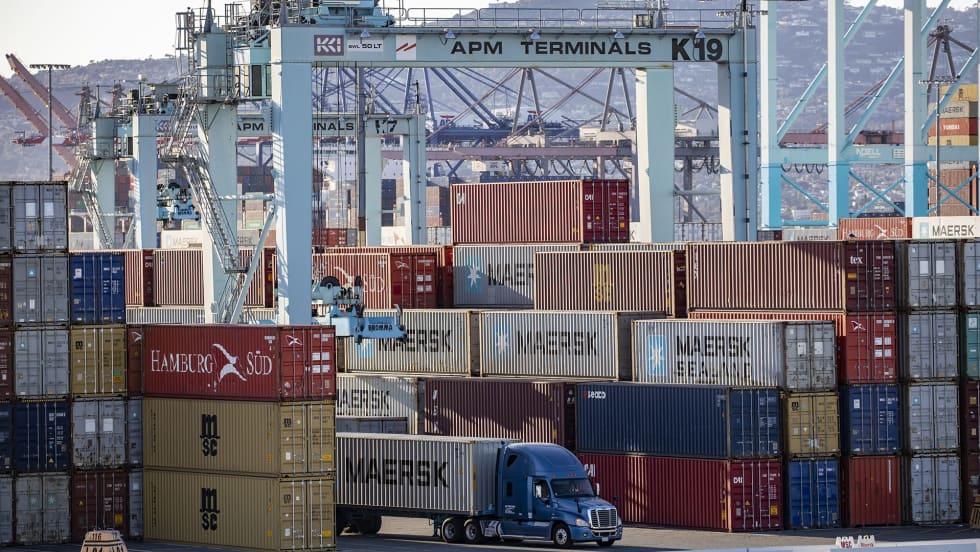
Import Cargo Volume to See Year-Over-Year Gain Again in June, Then Remain Below 2025 Levels Into Fall
After July, the report predicts a weakening in import volume as consumer uncertainty remains high and the impact of increasing inflation takes its toll.
Read More →
AUCTION OF EQUITY INTEREST IN HEAVY HAUL TRUCKING COMPANY!!
Mark your calendar: June 30, 2026 (10:00 a.m. PDT). A 37.5% ownership interest in MagnaTrans, LLC, a California limited liability company doing business as Magna Transportation Group, will be sold in an in-person and online auction to the highest bidder or bidders under Article 9 of the Uniform Commercial Code. The Rancho Cucamonga-based heavy haul and over-dimensional trucking company operates across California, Oregon, and Arizona.
Read More →