




Manufacturers Call for Infrastructure Investment
A new study by the National Association of Manufacturers puts forward the case for infrastructure investment as a stimulus for economic growth. Long-term investment will increase employment and grow Gross Domestic Product by 1.3% over the next five years and almost 3% over the next 15 years, according to the study.

Photo: Oregon DOT via Wikemedia Commons

Photo: Oregon DOT via Wikemedia Commons
A new study by the National Association of Manufacturers puts forward the case for infrastructure investment as a stimulus for economic growth.
Long-term investment will increase employment and grow Gross Domestic Product by 1.3% over the next five years and almost 3% over the next 15 years, according to the study.
There would be a three-to-one return on the investment over the next 15 years, as well as an increase in workers’ take-home pay, the study found.
“The United States is stuck in a decade-long period of decline that will eventually harm job creation, future productivity and our ability to compete head-to-head with companies all over the globe,” said NAM president and CEO Jay Timmons in a statement.
“Manufacturers call on Congress to consider this sobering data as it acts to fulfill its well-established responsibility of facilitating commerce in the United States,” Timmons said.
“We need legislation passed to help fund transportation and infrastructure.”
The study comes as Congress moves toward the next phase of the ongoing political struggle over how to preserve and improve the national transportation infrastructure.
Earlier this year legislators punted the key question of infrastructure funding with a bill that maintains the federal transportation program as is until next May.
While some in Congress are agitating for funding action during the lame-duck session following the November mid-term election, others would rather see drastic cuts in federal fuel taxes and devolution of the federal transportation program to the states.
U.S. manufacturers are aligned with the business community at large, including trucking interests, in support of robust reinvestment in infrastructure.
The NAM study found that investment in all infrastructure, including highways, grew annually during the 50 years up to 2003, but then contracted sharply by more than 1%.
“This investment expenditure has lagged GDP growth by a whopping three percentage points on average,” the study says.
“In total, the volume of public infrastructure investment was 10.5% lower in 2012 compared to 2003, and available data indicate it has fallen further since then.”
The investment decline is even worse for highways and roads specifically – down almost 20% in 2012 compared to 2003, the study says.
The effect is that the U.S. is not able to gain ground in improving the infrastructure base, the study says.
What’s needed is a more focused and results-driven effort to expand and sustain higher levels of investment, the group said.
“Manufacturers that depend heavily on trucking for receiving supplies and delivering products would benefit the most from this boost to competitiveness.”
The study also says it is not necessary to stick with traditional approaches to funding, delivering and operating infrastructure.
Echoing themes established in recent infrastructure legislation, the study says investments can be tied to net social benefits and can be made more efficient by improving environmental processes. Also, there is a place for private as well and public investment and management.
“Widespread access to high-quality infrastructure is indispensable to the United States’ economic development and standard of living,” the study says.
“A more focused and outcomes-driven infrastructure effort is needed.”
More Fleet Management

What the U.S.-Canada Trade War Means for Trucking
Escalating U.S.-Canada tariffs could disrupt cross-border freight, reduce truck volumes, raise costs, and create new uncertainty for carriers on both sides of the border.
Read More →
What Are Trucking’s Top Concerns for 2026?
The American Transportation Research Institute wants to know what's worrying trucking fleet managers, drivers, and other stakeholders in its annual Industry Issues survey.
Read More →
American Trucking Associations Looks for a New Leader
ATA President and CEO Chris Spear abruptly left his job at the association on August 21, at a pivotal time for the trucking industry.
Read More →
Public Wi-Fi Cybersecurity Risks: How Truck Drivers and Fleets Can Protect Their Data
Public Wi-Fi can expose truck drivers and fleets to credential theft, malware, and other cyber threats. Here’s how to reduce the risk on the road.
Read More →
For Nicky Cupp, Fleet Innovation Starts With Frustration
HDT Truck Fleet Innovator Nicky Cupp turns everyday pain points at Fraley & Schilling into opportunities for better technology and smarter processes.
Read More →
Adam Buttgenbach’s Approach to Electric Trucks: Start With Where They Fit
HDT Truck Fleet Innovator Adam Buttgenbach helped PepsiCo build one of North America’s largest EV fleets by focusing on where electric trucks make operational sense.
Read More →
Deen Albert: Let Automation Do the Math, People Make the Decisions
HDT Truck Fleet Innovator Deen Albert makes sure people are still at the heart of operations at Grand Island Express, even while adopting artificial intelligence tools. AI-assisted dispatch helped boost revenue 25% with the same number of trucks.
Read More →
Trimble’s New AI Agent Takes Aim at Fleet Back-Office Busywork
Arc Agent works across Trimble TMS products to automate repetitive tasks such as freight orders, maintenance, invoices, fuel costs and more.
Read More →
How HDT’s 2026 Truck Fleet Innovators Are Rethinking Fleet Operations
Meet five trucking leaders who are challenging assumptions, solving operational problems, and putting innovative ideas to work.
Read More →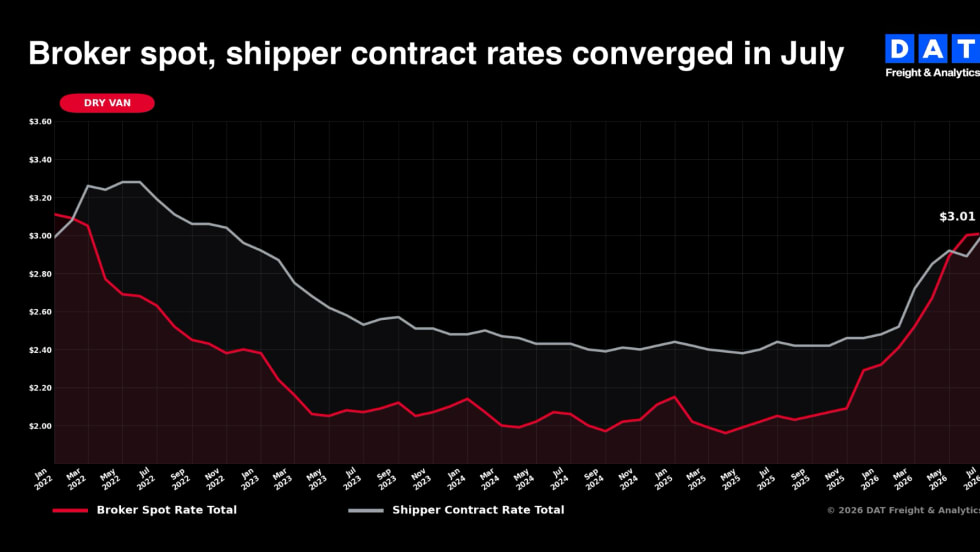
Tight Trucking Capacity Pushes Rates Higher Even as Freight Volumes Fall
“Spot rates moving ahead of contract rates have historically signaled a tightening market, but we haven’t seen a capacity-driven market quite like this one,” said DAT's Dean Croke.
Read More →