




Mahle Showcases ZEV Innovations at IAA 2024
Mahle is one of the fastest-growing suppliers of zero-emission powertrain components to the global trucking industry. At IAA 2024, the company showcased a host of new vehicle components and technology for fuel cell trucks.


Mahle's new fan for electric vehicles was designed using the characteristics of owl feathers to reduce noise.
Photo: Mahle
At the 2024 IAA commercial vehicle show in Hannover, Germany, Mahle showcased a complete system for a fuel-cell truck. The new system includes fuel cell peripherals, thermal management, and a fully functional heavy-duty electric axle. More innovations were highlighted that also apply to battery-electric commercial vehicles.
Mahle is a technology group that develops components and systems for battery-electric and fuel cell vehicles. The company is also working on new internal combustion engine technologies that run on hydrogen and other renewable fuels.
Other product innovations Mahle displayed included a high-performance, fuel-saving evaporative cooling system for demanding fuel cell and electric vehicles, as well as a bionic fan that makes an electric truck considerably quieter at full load or during rapid charging by halving the sound pressure level.
“We are committed to shaping a sustainable transportation sector with a view to strengthening the foundations for economic growth,” said Arnd Franz, chairman of the Mahle management board and CEO.
Why Mahle is a Growing Player in the ZEV Business
In a roundtable discussion on the state of the industry with journalists, Franz emphasized that the growing electrification of the transportation sector offered considerable potential for the company.
He said that the volume of Mahle components per vehicle was twice as high in the case of battery-electric trucks as with conventional internal combustion engine trucks and would be doubled once again in the case of fuel cell trucks.
The group’s customers currently include more than 120 international commercial vehicle brands in the on-highway and off-highway segments. The commercial vehicle sector accounts for about one-fifth of Mahle’s OEM business and the share is growing.
At IAA, Franz noted that Mahle is showcasing its systemic approach to a fuel cell truck with fuel cell peripherals, thermal management and a fully functional heavy-duty electric axle to visualize the interaction and interdependencies between individual product groups.
Mahle engineers have developed two, fully integrated Superior Continuous Torque (SCT) electric motors with liquid management systems (without external piping and tubes) into its heavy-duty electric axle design.

Mahle CEO Arnd Franz talks with journalists during a roundtable discussion at the 2024 IAA commercial vehicle show in Hannover, Germany.
Photo: Jack Roberts
The SCT (Superior Continuous Torque) electric motor delivers continuous output of 480 kW and efficiency of 92%. Franz said this makes it the ideal electric drive system for heavy-duty traffic in battery-electric trucks and fuel cell applications.
With the electric axle, Mahle can deliver 35,000 Nm of torque to the wheels. With that power configuration, Franz said a 35-ton fuel cell truck could cross Europe’s mountainous Brenner pass from Innsbruck to Bolzano with a time saving of 3.5 minutes — or 10% faster than a diesel truck.
Further details of the SCT electric motor include:
High power delivery an unlimited time
Small, light, and efficient
Available without rare earth metals, if requested by the customer
Suitable for cars, commercial vehicles, construction machinery and tractors
Can be combined with a magnet-free contactless transmitter electric motor
World Debut of Innovative Evaporative Cooling System for EVs
A key component for thermal management is the newly developed evaporative cooling system. IAA marks the world debut of this new innovation.
The evaporative cooling system uses the cooling effect of evaporating water. Water is sprayed onto the coolant cooler via a grating, ensuring optimum temperature control for the fuel cell.
Franz said the benefits of an evaporative cooling system for electric motors include:
Up to 50 kW more cooling performance in the same installation space
Allows the fan rating to be reduced; for a 300 kW fuel cell truck this results in a smaller fan motor and additional propulsion power of 25 kW or plus 8%.
"The water used in the evaporaton process comes from the fuel cell itself," Franz explained.
Hydrogen fuel cells create water as a byproduct of the chemical process that creates electricity to power a vehicle.
"We have very clean water coming from the fuel cell that is sprayed on the cooling system," Franz continued. "And that dramatically increases the efficiency and power of the cooling module."
Mahle Looks to Animal World for Quiet Bionic Cooling Fan
Another critical design feature is a new, bionic cooling fan. This new fan was designed to reduce loud fan noises of commercial vehicles that may create a nuisance under full load or during recharging at night in residential areas or at rest areas. This new component for fuel cell and electric vehicles halves fan noise on average, according to Mahle.
Bionic means the design was based on the animal world. With the help of artificial intelligence, the Mahle bionic fan was designed based on the flight characteristics of owl feathers. Franz said Mahle engineers took the feathers of an owl, one of the most silently flying birds, as their model because owl feathers have natural noise-reducing qualities.
Accoridng to Franz, the Mahle bionic fan can:
Reduce truck fan noise by up to 4 dB(A) – more than halving the sound pressure level
10% efficiency improvement
Deliver 10% weight reduction
Can be rated from 300 watts to 35 kW
Can be used in a broad range of applications, from small electric cars to especially demanding commercial vehicles with fuel cells and battery-electric drive systems.
More Fuel Smarts

Why Diesel Price Relief Efforts May Fall Short
Diesel prices have eased from September’s record high, but doubts about additional Russian supply and limits on dyed-diesel tax relief mean trucking fleets still face expensive fuel. And prices could go higher.
Read More →
Why Small Fuel Savings Matter in Trucking
Can better fuel economy help pay for driver raises? In this podcast, GP Transco explains how small efficiency gains create room to reinvest in its people.
Read More →
How GP Transco Cuts Trucking Fuel Costs, a Tenth of a Gallon at a Time
What’s another tenth of a mile per gallon worth? GP Transco shares how equipment upgrades and driver coaching turn small gains into meaningful fuel savings.
Read More →
Electric Yard Tractors Move Beyond Pilots
Operating-cost savings have overtaken sustainability goals as the leading reason surveyed fleets are adopting battery-electric terminal tractors, according to new NACFE research.
Read More →
Geotab Links Fleet Card to Vehicle Data
The new card combines fuel discounts with telematics-based purchase controls. Geotab’s analysis also points to potential savings from choosing lower-priced fuel stops.
Read More →
Fleet Economics Shape Electric Truck Outlook
ACT Research expects costs, charging infrastructure, and technology improvements to drive zero-emission commercial vehicle adoption as federal regulations and incentives retreat.
Read More →
Wex Adds Cardless Fuel Payments for Over-the-Road Customers
A new fuel card feature for Wex customers offers convenience and security.
Read More →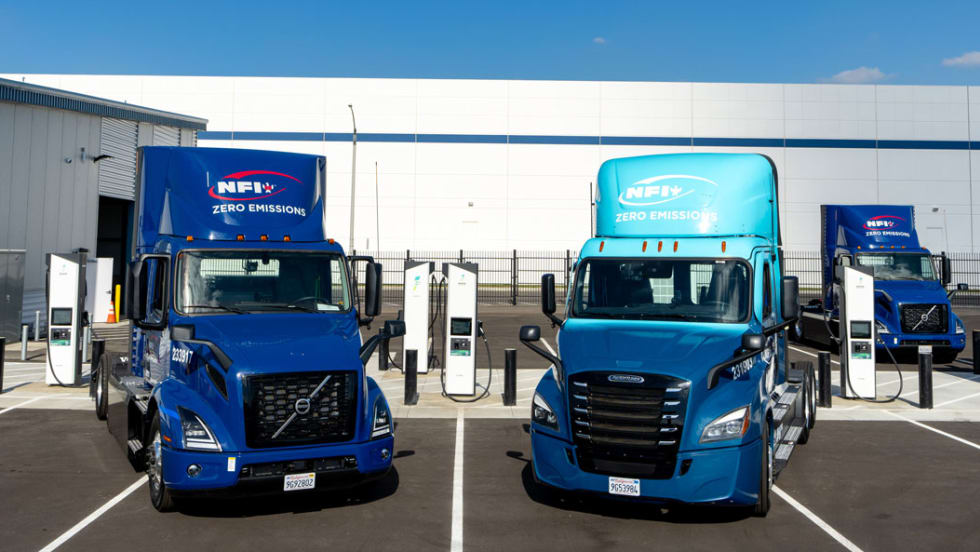
New California Law Could Shed Light on Electric Truck Prices
Why do battery-electric Class 8 trucks remain so expensive? A California bill signed by Gov. Gavin Newsom would give fleets and state agencies more visibility into what manufacturers charge.
Read More →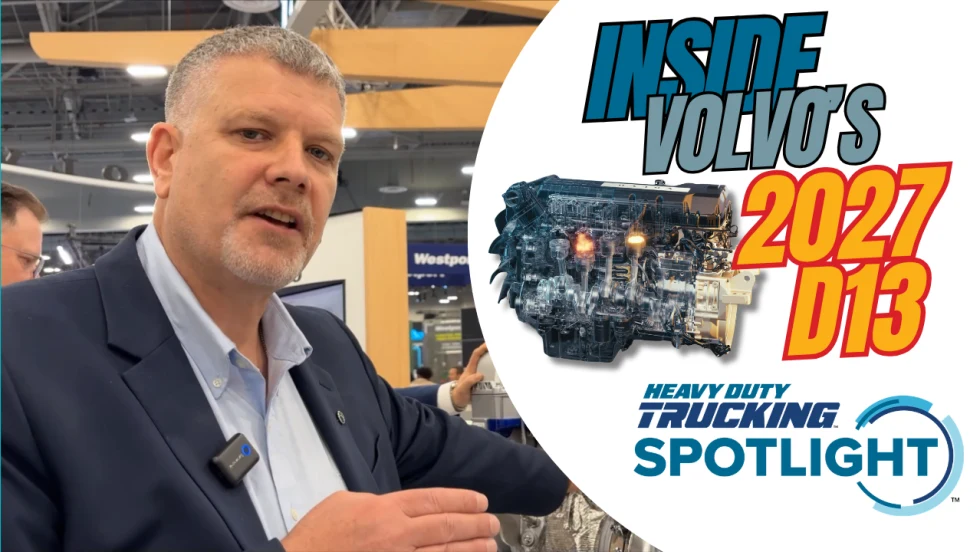
How Volvo Updated Its D13 for EPA 2027 [Watch]
Volvo’s updated D13 promises lower emissions without sacrificing performance or fuel economy. Take a closer look at what changed inside the engine in this HDT Spotlight video.
Read More →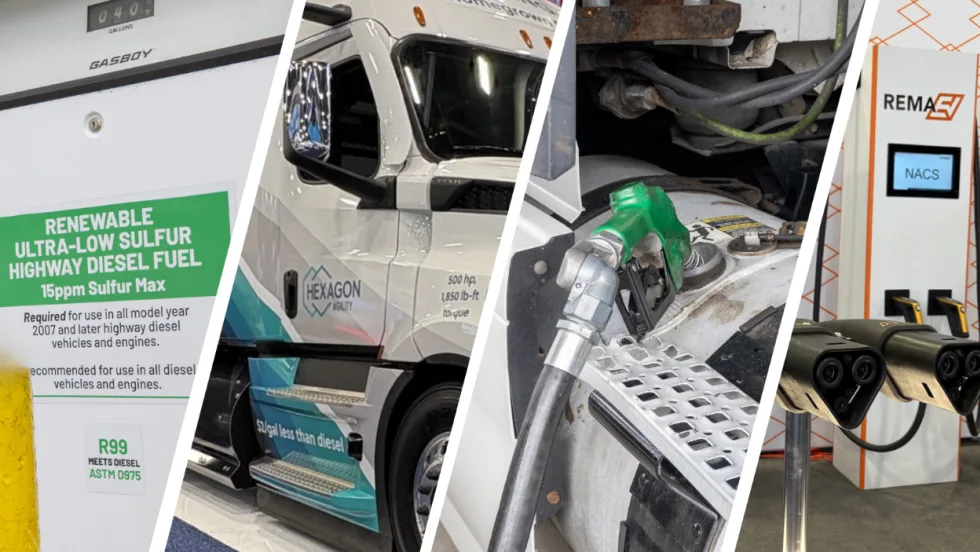
Diesel Price Spike Shortens Payback for Natural Gas Trucks, Report Says
Energy Vision estimates fleets could recover the higher purchase price of an RNG-fueled Class 8 tractor in 1.3 to 2.8 years under current fuel-price scenarios.
Read More →