





Related: Backhaul Assist Helps Shippers and Carriers Collaborate on Capacity Utilization
Lanehub Rewarding Shippers for Connecting Carriers With New Customers
Lanehub, a collaborative transportation network that helps shippers and carriers team up to optimize capacity on recurring freight lanes, is adding incentives to reward shippers that help their current carriers team up with other shippers that need them for a backhaul lane.
June 17, 2019
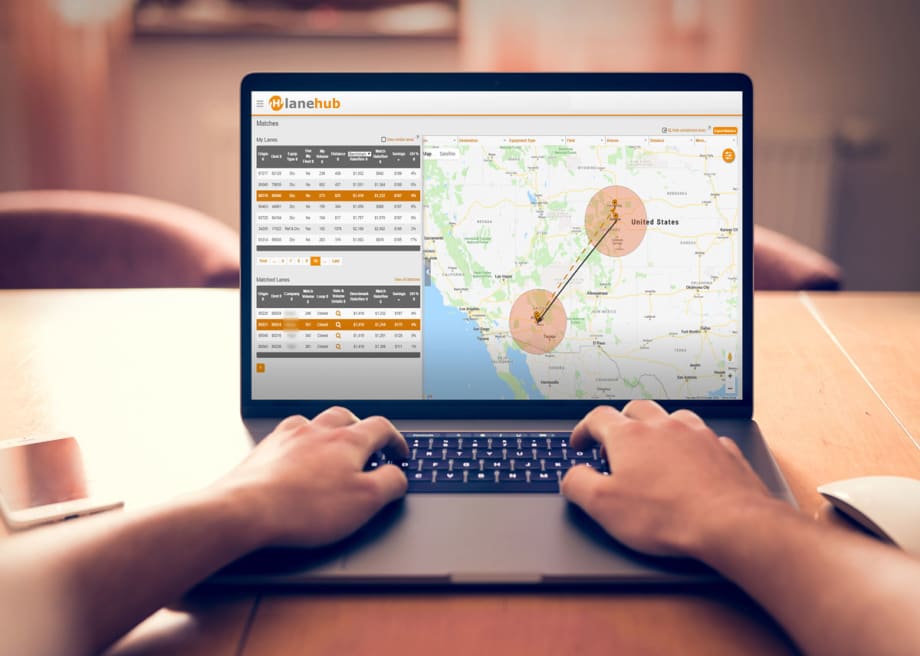
Lanehub helps shippers collaborate with each other and with their private fleets and contract carriers to reduce empty miles.
Photo: Lanehub
2 min to read
Lanehub, a collaborative transportation network that helps shippers and carriers team up to optimize capacity on recurring freight lanes, is adding incentives to reward shippers that help their current carriers team up with other shippers that need them for a backhaul lane.
Backhaul Assist Benefit Sharing gives shippers the ability to earn a benefit-sharing credit when they help their contract carriers connect with other shippers in the Lanehub Collaborative Transportation Network that have return freight that fills imbalances in the carriers’ networks.
“Backhaul Assist already helps private and dedicated fleets find consistent, well-matched backhaul freight,” explained Mark Hackl, CEO and founder of Lanehub. “With the addition of Backhaul Assist Benefit Sharing, shippers now have the ability to also help their contract carriers connect directly with new shippers and win recurring business on matched backhaul lanes.”
Say Procter & Gamble has a contract carrier that always hauls P&G goods outbound from Milwaukee to Cleveland, but the carrier has to find a backhaul to get the truck back to Milwaukee. Because P&G doesn't have a backhaul for their dedicated carrier, they are being charged more money. With Lanehub, P&G can see a match with Williams-Sonoma that has freight going from Cleveland to Milwaukee. P&G can reach out to Williams-Sonoma and introduce them to the carrier. If Willams-Sonoma signs on with that carrier, P&G gets the benefit credit – and a cheaper contract, because it's considered a roundtrip haul versus just a headhaul. And the carrier keeps its trucks running loaded instead of searching for backhauls or deadheading, while drivers are happy because they have a secure/predictable routine.
Benefit Sharing is available to all shippers in the Lanehub Collaborative Transportation Network. Any carrier currently contracted to haul freight for an existing member of the Lanehub network is eligible. Once a carrier is registered and visible in the software, shippers will share new lanes that match with lanes the carrier is currently hauling. When a carrier starts hauling the new, matched freight, Lanehub collects a service fee from the shipper that obtained the capacity. The benefit-sharing credit is then allocated back to the shipper that helped provide the capacity by sharing their carrier.
“Securing direct contract freight lanes with shippers can be more difficult for smaller and mid-size carriers, especially complementary lanes running in both directions,” Hackl said. “Consider us the eHarmony of freight. We are not a spot or transactional load matching service. Participating in our Collaborative Transportation Network is a way for shippers to collaborate and carriers to compete on their own terms for the long run.”
Shippers using Lanehub include companies such as Anheuser-Busch, Bridgestone, Colgate-Palmolive, Land O'Lakes, Procter & Gamble, Smithfield Foods, Williams-Sonoma and others.
More Fleet Management

Sponsored•September 16, 2026
Color Match Smarter: Tools That Restore & Perform
For fleet managers and collision repair professionals keeping heavy-duty trucks on the road, getting the color right the first time isn't just about appearance — it's about efficiency, turnaround time, and bottom-line results. Discover how today's digital color tools are transforming the repair process from guesswork to precision.
Read More →
FMCSA Pauses Biennial-Update Enforcement Amid Motus Transition
Carriers whose updates were due on or after June 1 have more time, while FMCSA works to stabilize its new registration system and warns of phishing sites impersonating its new carrier registration system, Motus.
Read More →
Sponsored•September 14, 2026
2026 Blueprint for Countering Smarter Supply Chain Theft
Cargo theft is no longer just the cost of doing business. It's a multi-billion-dollar criminal enterprise exploiting vulnerabilities across your fleet, drivers, and supply chain.
Read More →


Sponsored•September 1, 2026
How Telematics Improves Visibility, Control, and Performance in Refrigerated Fleets
Explore how telematics help refrigerated fleets improve visibility, uptime, efficiency, compliance, and cargo protection across connected cold chain operations.
Read More →
What the U.S.-Canada Trade War Means for Trucking
Escalating U.S.-Canada tariffs could disrupt cross-border freight, reduce truck volumes, raise costs, and create new uncertainty for carriers on both sides of the border.
Read More →
What Are Trucking’s Top Concerns for 2026?
The American Transportation Research Institute wants to know what's worrying trucking fleet managers, drivers, and other stakeholders in its annual Industry Issues survey.
Read More →
American Trucking Associations Looks for a New Leader
ATA President and CEO Chris Spear abruptly left his job at the association on August 21, at a pivotal time for the trucking industry.
Read More →
Public Wi-Fi Cybersecurity Risks: How Truck Drivers and Fleets Can Protect Their Data
Public Wi-Fi can expose truck drivers and fleets to credential theft, malware, and other cyber threats. Here’s how to reduce the risk on the road.
Read More →
For Nicky Cupp, Fleet Innovation Starts With Frustration
HDT Truck Fleet Innovator Nicky Cupp turns everyday pain points at Fraley & Schilling into opportunities for better technology and smarter processes.
Read More →
Adam Buttgenbach’s Approach to Electric Trucks: Start With Where They Fit
HDT Truck Fleet Innovator Adam Buttgenbach helped PepsiCo build one of North America’s largest EV fleets by focusing on where electric trucks make operational sense.
Read More →