




Related: Seen at IAA 2016 Truck Show [Photos]
Jacobs Debuts High Power Density Engine Brake for Europe
Heavy-duty vehicle component manufacturer Jacobs Vehicle Systems has launched its new High Power Density Engine Brake for vehicle and engine manufacturers, announcing the technology at the IAA Commercial Vehicle show in Hannover, Germany.
by Staff
September 22, 2016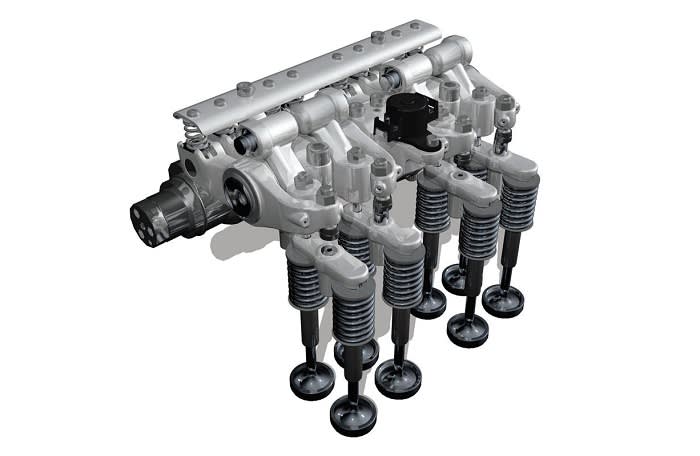
Image via Jacobs Vehicle Systems
2 min to read
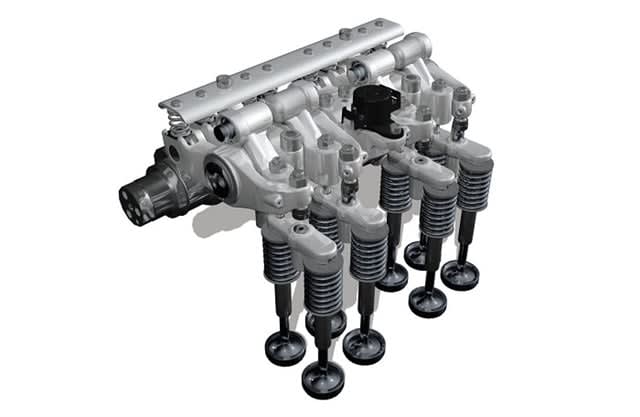
Image via Jacobs Vehicle Systems
Heavy-duty vehicle component manufacturer Jacobs Vehicle Systems has launched its new High Power Density Engine Brake for vehicle and engine manufacturers, announcing the technology at the IAA Commercial Vehicle show in Hannover, Germany.
Jacobs’ HPD Engine Brake increases the performance of traditional compression release braking over the engine’s entire operating range and can double braking performance at lower rpm. The technology can provide large engine displacement braking power in small and medium displacement diesel and natural gas engines.
The system is designed to be quiet in operation and is fully integrated into the engine’s overhead design. It can assist with exhaust aftertreatment thermal management by preventing the catalyst from cooling during descents.
By increasing engine braking performance at lower engine speeds the HPD Engine Brake can improve thermal management and match industry trends toward downspeeding and downsizing engines, according to Jacobs.
Engine braking performance is becoming increasingly important because key strategies for improving fuel efficiency include reducing the natural slowing of the vehicle caused by wind resistance, engine, drivetrain, and rolling resistance from the tires, says Jacobs.
Jacobs’ HPD Engine Brake transforms the four-stroke engine into a two-stroke compression device by deactivating the main intake and exhaust valve events and supplementing with two-stroke valve events. Whereas a conventional engine brake has one compression release and one brake gas recirculation event per cam rotation, this innovative and patented two-stroke technology achieves two braking events per cam rotation. It is fully variable with controlled boost modulation, which allows the driver to achieve the right balance between retardation, speed and efficiency.
“The majority of European trucks still use hydraulic driveline retarders, which are dependent on vehicle speed for effectiveness, and are typically 175 kg heavier, with a corresponding penalty for the vehicle’s payload capacity,” said Sergio Sgarbi, Jacobs Vehicle Systems president. “The Jacobs HPD Engine Brake can cope with those lower speeds, eliminating the need for a driveline retarder and becoming the primary choice in secondary braking.”
More Equipment

How Volvo Updated Its D13 for EPA 2027 [Watch]
Volvo’s updated D13 promises lower emissions without sacrificing performance or fuel economy. Take a closer look at what changed inside the engine in this HDT Spotlight video.
Read More →
Michelin Tire Improves Efficiency and Durability for Regional Fleets
The Michelin X Multi Energy D2 is a regional haul drive tire engineered to help fleets improve fuel efficiency, durability and traction in demanding stop-and-go operations.
Read More →
ZF Expands Commercial Vehicle Push in North America
ZF is expanding its North American commercial-vehicle presence with new transmission applications, electrification, trailer technology and autonomous-driving systems.
Read More →
Tesla Wants a Self-Driving Semi. Are Cameras Enough?
Could Tesla’s camera-only autonomous driving technology work on an 80,000-pound Semi? In this commentary, HDT's Deborah Lockridge takes a look at Tesla, Cybercab, and how autonomous trucks see the road.
Read More →
Kodiak: Driverless Long-Haul Truck Launch on Track for 2026
Kodiak AI says its driverless long-haul safety case is 93% complete and it remains on track to begin commercial operations by year-end 2026.
Read More →
What DOT’s Automated Vehicle Strategy Means for Trucking
The U.S. Department of Transportation issued a new automated-vehicle strategy that outlines plans for driverless-truck regulations, cross-state freight corridors, and federal safety standards.
Read More →
East Coast Port Launches $45M Electric Truck Push
The Port Authority of New York and New Jersey announced millions in incentives for zero-emission drayage trucks, yard tractors, and new charging hubs near the port.
Read More →
PlusAI Going Public to Fund Autonomous Truck Launch
A SPAC deal could provide PlusAI with up to $300 million as it works toward a 2027 commercial launch of factory-built autonomous trucks.
Read More →
NHTSA Moves to Rewrite Truck Fuel-Economy Rules
The National Highway Traffic Safety Administration says it lacks authority to regulate medium- and heavy-duty truck engines separately from complete vehicles, but the existing standards have not yet been eliminated.
Read More →
Detroit Opens Orders for EPA 2027 Engines
Detroit isn’t starting from scratch to meet EPA 2027 diesel emissions standards. Its Gen 6 DD13 and DD15 engines keep much of today’s platform while updating the fuel and aftertreatment systems.
Read More →