




International Roadcheck in May to Focus on Wheel Ends
The Commercial Vehicle Safety Alliance’s International Roadcheck will run May 17-19.

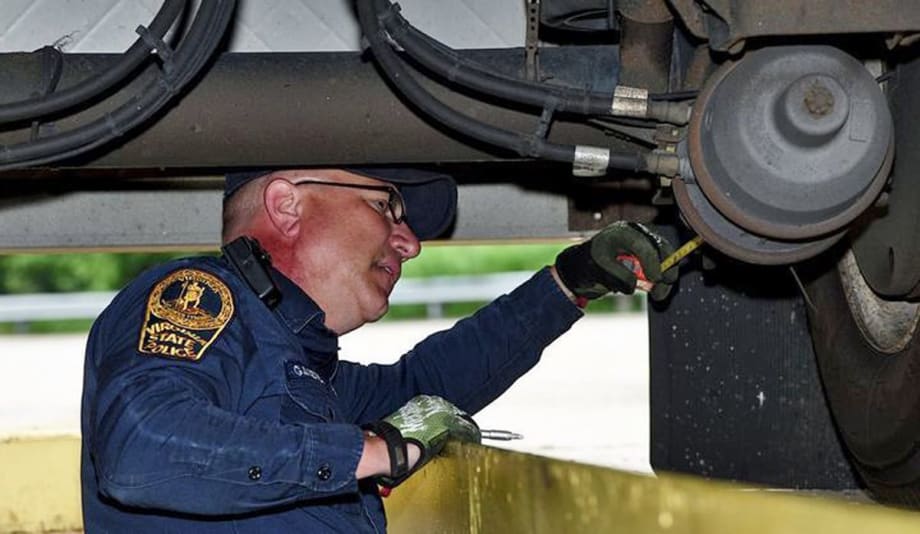
International Roadcheck is 72-hour high-visibility, high-volume commercial motor vehicle inspection and enforcement initiative.
Photo: CVSA
The Commercial Vehicle Safety Alliance’s International Roadcheck will run May 17 through May 19 and will focus on wheel-end violations.
Roadcheck is 72-hour high-visibility, high-volume commercial motor vehicle inspection and enforcement initiative — sometimes called an "inspection blitz." Commercial motor vehicle inspectors in Canada, Mexico and the U.S. will conduct North American Standard Inspections of commercial motor vehicles and drivers at weigh and inspection stations, on roving patrols, and at temporary inspection sites.
Each year, CVSA focuses on a specific aspect of a roadside inspection. This year, the focus will be on wheel ends. Wheel-end components support the heavy loads carried by commercial motor vehicles, maintain stability and control, and are critical for braking. Violations involving wheel end components historically account for about one quarter of the vehicle out-of-service violations discovered during International Roadcheck, and past Roadcheck data routinely identified wheel-end components as a top 10 vehicle violation.
During Roadcheck, commercial motor vehicle inspectors examine large trucks and motorcoaches and the driver’s documentation and credentials using CVSA’s North American Standard Inspection Program procedures, which are the uniform inspection steps, processes and standards established to ensure consistency in compliance, inspections and enforcement. Using the North American Standard Out-of-Service Criteria, also established by CVSA, inspectors identify critical out-of-service violations that if found, require the inspector to restrict the driver or vehicle from travel until those violations or conditions are addressed.
Vehicles that successfully pass a North American Standard Level I or Level V Inspection without any critical vehicle inspection item violations may receive a CVSA decal. In general, a vehicle with a valid CVSA decal will not be re-inspected during the three months while the decal is valid. Instead, inspectors will focus their efforts on vehicles without a valid CVSA decal.
More Equipment

How Volvo Updated Its D13 for EPA 2027 [Watch]
Volvo’s updated D13 promises lower emissions without sacrificing performance or fuel economy. Take a closer look at what changed inside the engine in this HDT Spotlight video.
Read More →
Michelin Tire Improves Efficiency and Durability for Regional Fleets
The Michelin X Multi Energy D2 is a regional haul drive tire engineered to help fleets improve fuel efficiency, durability and traction in demanding stop-and-go operations.
Read More →
ZF Expands Commercial Vehicle Push in North America
ZF is expanding its North American commercial-vehicle presence with new transmission applications, electrification, trailer technology and autonomous-driving systems.
Read More →
Tesla Wants a Self-Driving Semi. Are Cameras Enough?
Could Tesla’s camera-only autonomous driving technology work on an 80,000-pound Semi? In this commentary, HDT's Deborah Lockridge takes a look at Tesla, Cybercab, and how autonomous trucks see the road.
Read More →
Kodiak: Driverless Long-Haul Truck Launch on Track for 2026
Kodiak AI says its driverless long-haul safety case is 93% complete and it remains on track to begin commercial operations by year-end 2026.
Read More →
What DOT’s Automated Vehicle Strategy Means for Trucking
The U.S. Department of Transportation issued a new automated-vehicle strategy that outlines plans for driverless-truck regulations, cross-state freight corridors, and federal safety standards.
Read More →
East Coast Port Launches $45M Electric Truck Push
The Port Authority of New York and New Jersey announced millions in incentives for zero-emission drayage trucks, yard tractors, and new charging hubs near the port.
Read More →
PlusAI Going Public to Fund Autonomous Truck Launch
A SPAC deal could provide PlusAI with up to $300 million as it works toward a 2027 commercial launch of factory-built autonomous trucks.
Read More →
NHTSA Moves to Rewrite Truck Fuel-Economy Rules
The National Highway Traffic Safety Administration says it lacks authority to regulate medium- and heavy-duty truck engines separately from complete vehicles, but the existing standards have not yet been eliminated.
Read More →
Detroit Opens Orders for EPA 2027 Engines
Detroit isn’t starting from scratch to meet EPA 2027 diesel emissions standards. Its Gen 6 DD13 and DD15 engines keep much of today’s platform while updating the fuel and aftertreatment systems.
Read More →