




Indiana Police Targeting 'Hot Trucks'
Indiana State Police have stepped up enforcement of what are being called "hot trucks" -- refrigerated trucks found to be delivering food that's not being kept at the proper temperature. On July 1, a new state law went into effect that gave the Commercial Vehicle Enforcement Division of the Indiana State Police the authority to stop suspected "hot" trucks
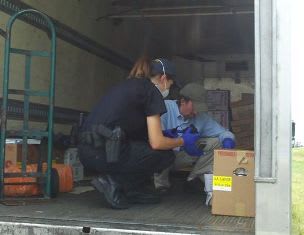
A new law has helped Indiana State Police target trucks that aren't keeping food at proper temperatures.
Indiana State Police have stepped up enforcement of what are being called "hot trucks" -- refrigerated trucks found to be delivering food that's not being kept at the proper temperature.
On July 1, a new state law went into effect that gave the Commercial Vehicle Enforcement Division of the Indiana State Police the authority to stop suspected "hot" trucks,
look inside, ticket the driver and call in health officials.
Members of the state police, who just received additional training, are catching a good percentage of the violators in the Lafayette, Ind., area.
Most of the violators seem to be coming from Chicago bound for Indiana. Police officials say they typically are headed to Chinese or Mexican and Hispanic restaurants.
A sampling of the recent incidents:
July 20: A 2008 UD refrigerated truck was stopped on I-65 southbound near the 171 mile marker for possible motor carrier violations. The truck was owned by Hispamex Products Inc. of Cicero, Ill. Troopers found the refrigerated unit had been shut off to help the truck run better. Approximately 2,000 pounds of meat, kid's drinks, cheese and yogurt were destroyed. The load was headed to Crawfordsville and Indianapolis stores and restaurants.
July 24: State police stopped a 2006 Freightliner pulling a Great Dane refrigerated trailer owned by Expressway Leasing LLC of Chicago, for a federal motor carrier inspection on State Road 28 in Clinton County. The officer could smell a putrefied odor coming from the back of the trailer. The driver said there had been problems with the refrigeration unit on the trailer but it had been fixed. Approximately 2,000 pounds of food products were destroyed. The truck had made deliveries in Ohio and Frankfort, Ind., and was heading to Lafayette area restaurants.
July 18: A 2008 Sterling straight truck with an enclosed refrigerated box container was stopped on I-65 southbound near the 173 mile marker for a traffic violation and was found to have the refrigerator unit not in working order. When they opened the container they found raw meat and vegetables above the allowable temperatures and also cross contamination with the spoiled foods. More than 1,500 pounds of food were destroyed.
July 26: A 1999 conventional Freightliner pulling a 1998 Great Dane refrigerated trailer owned by Dearborn Wholesale Grocers LP out of Chicago was pulled over for a routine truck inspection. A trooper noticed the refrigerated unit was not working properly and after checking inside the trailer.
Another trooper stopped a white 2002 International straight truck with a boxed refrigerated unit owned by Covemex Corp. out of Chicago for a routine inspection. The refrigerated unit was not on, so the trooper checked the cargo and found the load was found to be above the temperature required by law.
Both vehicles were taken to a large parking lot. The County Health Department was called to assist and approximately 500 pounds of dairy products and meats were destroyed from each truck.
Some of the repeat offenders have simply popped up under new names, say police.
This summer's excessive heat is making the problem worse. Tons of spoiled food have been destroyed.
More Drivers

Hours of Service Pilot Programs: FMCSA Readies for 2027 Rollout
Two pilot programs could eventually reshape hours-of-service rules, giving truck drivers options to pause their 14-hour clock or use longer split sleeper rest periods.
Read More →
Medical Cards, English Proficiency Reshape Roadcheck Violations
Medical-card violations jumped to the top of the driver out-of-service list during CVSA’s 2026 International Roadcheck, while English-language proficiency violations appeared among the leading violations for the first time.
Read More →
Driver Trust Can Make or Break the Success of Fleet Safety Technology
New Teletrac Navman research suggests that onboarding, transparency about driver data, and positive feedback can play a significant role in how commercial drivers respond to safety and coaching technology.
Read More →
EEOC Sues KLLM Over Alleged Sex Discrimination in Driver Training
KLLM is facing a federal sex-discrimination lawsuit over policies the EEOC alleges put female truck driver trainees at a disadvantage.
Read More →
FMCSA Moves to Codify English Language Requirements for Commercial Drivers
By changing regulations on English-language proficiency requirements for commercial drivers, rather than relying on a guidance memo, the FMCSA said future administrations won't be able to walk back the Trump administration's stricter enforcement with just a memo.
Read More →
Drivers Put Western Star Trucks to the Test at Star Nation Experience
Watch to get an inside look at the Western Star trucks, technology, and community behind the Star Nation Experience 2026!
Read More →
Trump Administration Looks to Put More Veterans Behind the Wheel
The Freedom Haulers program pulls together existing and expanded programs at several federal agencies to recruit veterans to drive commercial heavy-duty trucks and cut the red tape for them to get a CDL, training, and employment.
Read More →
Putting Mack’s Command Steer to the Test
A test drive of Mack’s Command Steer active steering system evaluates how it can make truck driving easier and less tiring.
Read More →
Competition Heating Up for Truck Drivers
New report reveals rising driver hiring costs, the return of sign-on bonuses, growing AI advantages, and the operational factors shaping driver retention.
Read More →
How Fraley & Schilling Improved Logbook Compliance by Over 50%
Fraley & Schilling needed a way to close a compliance workflow gap in its ELD system without adding more work from driver training, reminders, and back-office follow-ups. It found the answer in a custom driver app.
Read More →