




Hyundai, Plus Show Concept for Autonomous Hydrogen Freight Ecosystem
The collaboration pairs Hyundai Motor’s hydrogen-powered Xcient Fuel Cell truck with Plus’s AI-based autonomous driving software, SuperDrive.

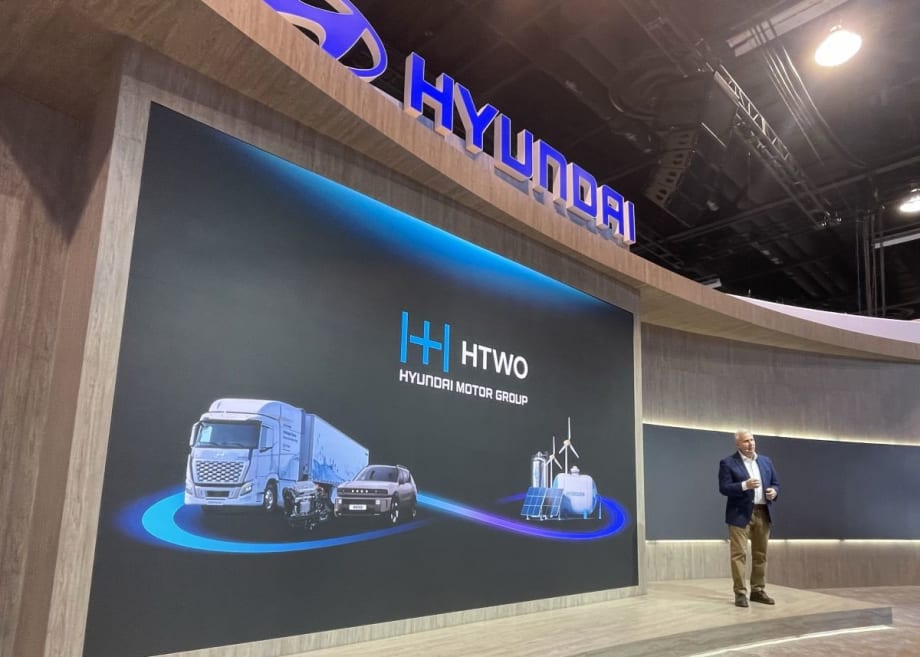
Ken Ramirez, head of Hyundai's global CV and H2 business, speaks at ACT Expo about the company's vision of scaling autonomous, hydrogen-fuel-cell-powered long haul freight transport.
Photo: Jack Roberts
Hyundai Motor and Plus unveiled a shared vision on how their collaboration on autonomous hydrogen-powered fuel cell trucks aims to accelerate the development of a hydrogen-powered freight network in the United States.
At the Advanced Clean Transportation (ACT) Expo 2025 in Anaheim, California, the two companies debuted a video exploring how they believe the collaboration can drive a scalable and cost-effective solution for lower-carbon long-haul freight movement.
The collaboration pairs Hyundai Motor’s hydrogen-powered Xcient Fuel Cell truck with Plus’s AI-based autonomous driving software, SuperDrive.
A Scalable Pathway to Hydrogen Freight
In the concept video, Hyundai Motor and Plus outline a practical framework for deploying autonomous hydrogen fuel cell trucks along high-utilization hub-to-hub routes. The approach focuses on:
Initial deployment across major freight corridors to build early momentum
Stimulating demand for strategically placed hydrogen refueling stations
Expanding infrastructure to support a growing fleet and wider hydrogen use
Reinforcing scalability, as new routes drive further infrastructure investment and adoption
The video illustrates how this infrastructure can be built out incrementally, with each added delivery route increasing network efficiency and economic viability — benefiting not only autonomous trucks, but also other hydrogen-powered vehicles.
Over time, this blueprint envisions a self-reinforcing cycle of vehicle adoption, infrastructure development, and lower operational costs per unit, according to the companies.
Fuel-Cell Technologies for a Sustainable Future
“Hyundai Motor believes in a sustainable future powered by advanced fuel cell technologies,” said Jim Park, Senior Vice President of Commercial Vehicle and Hydrogen Business Development at Hyundai Motor North America.
“We hope to continue our partnership with Plus to add autonomous driving capabilities to Xcient Fuel Cell trucks in the future and provide our fleet operator customers with additional solutions that improve road safety and freight efficiency.
“The concept shared today shows why we value this partnership and the vision for what autonomous hydrogen fuel cell trucks can deliver.”
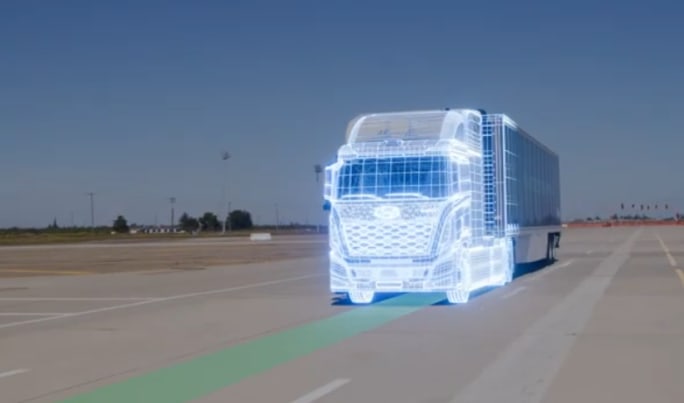
David Liu, CEO and Co-Founder of Plus: "By combining self-driving and zero-tailpipe emission technologies, we are laying the groundwork for a cleaner, more efficient transportation system that meets the demands of today and the needs of tomorrow.”
Photo: Screen capture from Hyundai-Plus video
David Liu, CEO and Co-Founder of Plus, added: “Autonomous hydrogen fuel cell trucks are a transformative step forward in sustainable freight.
"By combining self-driving and zero-tailpipe emission technologies, we are laying the groundwork for a cleaner, more efficient transportation system that meets the demands of today and the needs of tomorrow.”
Earlier this year, two startups that were making Class 8 hydrogen-fuel-cell trucks, Nikola and Hyzon, closed their doors.
More Fleet Management

Color Match Smarter: Tools That Restore & Perform
For fleet managers and collision repair professionals keeping heavy-duty trucks on the road, getting the color right the first time isn't just about appearance — it's about efficiency, turnaround time, and bottom-line results. Discover how today's digital color tools are transforming the repair process from guesswork to precision.
Read More →
FMCSA Pauses Biennial-Update Enforcement Amid Motus Transition
Carriers whose updates were due on or after June 1 have more time, while FMCSA works to stabilize its new registration system and warns of phishing sites impersonating its new carrier registration system, Motus.
Read More →
2026 Blueprint for Countering Smarter Supply Chain Theft
Cargo theft is no longer just the cost of doing business. It's a multi-billion-dollar criminal enterprise exploiting vulnerabilities across your fleet, drivers, and supply chain.
Read More →


How Telematics Improves Visibility, Control, and Performance in Refrigerated Fleets
Explore how telematics help refrigerated fleets improve visibility, uptime, efficiency, compliance, and cargo protection across connected cold chain operations.
Read More →
What the U.S.-Canada Trade War Means for Trucking
Escalating U.S.-Canada tariffs could disrupt cross-border freight, reduce truck volumes, raise costs, and create new uncertainty for carriers on both sides of the border.
Read More →
What Are Trucking’s Top Concerns for 2026?
The American Transportation Research Institute wants to know what's worrying trucking fleet managers, drivers, and other stakeholders in its annual Industry Issues survey.
Read More →
American Trucking Associations Looks for a New Leader
ATA President and CEO Chris Spear abruptly left his job at the association on August 21, at a pivotal time for the trucking industry.
Read More →
Public Wi-Fi Cybersecurity Risks: How Truck Drivers and Fleets Can Protect Their Data
Public Wi-Fi can expose truck drivers and fleets to credential theft, malware, and other cyber threats. Here’s how to reduce the risk on the road.
Read More →
For Nicky Cupp, Fleet Innovation Starts With Frustration
HDT Truck Fleet Innovator Nicky Cupp turns everyday pain points at Fraley & Schilling into opportunities for better technology and smarter processes.
Read More →
Adam Buttgenbach’s Approach to Electric Trucks: Start With Where They Fit
HDT Truck Fleet Innovator Adam Buttgenbach helped PepsiCo build one of North America’s largest EV fleets by focusing on where electric trucks make operational sense.
Read More →