




House Will Push Highway Extension
The House, unable to resolve internal differences regarding its five-year, $260 billion highway bill and opposed to the Senate's two-year, $109 billion measure, is going to push for a three-month extension of the current program
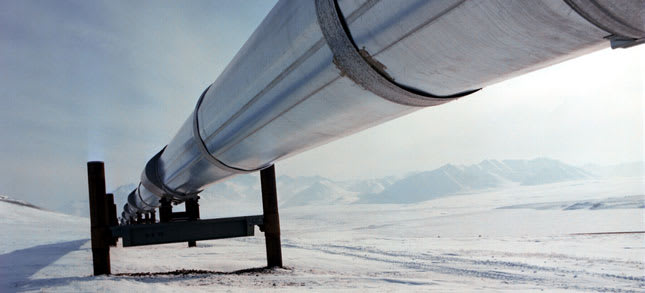
The House still wants to link energy revenues with highway funding, such as drilling in previously protected areas of the Arctic.
The House, unable to resolve internal differences regarding its five-year, $260 billion highway bill and opposed to the Senate's two-year, $109 billion measure, is going to push for a three-month extension of the current program.
Rep. John Mica, R-Fla., said he will introduce the extension today.
House Republicans have been under pressure from the Senate, the White House, House Democrats and transportation interests to simply pass the bill that the Senate passed by a wide bipartisan margin last week.
However, the House still wants the five-year term and remains wedded to the idea of supplementing Highway Trust Fund revenues by taxing expanded oil and gas drilling in the Arctic and offshore.
"We continue to believe that linking energy and infrastructure is the responsible thing to do in order to meet our long-term needs," Mica said in a statement.
The current highway program is funded through the end of this month. Mica's proposal would extend it through the end of June to give the House time to come to agreement on its bill. This would be the ninth extension of the program since it officially expired in October 2009.
The House bill faltered initially when Democrats and urban Republicans objected to it taking transit funding out of the Highway Trust Fund. That decision was reversed, but some Republicans still object to the bill's overall cost, and some Democrats do not like the drilling provision.
It is not clear how the House bid for an extension will play out. Voting on the measure is scheduled for next week, but Senate Majority Leader Harry Reid, D-Nev., indicated this week he will oppose the extension and continue to push for the Senate bill.
Something has to be done by March 31 or the government's ability to collect fuel taxes will expire. If the extension prevails, then the House will have until the end of June to pass its bill and reconcile the enormous differences between it and the Senate's bill, or pass another extension.
Meanwhile, former New Jersey Senator Bill Bradley and former Comptroller General David Walker put a new idea on the table for funding infrastructure reinvestment.
In an opinion piece published in a Washington newspaper, The Hill, they suggested exchanging the current gas tax with a 6% fee on all oil produced in or imported into the U.S.
The "oil security fee" could be collected through the existing administrative structure of the Oil Spill Liability Fund, they said.
With oil at $103 per barrel, the fee would offset the loss of the fuel tax. If oil fell below that price, the fuel tax could be reimposed.
"While a growing economy means our rate of federal infrastructure investment must increase, every dollar spent must yield maximum economic return," they said.
"We must hold our legislators accountable against that goal. But failure to invest is not an option, nor is pretending to pay for this investment when we do not."
More Drivers

EEOC Sues Texas Trucking Company Over Driver Age Limits
The agency says Trancasa USA rejected applicants over 65 and applied tougher driving-record standards to those over 60.
Read More →
Nussbaum, Roehl Announce Second Driver Pay Increase This Year
This year has seen a swath of major truck driver pay increases as freight capacity has tightened.
Read More →
From One Generation to the Next: How Mentorship Builds Safer Truck Drivers
After three decades in trucking, Harold Perry shares what he's learned about driver safety, mentorship, and helping the next generation build confidence behind the wheel.
Read More →
Truck Drivers Need More Than Another Alert
Fleets have more visibility into truck health, safety events, and driver activity than ever. The next challenge is turning all that information into useful guidance for the person who has to decide what to do next.
Read More →
FMCSA Removes 110 Truck Driver Training Schools from Certified ELDT List
Federal regulators also are targeting more than 160 additional training providers and launching a nationwide audit of third-party CDL skills testers as part of a broader crackdown on trucking fraud.
Read More →
Hours of Service Pilot Programs: FMCSA Readies for 2027 Rollout
Two pilot programs could eventually reshape hours-of-service rules, giving truck drivers options to pause their 14-hour clock or use longer split sleeper rest periods.
Read More →
Medical Cards, English Proficiency Reshape Roadcheck Violations
Medical-card violations jumped to the top of the driver out-of-service list during CVSA’s 2026 International Roadcheck, while English-language proficiency violations appeared among the leading violations for the first time.
Read More →
Driver Trust Can Make or Break the Success of Fleet Safety Technology
New Teletrac Navman research suggests that onboarding, transparency about driver data, and positive feedback can play a significant role in how commercial drivers respond to safety and coaching technology.
Read More →
EEOC Sues KLLM Over Alleged Sex Discrimination in Driver Training
KLLM is facing a federal sex-discrimination lawsuit over policies the EEOC alleges put female truck driver trainees at a disadvantage.
Read More →
FMCSA Moves to Codify English Language Requirements for Commercial Drivers
By changing regulations on English-language proficiency requirements for commercial drivers, rather than relying on a guidance memo, the FMCSA said future administrations won't be able to walk back the Trump administration's stricter enforcement with just a memo.
Read More →