




House Passes 10-Month Extension of Highway Program
The U.S. House of Representatives yesterday passed a bill that will extend the current highway program until the end of the year and replenish the Highway Trust Fund with $19.5 billion from general revenues
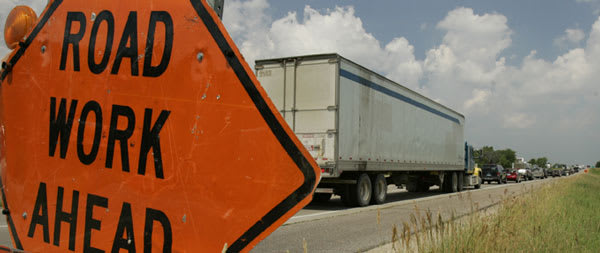
A new 10-month extension will give Congress time to work on a proper, long-term highway reauthorization program. (Photo courtesy of Michelin)
The U.S. House of Representatives yesterday passed a bill that will extend the current highway program until the end of the year and replenish the Highway Trust Fund with $19.5 billion from general revenues.
The highway provisions are part of a larger job-creation measure that went back to the Senate for further consideration. Among other things, the bill will create $15 billion worth of payroll tax breaks for small businesses that hire new workers.
The highway program is currently operating under a one-month extension passed earlier this week after a dramatic showdown between Sen. Jim Bunning, R-Ky., and most of the rest of the Washington political community.
Bunning objected to the funding approach proposed by the Democratic leadership in the jobs-and-transportation bill. Despite opposition from the majority of both parties in the Senate, he blocked the measure for several days, forcing the Department of Transportation to furlough 2,000 employees and stop sending reimbursements to the states for federal-aid highway projects. Eventually a deal was struck, and on Wednesday the funds started flowing again and DOT employees returned to work.
Time To Consider a Long-Term Program
This one-month extension is the fifth extension of the highway program, which officially ended Oct. 1. Passage of the 10-month extension, which is expected to come after Senate consideration, will give Congress time to consider a proper, long-term highway program.
The House is further along in the process of developing the new program. The Transportation and Infrastructure Committee has cleared a comprehensive "Blueprint for Investment and Reform" that proposes far-reaching changes in the structure and management of the highway program.
This approach envisions a $450 billion investment over six years, a 38 percent increase over the current program, plus an additional $50 billion for high speed rail. It calls for significant organizational reforms at the Department of Transportation, for performance standards in the execution of highway projects, for speeding up the completion of projects and for creation of a National Transportation Strategic Plan. It also would beef up the truck safety program, among other things requiring mandatory onboard electronic recorders.
The Senate has held hearings and offered a conceptual proposal calling for increasing the rail and intermodal share of freight transport by 10 percent in the next decade, reducing per-capita vehicle miles, cutting the number of traffic fatalities in half by 2030, reducing carbon dioxide emissions by 40 percent in the next 20 years and improving the condition of highways. The proposal does not spell out how these things should be accomplished.
Administration Says No Fuel Tax Hike
President Obama wants a comprehensive, robust transportation bill, Transportation Secretary Ray LaHood told a meeting of state transportation department chiefs this week.
"I had a one-on-one with President Obama this week," LaHood said Wednesday at the American Association of State Highway and Transportation Officials meeting. "What he said to me was, try and find a bipartisan way to get the money."
But as far as the administration is concerned, none of the money will come from an increase in the federal fuel tax.
"We like a lot of the things that are in (the Transportation and Infrastructure Committee's) bill," LaHood said. "It's a good bill. The only problem is, it costs about $450 billion. As you know, that kind of money doesn't currently exist. The Highway Trust Fund is deficient to take care of the needs that we want to accomplish because we're driving less, driving more fuel efficient cars. And the president has said he doesn't want to raise the gas tax."
Addressing the state transportation officials, most of whom believe a fuel tax increase is necessary, LaHood said, "I know it's easy for people who are not elected to talk about raising the gas tax, because people who are not elected don't have to face the voters. But in a bad economy, when unemployment is just below 10 percent, we are not going to be talking about raising the gas tax, at least not from the microphone that we speak from. It's just very difficult when people are out of work and can little afford to even put a gallon of gas in their tank, to talk about raising the gas tax."
Look for more details in the next issue of Heavy Duty Trucking.
More Drivers

Truck Drivers Need More Than Another Alert
Fleets have more visibility into truck health, safety events, and driver activity than ever. The next challenge is turning all that information into useful guidance for the person who has to decide what to do next.
Read More →
FMCSA Removes 110 Truck Driver Training Schools from Certified ELDT List
Federal regulators also are targeting more than 160 additional training providers and launching a nationwide audit of third-party CDL skills testers as part of a broader crackdown on trucking fraud.
Read More →
Hours of Service Pilot Programs: FMCSA Readies for 2027 Rollout
Two pilot programs could eventually reshape hours-of-service rules, giving truck drivers options to pause their 14-hour clock or use longer split sleeper rest periods.
Read More →
Medical Cards, English Proficiency Reshape Roadcheck Violations
Medical-card violations jumped to the top of the driver out-of-service list during CVSA’s 2026 International Roadcheck, while English-language proficiency violations appeared among the leading violations for the first time.
Read More →
Driver Trust Can Make or Break the Success of Fleet Safety Technology
New Teletrac Navman research suggests that onboarding, transparency about driver data, and positive feedback can play a significant role in how commercial drivers respond to safety and coaching technology.
Read More →
EEOC Sues KLLM Over Alleged Sex Discrimination in Driver Training
KLLM is facing a federal sex-discrimination lawsuit over policies the EEOC alleges put female truck driver trainees at a disadvantage.
Read More →
FMCSA Moves to Codify English Language Requirements for Commercial Drivers
By changing regulations on English-language proficiency requirements for commercial drivers, rather than relying on a guidance memo, the FMCSA said future administrations won't be able to walk back the Trump administration's stricter enforcement with just a memo.
Read More →
Drivers Put Western Star Trucks to the Test at Star Nation Experience
Watch to get an inside look at the Western Star trucks, technology, and community behind the Star Nation Experience 2026!
Read More →
Trump Administration Looks to Put More Veterans Behind the Wheel
The Freedom Haulers program pulls together existing and expanded programs at several federal agencies to recruit veterans to drive commercial heavy-duty trucks and cut the red tape for them to get a CDL, training, and employment.
Read More →
Putting Mack’s Command Steer to the Test
A test drive of Mack’s Command Steer active steering system evaluates how it can make truck driving easier and less tiring.
Read More →