





Related: 7 Things You Need to Know About Upcoming CSA Changes
House Funding Bill Addresses Trucking Rules on Meal Breaks, Hours of Service, and More
A House appropriations bill for transportation and other departments takes aim at Federal Motor Carrier Safety Administration rules regarding hours of service, meal and rest breaks, the CSA safety accountability program, and underride guards.
June 4, 2019
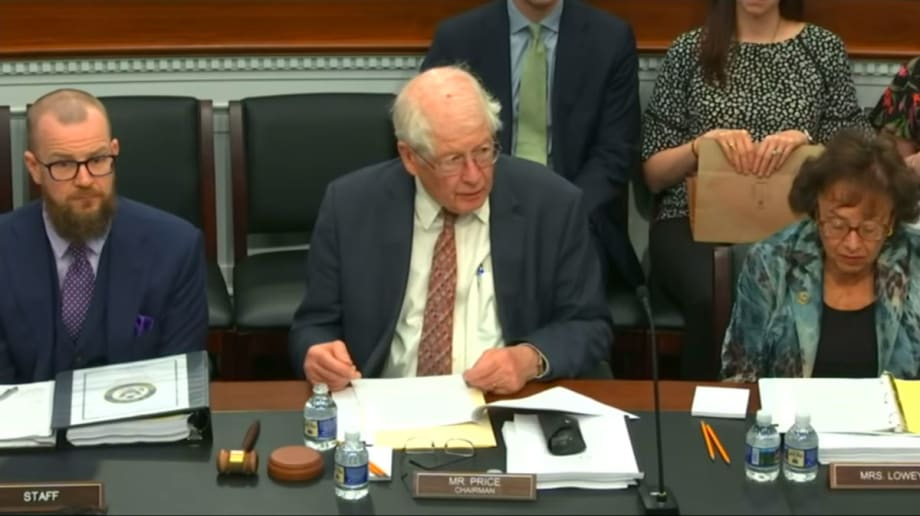
A House appropriations bill could affect FMCSA rules regarding hours of service, meal and rest breaks, the CSA safety accountability program, and underride guards.
Screenshot of U.S. House of Representatives Appropriations Committee video
4 min to read
A House appropriations bill setting forth proposed funding for transportation and other departments takes aim at Federal Motor Carrier Safety Administration trucking rules regarding hours of service, meal and rest breaks, the CSA safety accountability program, and underride guards.
On June 4, the House Appropriations Committee approved the fiscal year 2020 Transportation, Housing and Urban Development, and Related Agencies bill (commonly called T-HUD). The legislation funds the Department of Transportation, the Department of Housing and Urban Development, and other related agencies.
The legislation provides $137.1 billion in budgetary resources, an increase of $6 billion above the 2019 level and $17.3 billion above the White House’s budget request. The bill includes $75.8 billion in discretionary funding, an increase of $4.7 billion over the 2019 level and $17.3 billion over the president’s 2020 budget request.
“The Department of Transportation should prioritize safety, and this bill would equip the department to fund safety upgrades on our roads and rails as well as research to improve safety technologies,” said House Appropriations Committee Chairwoman Nita Lowey (D-NY) in a statement.
The bill calls for $677 million for the FMCSA, $10 million above the 2019 level and $1 million above the President’s budget request.
But appropriations bills do more than just decide which agency gets what amount of money. They also aim to require agencies such as the FMCSA to do or not do certain things as a condition of that funding.
For instance, the bill as proposed would prohibit the National Highway Traffic Safety Administration from finalizing a rule that would roll back fuel-economy standards and lead to increased greenhouse gas emissions from vehicles.
There were a number of trucking-specific provisions:
State meal and rest break rules
The committee apparently didn’t like the FMCSA’s move late last year to announce that federal hours of service rules pre-empt state meal and rest break rules (most notably California’s.)
According to the draft, “No funds made available by this or any other Act may be obligated or expended under the authority in 49 U.S.C. 31141(c) to review and issue a decision on a petition to preempt State meal and rest break laws that may differ from those in 49 C.F.R. 395.”
Right before Christmas, the agency granted petitions to preempt California’s meal and rest break rules for truck drivers because they conflict with federal hours-of-service regulations.
The Owner-Operator Independent Drivers Association applauded the provision, saying it believed the agency erred in granting that petition, also noting that “Congress has … repeatedly rejected [the American Trucking Associations’] efforts to legislatively impose a similar federal pre-emption.”
30-minute rest break rules
Even as the FMCSA is on the cusp of proposing new revisions to the hours of service rules, the THUD bill aims to stop the agency from dropping the 30-minute rest break provision.
“None of the funds made available in this Act may be used to promulgate or enforce a rule that eliminates the 30 minute rest break specified in part 395 23 of title 49, Code of Federal Regulations, as it was in operational effect on May 15, 2019.”
OOIDA opposes this provision, calling the 30-minute rest break rule “an overly burdensome requirement that does nothing to improve highway safety.”
The 30-minute rest break rule was among the areas the FMCSA asked the indsutry for comment about as it worked to revise the hours of service rules.
CSA
The bill requires FMCSA to provide a public website information regarding analysis of violations developed under the agency’s Compliance, Safety, Accountability program, consistent with data that the agency made publicly available immediately before Dec. 4, 2015.
OOIDA said it has serious concerns about this provision. “Despite recent positive developments, the CSA program remains critically flawed and categorically unfair to truckers. Publicly posting an analysis of violations developed under CSA while the system is still being improved is extremely problematic. Rather than creating arbitrary timeframes for the availability of the data, Congress should focus its efforts on ensuring FMCSA is establishing a program that is fair, reliable, and actually based on safety.”
ELD exemption for livestock haulers
The appropriations bill says none of the funds can be used to “implement, administer, or enforce the requirements of section 31137 of title 49, United States Code, or any regulation issued by the Secretary pursuant to such section, with respect to the use of electronic logging devices by operators of commercial motor vehicles transporting livestock or insects.”
Currently, transporters of livestock and insects are not required to have an ELD, according to FMCSA, a statutory exemption that will remain in place "until further notice." Presumably the authors of the bill don't want the agency to suddenly change its mind about the exemption.
Underride guards
The bill also would require that rear underride guards be inspected annually, and it calls for the National Highway Traffic Safety Administration to working with experts and stakeholders “to facilitate the deployment and adoption of rear and side underride protection devices.”
This is just the first step in the process. The bill now goes to the House, which could make changes, and the Senate must take up the measure as well before it is passed and goes to the president for his signature.
More Safety & Compliance

FMCSA Pauses Biennial-Update Enforcement Amid Motus Transition
Carriers whose updates were due on or after June 1 have more time, while FMCSA works to stabilize its new registration system and warns of phishing sites impersonating its new carrier registration system, Motus.
Read More →
ZF Expands Commercial Vehicle Push in North America
ZF is expanding its North American commercial-vehicle presence with new transmission applications, electrification, trailer technology and autonomous-driving systems.
Read More →
Truck Drivers Need More Than Another Alert
Fleets have more visibility into truck health, safety events, and driver activity than ever. The next challenge is turning all that information into useful guidance for the person who has to decide what to do next.
Read More →
Tesla Wants a Self-Driving Semi. Are Cameras Enough?
Could Tesla’s camera-only autonomous driving technology work on an 80,000-pound Semi? In this commentary, HDT's Deborah Lockridge takes a look at Tesla, Cybercab, and how autonomous trucks see the road.
Read More →
What DOT’s Automated Vehicle Strategy Means for Trucking
The U.S. Department of Transportation issued a new automated-vehicle strategy that outlines plans for driverless-truck regulations, cross-state freight corridors, and federal safety standards.
Read More →
NYC Expands Speed, Pedestrian Safety Tech Across Fleet
New York City is expanding intelligent speed assistance and pedestrian-alert systems across its municipal fleet, moving the technologies from pilot programs into vehicle procurement and retrofit requirements.
Read More →
FMCSA Removes 110 Truck Driver Training Schools from Certified ELDT List
Federal regulators also are targeting more than 160 additional training providers and launching a nationwide audit of third-party CDL skills testers as part of a broader crackdown on trucking fraud.
Read More →
Beyond DOT Compliance: What Makes a Trucking Fleet Truly Safe?
A trucking fleet can follow every rule and still make unsafe decisions. The real test comes when safety conflicts with freight, productivity, or cost.
Read More →
Hours of Service Pilot Programs: FMCSA Readies for 2027 Rollout
Two pilot programs could eventually reshape hours-of-service rules, giving truck drivers options to pause their 14-hour clock or use longer split sleeper rest periods.
Read More →
New Guide Offers Pet Safety Tips for Truck Drivers
Hundreds of thousands of pets travel in truck cabs. A new safety guide from Volvo Trucks and the Center for Pet Safety offers practical advice for truck drivers who bring dogs and cats along for the ride.
Read More →