





Related: House Members Push for Long-Term Fix for Highway Trust Fund
House Bill Aims For Dedicated Revenue Source for Freight Infrastructure
Bipartisan legislation introduced in the House on June 22 would create a Freight Transportation Infrastructure Trust Fund, funded through a national 1% “waybill fee” on the transportation cost of goods.
June 22, 2017
Photo: Federal Motor Carrier Safety Administration
2 min to read
Photo: Federal Motor Carrier Safety Administration
Bipartisan legislation introduced in the House on June 22 would create a Freight Transportation Infrastructure Trust Fund, funded through a national 1% “waybill fee” on the transportation cost of goods, according to the bill’s sponsor, Rep. Alan Lowenthal (D-CA).
Lowenthal said his National Multimodal and Sustainable Freight Infrastructure Act (H.R. 3001) “builds on the success of the FAST Act [highway bill that became law in 2015] and ensures continued investment in the goods movement network.”
If enacted, the bill would raise roughly $8 billion a year dedicated to freight-related infrastructure projects throughout the nation, he explained, with a focus on “multimodal projects and projects that rebuild aging infrastructure while relieving bottlenecks” in the freight transportation system.
“Goods movement is the backbone of our economy,” said Lowenthal. “In order to maintain the standing of the United States as a global economic leader, we must invest in expanding the capacity, reliability, and efficiency of our nation’s goods movement system and freight infrastructure.
“And yet,” he continued, “that infrastructure is crumbling around us. We must take action to rebuild it and strengthen it, all in a way that also addresses the negative impacts of goods movement on our communities.”
Lowenthal noted that the FAST Act was the first legislation to outline a national freight policy and that his H.R. 3001 incorporates ideas from his earlier proposals on freight infrastructure financing that called for setting up both formula and competitive programs to invest in these systems.
To invest the funds, the new bill would launch two freight-specific grant programs: A formula grant in which each state would receive funds each year based on the amount of existing infrastructure within the state, and a competitive grant program what would be open to all local, regional, and state governments.
Lowenthal stated that “to address the growing national backlog of infrastructure needs to support our economy, sustained investment in our freight infrastructure is necessary.” Making his case for an infrastructure trust fund, he pointed out that the latest report card on America’s infrastructure by the American Society of Civil Engineers rated America’s rail system with a B, its bridges and ports with a C+, its roads with a D and gave the entire infrastructure system an overall D+.
H.R. 3001 was introduced with original co-sponsors being Reps. Nanette Barragan (D-CA), Earl Blumenauer (D-OR), Matt Cartwright (D-PA), Judy Chu (D-CA), Robin Kelly (D-NY), Mark Meadows (R-NC), Gwen Moore (D-WI), Grace Napolitano (D-CA), Mark Pocan (D-WI), Dana Rohrabacher (R-CA), and Mark Takano (D-CA).
More Fleet Management
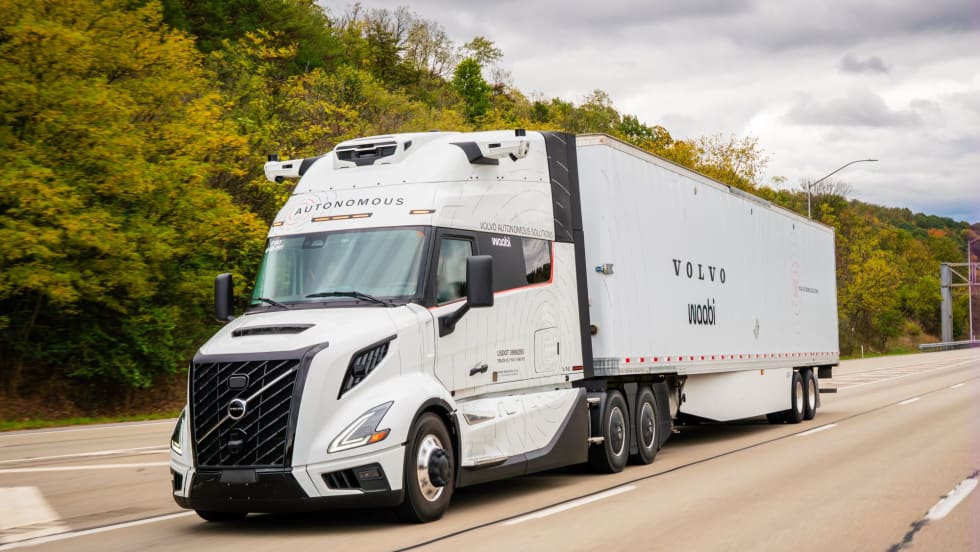
Volvo, Waabi Start Commercial Autonomous Operations in Texas
Volvo VNL Autonomous trucks, powered by the Waabi Driver, are hauling freight directly to third-party facilities for a customer in Texas.
Read More →
Samsara Launches Custom AI Agent Builder
Agent Studio lets fleets create AI tools for hours-of-service monitoring, reporting and driver support, including agents that communicate by phone.
Read More →
Geotab Links Fleet Card to Vehicle Data
The new card combines fuel discounts with telematics-based purchase controls. Geotab’s analysis also points to potential savings from choosing lower-priced fuel stops.
Read More →

How MFA Helps Protect Trucking Fleets
Multi-factor authentication adds protection when passwords are stolen. Here’s how it works and where fleets should start.
Read More →
How Better Freight Data Helps Trucking Teams Get Ahead of Disruption
Trucking and logistics teams have plenty of data. The problem is getting the right information in front of the right people soon enough to act. Better-connected data can help teams spot trouble earlier and make smarter decisions before small problems become big ones.
Read More →
Trimble: Taking Artificial Intelligence in Trucking Beyond Faster Tasks
At Insight 2026, Trimble executives argued that fleets may need to redesign workflows to get more from AI as it introduced new products and enhancements. AI’s value will depend on how fleets combine automation with their people's knowledge.
Read More →
Sponsored•September 28, 2026
Build a bulletproof fleet: Uniting ELDs and dash cams for total compliance
An ELD can prove compliance, but it cannot always prove what happened on the road. Discover how uniting accurate ELD data with AI-powered dash cam video can help your fleet strengthen compliance, defend against liability, protect drivers and reduce operational costs.
Read More →
Nominations Open for HDT Emerging Leaders
Heavy Duty Trucking is looking for accomplished trucking fleet professionals under 40 who are making an impact and helping lead the industry forward.
Read More →
Why Private Fleets Are Taking More Freight
Private fleets are putting their own trucks on demanding customers and high-cost lanes as companies seek greater control over service, costs, and capacity.
Read More →
Sponsored•September 16, 2026
Color Match Smarter: Tools That Restore & Perform
For fleet managers and collision repair professionals keeping heavy-duty trucks on the road, getting the color right the first time isn't just about appearance — it's about efficiency, turnaround time, and bottom-line results. Discover how today's digital color tools are transforming the repair process from guesswork to precision.
Read More →