




Hours of Service Proposal Goes to White House
A long-awaited proposal to reform the truck driver hours of service rules is finally moving. Last week the Department of Transportation forwarded its comprehensive reform plan to the White House Office of Management and Budget for political and financial review.
A long-awaited proposal to reform the truck driver hours of service rules is finally moving. Last week the Department of Transportation forwarded its comprehensive reform plan to the White House Office of Management and Budget for political and financial review.
The OMB review process is expected to take a month to six weeks, barring any snags, according to a DOT insider.
When OMB is done, the proposal will be published and DOT will seek comments. The comment period will include a series of a half-dozen hearings this spring, held in various cities around the country.
If DOT’s timetable holds, the final rule will be posted late next year.
Details are still closely held, but a source at DOT said truckers will find cause to both love and hate the proposal. Early reports indicate that the rules will be based on a 24-hour clock, divided into 14 hours on-duty and 10 hours off. Drivers would get two hours of break time during their 14 hours on-duty, to be taken at the driver’s discretion. Also, the proposal may include different rules for different kinds of trucking operations. For example, long-haul drivers who are on the road for several nights would get additional time off.
Considering the significance of the proposal, there is the chance of a slowdown at OMB. One industry lobbyist, Timothy Lynch of the Motor Freight Carriers Assn., points out that the rules affect the productivity of an industry that moves 80% of the value of the nation’s goods. Lynch, who represents the major unionized LTL carriers, says the rules don’t need to be changed and plans to enlist shippers and Federal Reserve Chairman Alan Greenspan in his effort to preserve the status quo (see previous story).
The proposal’s move to OMB came over the opposition of American Trucking Associations. ATA President Walter B. McCormick had called on DOT Secretary Rodney Slater to postpone reforms until the new chief of the Federal Motor Carrier Safety Administration has been confirmed (see previous story).
A DOT source said the proposed rules are based on science, are cost-justified and will set a new standard for hours of service regulation among the transportation modes.
More Drivers

Competition Heating Up for Truck Drivers
New report reveals rising driver hiring costs, the return of sign-on bonuses, growing AI advantages, and the operational factors shaping driver retention.
Read More →
How Fraley & Schilling Improved Logbook Compliance by Over 50%
Fraley & Schilling needed a way to close a compliance workflow gap in its ELD system without adding more work from driver training, reminders, and back-office follow-ups. It found the answer in a custom driver app.
Read More →
Volvo Goes Gaming
Volvo has roared into American Truck Simulator with two new flagship trucks.
Read More →
What the Best Fleets to Drive For Teach About Driver Retention
Survey fatigue, AI-powered routing, owner-operator expectations, and the decline of social media all emerged as themes from this year's Best Fleets to Drive For program.
Read More →
Driver Retention Lessons From the Best Fleets to Drive For
What separates trucking's best workplaces from the rest? Jane Jazrawy shares the biggest lessons from this year's Best Fleets to Drive For program on driver retention, communication, AI, and workforce trends on the HDT Talks Trucking podcast.
Read More →
Farewell, CDL: Why I'm Giving Up My Commercial Driver's License
After more than 20 years as a CDL holder, HDT Executive Editor Jack Roberts is letting his commercial license expire. Not because he wants to — but because trucking's nuclear verdict crisis has made the risks of public-road test drives too great for editors, manufacturers, and everyone involved.
Read More →
How Top Trucking Fleets Improve Driver Retention [Video]
What do healthy snacks, optimized routing, and just picking up the phone have in common? They're all strategies the Best Fleets to Drive For are using to retain truck drivers.
Read More →
Trucker Path Adds Verisk CargoNet Theft Data to Navigation Platform
Trucker Path’s new cargo theft risk overlays give drivers and fleets visibility into high-risk areas, stolen commodity trends, and theft hotspots.
Read More →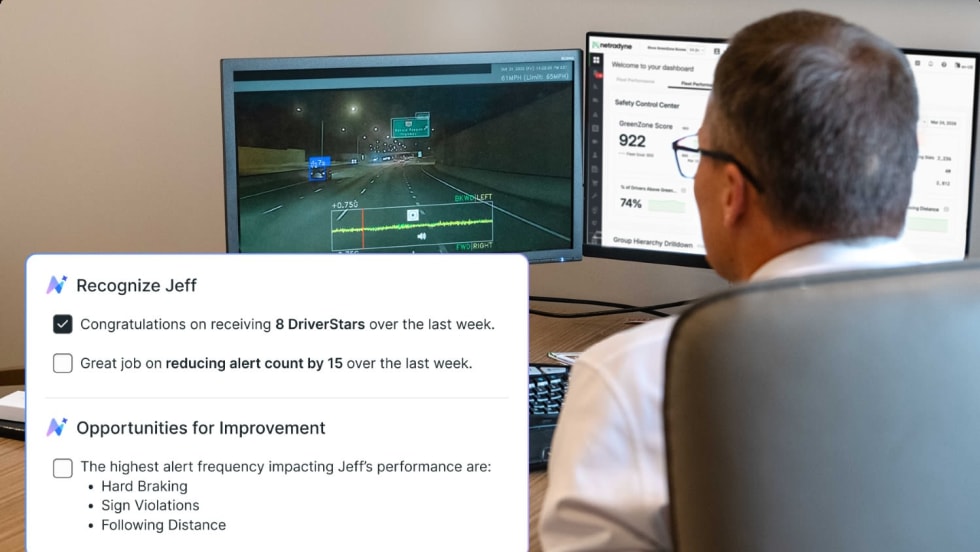
Netradyne Intelligence Uses New AI Agents to Automate Response to In-Cab Camera Data
The company called the next-generation in-cab camera safety platform "a fundamental shift from systems that report on what happened to systems that actively drive what should happen next."
Read More →
Why Truck Detention Keeps Costing Fleets Time and Money
A 2024 ATRI study found detention affects nearly 40% of truckload stops and costs the industry more than $15 billion annually. Despite the toll on drivers, fleets, and supply chains, the problem remains stubbornly persistent.
Read More →