




Hours of Service Decision Awaits Clapp’s Confirmation
The Federal Motor Carrier Safety Administration is continuing to work on truck driver hours of service reform, but don’t look for substantive decisions until after the Senate has confirmed Joseph Clapp as administrator

The Federal Motor Carrier Safety Administration is continuing to work on truck driver hours of service reform, but don’t look for substantive decisions until after the Senate has confirmed Joseph Clapp as administrator.
And don’t expect those decisions to show up as a final rule for many months. Federal law requires the agency to conduct an in-depth regulatory analysis of the rule, a process that will take at least a year, and perhaps longer.
But even before it gets to the details, the agency must decide if it will in fact proceed with a final rule. It still could determine to go for major revisions in a supplemental proposal, or to start again with new research.
FMCSA Assistant Administrator Julie Anna Cirillo expects that decision to be made by the senior political leadership at the Department of Transportation after Clapp has been confirmed, she said in an interview with Truckinginfo.com.
Clapp’s confirmation hearing is not yet scheduled. Sen. Fritz Hollings, D-S.C., chairman of the Senate Commerce Committee, has promised to move quickly on the confirmation hearing.
Clapp, the former chairman of LTL giant Roadway Express and an acknowledged safety leader, is likely to be confirmed, according to Hill sources. (See 'Bush Nominates Joseph Clapp to Top Safety Post," 7/18/2001.) However, he will encounter some opposition. Gerald Donaldson of Advocates for Highway and Auto Safety said his group will object to Clapp because of his industry background and his past support for longer combination vehicles.
Meanwhile, the safety agency is getting ready for the next step if it does decide to proceed with part or all of the rule. Cirillo explained that the agency is now searching for an outside contractor to conduct a regulatory analysis that will examine all aspects of the policy decisions.
Cirillo explained that DOT would ask the consultant to analyze a series of “scenarios,” or variations on the proposed rule. The scenarios, which could for example cover alternative scheduling schemes, will be based on what the agency learned from comments on its original proposal, Cirillo said.
She expects that through the scenarios, the analysis would cover major concerns raised about the proposal. It would, for example, address the trucking industry’s assertion that the proposed rule will cut back on productivity and force companies to put more drivers on the road – which in turn would increase the risk of accidents.
She said the decision to go with an outside consultant for the analysis is not in response to industry criticism of the agency’s own cost-benefit analysis of the original proposal. Trucking interests in particular claimed that analysis was seriously flawed, and urged the agency to start anew with a third-party review.
“Given the importance, the complexity and the wide range of comments that we got on the rule, and the limitations that we have staff-wise, I think we would have engaged a consultant regardless,” she said. “I can’t be sure of that but I am almost sure of that. This is not a third-party rule, this is our rule.”
At least one industry observer is concerned about FMCSA’s approach to this project. According to Kevin Williams, CEO of the Distribution and LTL Carriers Assn., the agency’s request for bid does not include any of the alternatives offered by industry.
Williams said the request asks contractors to explain how they would handle three alternatives: the current HOS rules with the additional requirement of an onboard recorder; the proposed revisions to the current rules; and an exemption from the rules for short-haul carriers.
This shows that the agency is looking more to validate the work that it already has done, than to look at other alternatives, Williams said.
Agency spokesman David Longo disagreed with this assessment. He said that the alternatives were chosen as a way to evaluate the capabilities of the contractors – “not to say that this is the work they will be asked to do.”
“When the contract is awarded, these options may be included, and they may not,” he said.
In the interview, Cirillo said, “We have not yet determined the scenarios. We are still working on them.”
Under federal law, the regulatory analysis must cover the total costs and benefits of the final rule. It also must address the impact of the rule on the profitability of small businesses. It must calculate the energy impact of the rule – the amount of fuel used by additional drivers, for example – and the environmental impact created by, say, emissions from additional trucks.
More Drivers

Competition Heating Up for Truck Drivers
New report reveals rising driver hiring costs, the return of sign-on bonuses, growing AI advantages, and the operational factors shaping driver retention.
Read More →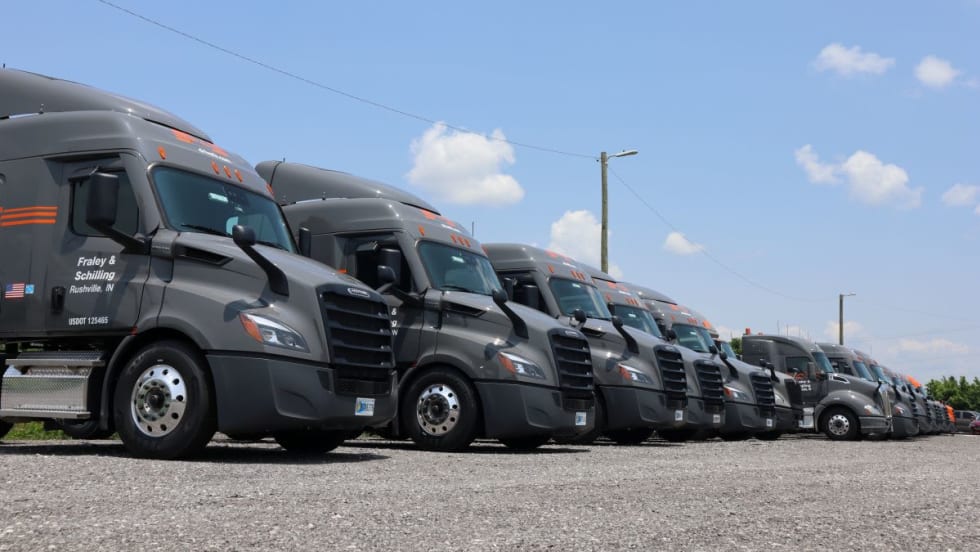
How Fraley & Schilling Improved Logbook Compliance by Over 50%
Fraley & Schilling needed a way to close a compliance workflow gap in its ELD system without adding more work from driver training, reminders, and back-office follow-ups. It found the answer in a custom driver app.
Read More →
Volvo Goes Gaming
Volvo has roared into American Truck Simulator with two new flagship trucks.
Read More →
What the Best Fleets to Drive For Teach About Driver Retention
Survey fatigue, AI-powered routing, owner-operator expectations, and the decline of social media all emerged as themes from this year's Best Fleets to Drive For program.
Read More →
Driver Retention Lessons From the Best Fleets to Drive For
What separates trucking's best workplaces from the rest? Jane Jazrawy shares the biggest lessons from this year's Best Fleets to Drive For program on driver retention, communication, AI, and workforce trends on the HDT Talks Trucking podcast.
Read More →
Farewell, CDL: Why I'm Giving Up My Commercial Driver's License
After more than 20 years as a CDL holder, HDT Executive Editor Jack Roberts is letting his commercial license expire. Not because he wants to — but because trucking's nuclear verdict crisis has made the risks of public-road test drives too great for editors, manufacturers, and everyone involved.
Read More →
How Top Trucking Fleets Improve Driver Retention [Video]
What do healthy snacks, optimized routing, and just picking up the phone have in common? They're all strategies the Best Fleets to Drive For are using to retain truck drivers.
Read More →
Trucker Path Adds Verisk CargoNet Theft Data to Navigation Platform
Trucker Path’s new cargo theft risk overlays give drivers and fleets visibility into high-risk areas, stolen commodity trends, and theft hotspots.
Read More →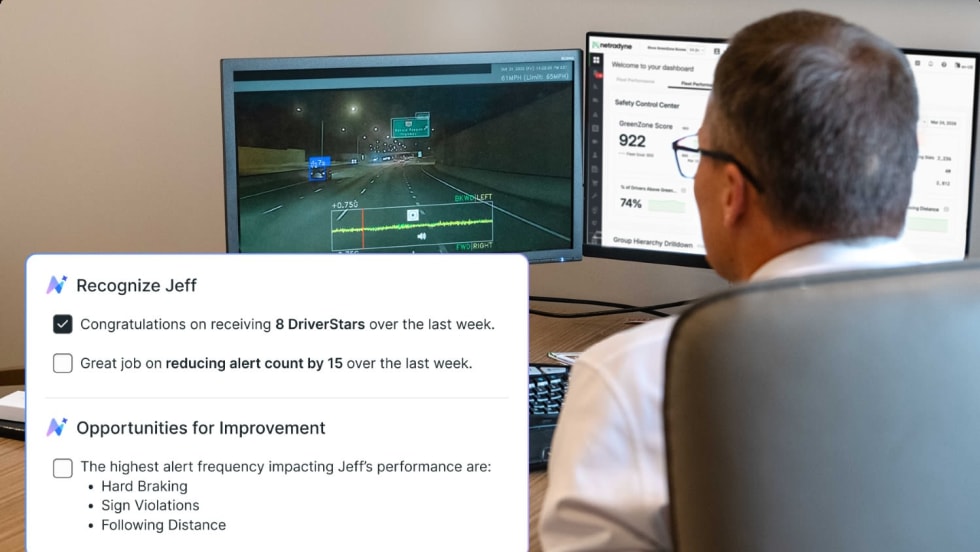
Netradyne Intelligence Uses New AI Agents to Automate Response to In-Cab Camera Data
The company called the next-generation in-cab camera safety platform "a fundamental shift from systems that report on what happened to systems that actively drive what should happen next."
Read More →
Why Truck Detention Keeps Costing Fleets Time and Money
A 2024 ATRI study found detention affects nearly 40% of truckload stops and costs the industry more than $15 billion annually. Despite the toll on drivers, fleets, and supply chains, the problem remains stubbornly persistent.
Read More →