




HOS Roundtables: Weekend Breaks and Daily Work
Since April's hours-of-service proposal, the trucking industry has said the weekend rest provision will put more trucks on the road during morning rush hour
Since April's hours-of-service proposal, the trucking industry has said the weekend rest provision will put more trucks on the road during morning rush hour.
But to Julie Anna Cirillo, acting assistant administrator of the Federal Motor Carrier Safety Administration, that argument is not yet proven.
More trucks on the road during rush hour is more of a congestion issue than a safety issue, Cirillo said at a roundtable discussion on the proposal last week.
“In general there are less accidents during congestion than other times of day,” Cirillo said.
Hubert Rogers, director of transportation for the snack food company Golden Flake, allowed that Cirillo may be right, but noted that congestion is a high stress situation that induces fatigue – and accidents follow fatigue.
It remains to be seen if this exchange – and others like it – will lead to changes in the proposal. While Cirillo and her staff gather information and ideas, they do not share their analysis with witnesses at the roundtable forums. But the roundtables – four days of them so far – have given trucking representatives a chance to air their concerns in more detail than was possible during the agency’s earlier field hearings.
Among the subjects covered at last week’s roundtable were the weekend rest period and the hours of work permitted each day. Here’s a rundown on what was said.
"Weekend" Rest. Under this provision, drivers are required to take a long break of at least 32 and up to 56 consecutive hours each week. The break must include two consecutive nights off, from midnight until 6 a.m., to recoup any sleep they may have lost during the week.
David Osiecki, vice president of safety and operations at American Trucking Associations, asked if he was correct in understanding that a driver could take this weekend at the beginning of one work week, and at the end of the following workweek – with a 10-day stretch of work in between.
FMCSA’s Charles Medalin, one of the principal writers of the rule, replied that while this would be permitted under the letter of the rule, as long as the driver stayed within his 60-hour limit, it would not being in keeping with the spirit of the rule.
Osiecki took the opportunity to suggest that the safety agency consider the weekend alternative proposed by ATA: re-start the driver's clock after a two-night break of 34 hours. That would give trucking companies more flexibility to manage their weekly schedules, he said.
David Owen, president of the National Association of Small Trucking Companies, expressed concern that the strictness of the midnight to 6 a.m. rule will force drivers to speed up as they approach the end of their shift.
In response, Cirillo observed that the proposed rule gives the driver more time behind the wheel than he currently gets – as much as 12 hours per day, compared to a 10-hour limit now.
Concern about the weekend provision varies according to the type of operation.
Grocery distributors that haul on regular schedules from distribution centers to stores, for example, would be better served a 24-hour restart provision, said Russ Weber, director of transportation for Roundy’s Inc.
Rick Briley, manager of fleet development for Allied Worldwide Relocations, worried that the proposal will leave independent movers stranded for the weekend break.
These owner-operators spend more time loading and unloading than driving, he explained. Like the grocery distributors, they would be better served by a 24-hour restart.
He acknowledged, after being asked by Cirillo, that loading and unloading are tiring. Then he added that once that work is done, the driver goes to a place where he can rest – he does not start his delivery.
A 7 a.m. start time also causes problems for bakery delivery operations, said Robb Mackie, vice president of government relations for the American Bakers Association. Retailers want fresh goods daily, and they don’t want delivery trucks lined up outside their stores after 7 a.m., he said.
Joe Beacom, vice president and chief compliance officer of Landstar System, brought up a point that has been on the front of truckers’ minds since the proposal became public. Requiring drivers to park between midnight and 6 a.m. is a problem when there is no place to park.
There is not much the safety agency can do about parking availability. It has no jurisdiction over highway rest areas – that’s handled by the Federal Highway Administration and the states. Cirillo is well aware of the problem and says that the Department of Transportation is doing what it can to raise states’ consciousness.
Beacom also pointed out that in Landstar’s experience, driving is safer at night. The company covers 13% of its miles at night, but experiences just 8% of accidents at night, due to less congestion.
Golden Flake's Rogers, introduced a new wrinkle on the midnight to six a.m. sleep requirement. His drivers would find it a severe handicap, he said: They prefer to work at night so they can escape the heat and humidity of daytime work in Alabama, where Golden Flake is based.
LaMont Byrd, director of the safety and health department for the Teamsters union, put in a note from the driver’s perspective. “It is important,” he said, “not to lose sight of the fact that drivers are people, they have families. They do not want to work more days a week.”
This drew a response from Robert Simpson, senior director of linehaul operations at Yellow Freight System. While Byrd may be correct that drivers don’t want more work, it also is true that they don’t want less, Simpson said. Under the proposal, Yellow drivers would lose two days every other week.
Yellow would have to take on new drivers who are not familiar with routes. The company would have to lower its hiring standards to get those drivers, he said.
There is a driver shortage now, Cirillo said. “Are you lowering standards now to fill those slots?”
“Yes, we are,” Simpson replied.
Daily Work
The proposal lengthens the time a driver can drive, but shortens his workday. The current 10-hour limit on driving would be boosted to 12 hours, but the current distinction between time driving and time on-duty but not driving would disappear. Instead of a possible 15-hour work day, with 10 hours of driving, the driver would get a 14-hour day, two hours of which would be mandatory breaks – in effect, a maximum of 12 hours of work.
Truckers don’t like the restriction.
Rogers of Golden Flake said that while he could adjust to a day that allowed 14 hours of work, a 12-hour limit would be devastating. It is more than enough time for driving, but his drivers load and unload, and are responsible for the accuracy and timeliness of delivery. They cannot always get it done in 12 hours.
“We work our drivers at a reasonable pace, and pay them well,” Rogers said. “I am not aware of a problem with fatigue.”
The moving industry would find itself in a bind under the proposal, said Briley of Allied. Movers need the flexibility to finish some packing or unpacking jobs, particularly since they cannot predict the circumstances that will affect the day’s work, Briley said.
The general sense of industry testimony was that drivers hardly ever put in 12 hours behind the wheel on a given day. Kevin Williams, CEO of the Distribution and LTL Carriers Association, said that LTL drivers average nine hours a day behind the wheel.
Cirillo returned the discussion to FMCSA’s central point about daily work. Science shows that after a certain number of hours, people get tired, she said.
“We have to think about what we’re saying. We’re asking a group of people to work more than twice as long as anyone else in this country.”
David Owen disagreed. “I don’t know a small businessman who doesn’t work 70-80 hours a week,” he said. “That’s the way it is. To expect this or any industry to all of a sudden observe a perfect circadian harmony is not realistic.”
Cirillo replied that the agency is
More Drivers
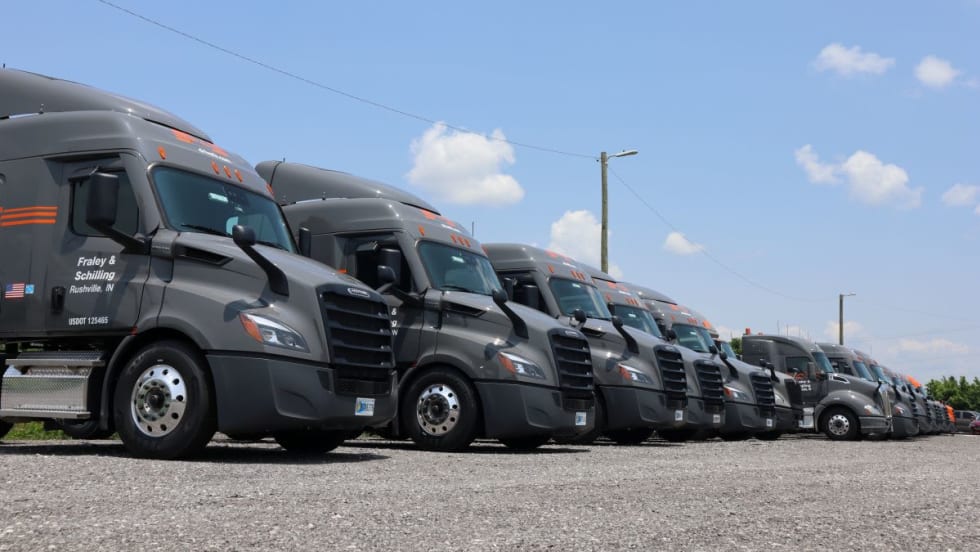
How Fraley & Schilling Improved Logbook Compliance by Over 50%
Fraley & Schilling needed a way to close a compliance workflow gap in its ELD system without adding more work from driver training, reminders, and back-office follow-ups. It found the answer in a custom driver app.
Read More →
Volvo Goes Gaming
Volvo has roared into American Truck Simulator with two new flagship trucks.
Read More →
What the Best Fleets to Drive For Teach About Driver Retention
Survey fatigue, AI-powered routing, owner-operator expectations, and the decline of social media all emerged as themes from this year's Best Fleets to Drive For program.
Read More →
Driver Retention Lessons From the Best Fleets to Drive For
What separates trucking's best workplaces from the rest? Jane Jazrawy shares the biggest lessons from this year's Best Fleets to Drive For program on driver retention, communication, AI, and workforce trends on the HDT Talks Trucking podcast.
Read More →
Farewell, CDL: Why I'm Giving Up My Commercial Driver's License
After more than 20 years as a CDL holder, HDT Executive Editor Jack Roberts is letting his commercial license expire. Not because he wants to — but because trucking's nuclear verdict crisis has made the risks of public-road test drives too great for editors, manufacturers, and everyone involved.
Read More →
How Top Trucking Fleets Improve Driver Retention [Video]
What do healthy snacks, optimized routing, and just picking up the phone have in common? They're all strategies the Best Fleets to Drive For are using to retain truck drivers.
Read More →
Trucker Path Adds Verisk CargoNet Theft Data to Navigation Platform
Trucker Path’s new cargo theft risk overlays give drivers and fleets visibility into high-risk areas, stolen commodity trends, and theft hotspots.
Read More →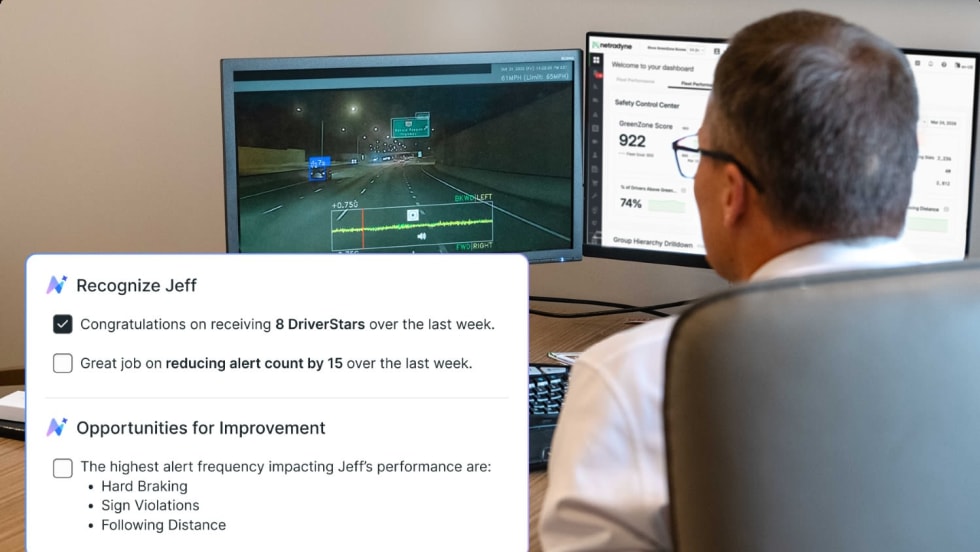
Netradyne Intelligence Uses New AI Agents to Automate Response to In-Cab Camera Data
The company called the next-generation in-cab camera safety platform "a fundamental shift from systems that report on what happened to systems that actively drive what should happen next."
Read More →
Why Truck Detention Keeps Costing Fleets Time and Money
A 2024 ATRI study found detention affects nearly 40% of truckload stops and costs the industry more than $15 billion annually. Despite the toll on drivers, fleets, and supply chains, the problem remains stubbornly persistent.
Read More →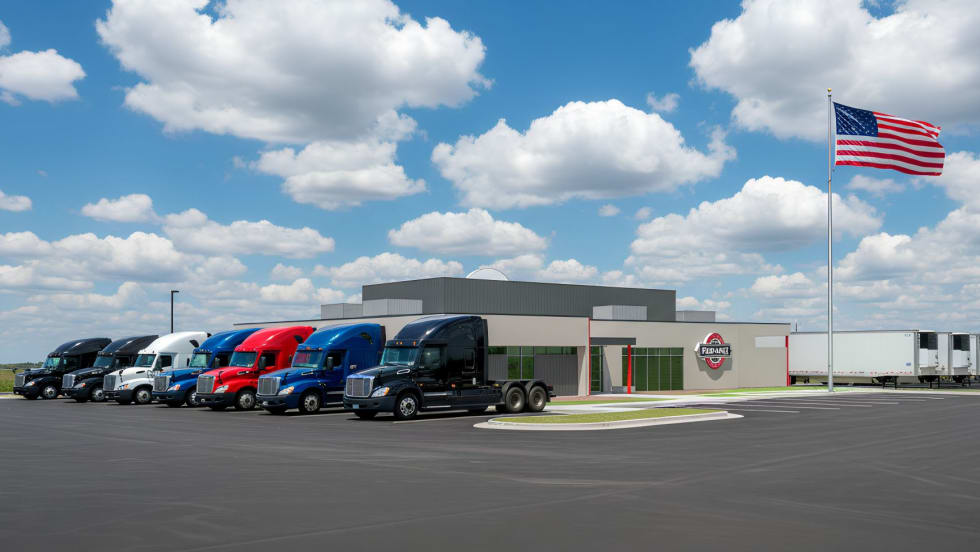
Prime Inc. to Open $7.9M Flagship Used-Truck Dealership
A new driver-focused facility to sell Prime Inc's used trucks and trailers will be the first purpose-built location in the company's history.
Read More →