




Highway Funding Difficult but Not Impossible
It won’t be easy, but there’s at least a glimmer of a way for Congress to come up with money to fund a longer-term highway bill. The Highway Trust Fund is going to run out of money possibly as soon as August, according to the Congressional Budget Office.

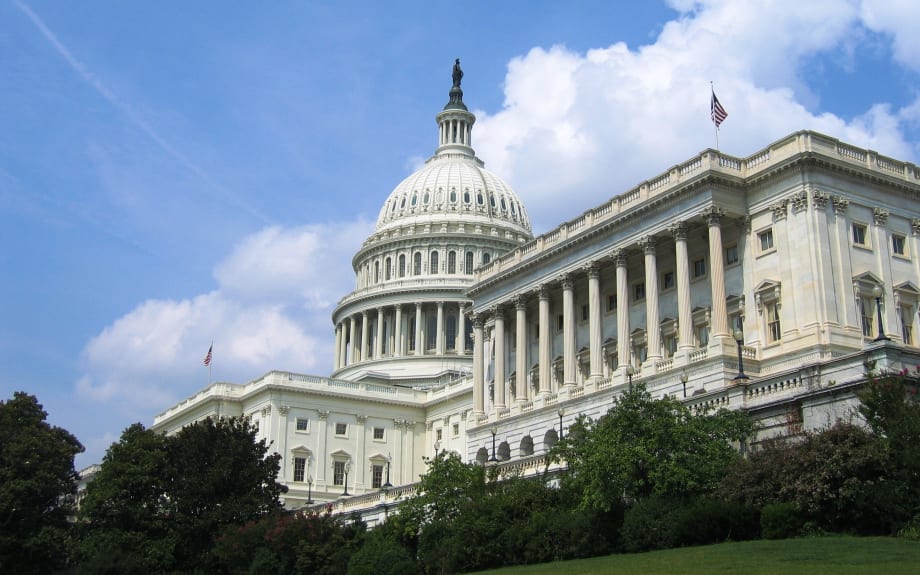
It won’t be easy but there’s at least a glimmer of a way for Congress to come up with money to fund a longer-term highway bill.
The near-term outlook is dicey. The Highway Trust Fund is going to run out of money possibly as soon as August, according to the authoritative Congressional Budget Office.
Absent a clear signal from Congress that there will be enough money to keep the fund whole, state transportation departments will be forced to suspend or cut back their commitments to highway construction projects. The drop-dead date for that signal is June, said Sen. Barbara Boxer, D-Calif.
President Obama and Rep. Dave Camp, R-Mich., have proposed separate ideas for temporarily replenishing the fund with one-time infusions that would support the highway program for at least four years. Both hinge on Congress passing substantive tax reforms, and the chance of that happening before June is approximately zero.
The transportation and business communities continue to assert that the quickest and most effective way to save the Fund is to raise the federal fuel tax. But Republican and Democratic lawmakers alike insist that raising the tax is politically impossible.
There are a host of other proposals on the table, ranging from devolving the problem to the states to a variety of financing innovations, but the likelihood that any of them will get through the legislative process in the next three months is practically nil.
What’s left is a transfer of money from the general treasury to the Fund in order to buy time to craft a long-term bill.
That’s a politically unpopular move – House Speaker John Boehner has said members oppose it – but if it can be done it could set the stage for a post-election agreement.
Optimists on the Hill point to two things: the bipartisan sentiment in the White House, the Senate and the House that the national infrastructure is in dire need of support this year, and a convergence between the Obama and Camp proposals.
Obama is calling for $302 billion over four years. About half of the money, $150 billion, would come from corporate tax reform, and $63 billion would go to plugging the hole in the Trust Fund.
Camp, R-Mich., Chairman of the House Ways and Means Committee, has a plan to comprehensively reform the tax code that would dedicate $126.5 billion over eight years to the Trust Fund.
Both ideas start with repatriation of tax dollars from the foreign operations of U.S. corporations, said Norma Krayem, a senior advisor at the Washington, D.C., law firm of Patton Boggs with extensive experience in transportation policy.
In the Camp proposal, for example, the money would come from a change in the tax treatment of foreign income to U.S. corporations. Right now, taxes on earnings and profits from a foreign subsidiary are postponed until the money is distributed as a dividend. Under the change, some of this income would be taxed over the eight years.
According to Camp, the change would benefit taxpayers as well as the Fund. His plan says it would eliminate the need for companies to track earnings and profits in the years before the dividend exemption was created. It also would moderate the tax burden on illiquid earnings and profits that were reinvested in the foreign subsidiary.
Sen. Barbara Boxer, D-Calif., chair of the Senate Environment and Public Works Committee, acknowledged that Congress won’t pass overall tax reform legislation this year, but said it is possible to do just the piece that would fund transportation.
The political attraction of this approach is that it offers a way for legislators to achieve a success, Krayem said.
“In order to deal with repatriation, there has to be some awareness of where those funds will go that is tangible,” she said.
“Transportation and infrastructure are very tangible. Every member of congress can take them back to their constituency as a rationale for doing this, and that’s a big deal.”
It is helpful, Krayem added, that Boxer in the Senate and Rep. Bill Shuster, R-Pa., chair of the House Transportation and Infrastructure Committee, are pushing for quick action on the next highway bill. Their committees are responsible for most of the policy provisions of the law, while Senate Finance and House Ways and Means handle the Trust Fund issue.
Boxer says she wants a bill by April. Shuster says he’s aiming to wrap up work by early summer and have a bill to the floor by August.
More Fleet Management

How Telematics Improves Visibility, Control, and Performance in Refrigerated Fleets
Explore how telematics help refrigerated fleets improve visibility, uptime, efficiency, compliance, and cargo protection across connected cold chain operations.
Read More →
What the U.S.-Canada Trade War Means for Trucking
Escalating U.S.-Canada tariffs could disrupt cross-border freight, reduce truck volumes, raise costs, and create new uncertainty for carriers on both sides of the border.
Read More →
What Are Trucking’s Top Concerns for 2026?
The American Transportation Research Institute wants to know what's worrying trucking fleet managers, drivers, and other stakeholders in its annual Industry Issues survey.
Read More →

American Trucking Associations Looks for a New Leader
ATA President and CEO Chris Spear abruptly left his job at the association on August 21, at a pivotal time for the trucking industry.
Read More →
Public Wi-Fi Cybersecurity Risks: How Truck Drivers and Fleets Can Protect Their Data
Public Wi-Fi can expose truck drivers and fleets to credential theft, malware, and other cyber threats. Here’s how to reduce the risk on the road.
Read More →
For Nicky Cupp, Fleet Innovation Starts With Frustration
HDT Truck Fleet Innovator Nicky Cupp turns everyday pain points at Fraley & Schilling into opportunities for better technology and smarter processes.
Read More →
Adam Buttgenbach’s Approach to Electric Trucks: Start With Where They Fit
HDT Truck Fleet Innovator Adam Buttgenbach helped PepsiCo build one of North America’s largest EV fleets by focusing on where electric trucks make operational sense.
Read More →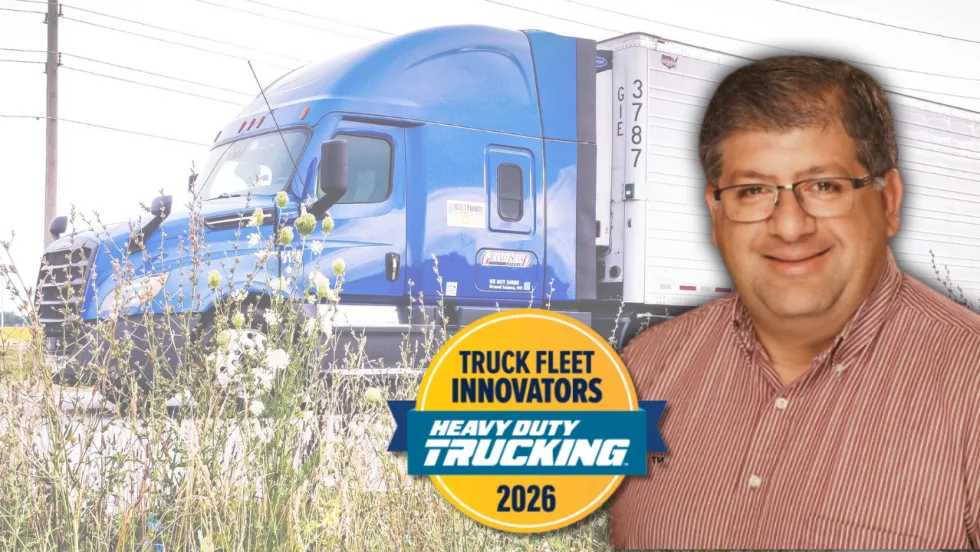
Deen Albert: Let Automation Do the Math, People Make the Decisions
HDT Truck Fleet Innovator Deen Albert makes sure people are still at the heart of operations at Grand Island Express, even while adopting artificial intelligence tools. AI-assisted dispatch helped boost revenue 25% with the same number of trucks.
Read More →
Trimble’s New AI Agent Takes Aim at Fleet Back-Office Busywork
Arc Agent works across Trimble TMS products to automate repetitive tasks such as freight orders, maintenance, invoices, fuel costs and more.
Read More →
How HDT’s 2026 Truck Fleet Innovators Are Rethinking Fleet Operations
Meet five trucking leaders who are challenging assumptions, solving operational problems, and putting innovative ideas to work.
Read More →