




Heavy Truck Sales Increase of 74% Leads to Record Rush Profit
Net income hit $19.8 million, or 49 cents per diluted share, compared to $5.6 million, or 14 cents per diluted share from the same time a year ago.
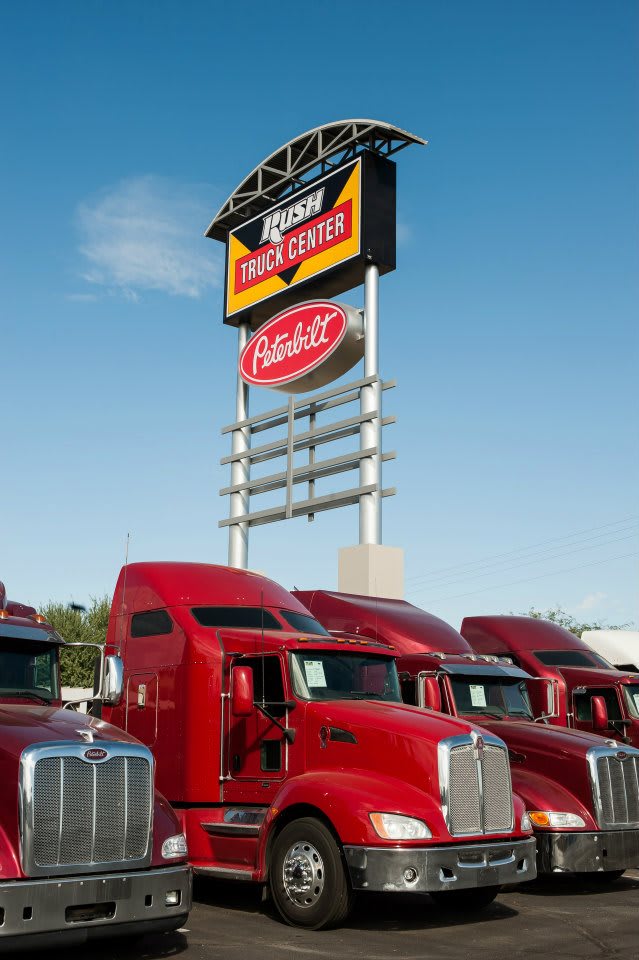
Photo: Rush Truck Centers Facebook page
Rush Enterprises, which operates the largest network of commercial vehicle dealerships in North America, recorded a record profit in the second quarter of the year
Net income hit $19.8 million, or 49 cents per diluted share, compared to $5.6 million, or 14 cents per diluted share from the same time a year ago.
Revenue during the most recent quarter was $1.18 billion compared to $790 million a year earlier, a 49% increase.
"Moderate freight growth and a stable economy, combined with our ability to offer unique solutions and company-wide efforts to 'integrate and execute' resulted in record-setting performance this quarter," said W. M. "Rusty" Rush, chairman, CEO and President of Rush Enterprises. "We significantly outpaced the U. S. market in both heavy- and medium-duty new truck sales, achieving record market share in both segments.
In the second quarter Rush's Class 8 retail sales, which accounted for 6.5% of the U.S. market, increased by 74% over the same time period in 2013. Rush's Class 4-7 medium-duty sales, which accounted for 5.7% of the total U.S. market, increased 49% over the second quarter of 2013.
Rush specialties in selling Peterbilt, International, Hino, Isuzu and Ford trucks.
"During March we began to see the positive impact of a steady economy and improvements in freight movement in our Class 8 truck sales, and this trend continued throughout the second quarter,” said Rush. “In particular, sales of our new Class 8 stock trucks significantly increased as independent operators and smaller vocational fleets required work-ready equipment to take advantage of increased activity in energy, construction and refuse segments. Some larger fleets also replaced aged vehicles to reduce maintenance expenses, but fleet expansion remains tempered by the driver shortage and high cost of equipment.”
He also said the company’s Class 4 through Class 7 truck sales also significantly outpaced the U. S. retail market.
The Company delivered 3,642 new heavy-duty trucks, 2,976 new medium-duty commercial vehicles, 489 new light-duty commercial vehicles and 2,021 used commercial vehicles during the second quarter of 2014. This compared to 2,088 new heavy-duty trucks, 2,001 new medium-duty commercial vehicles, 534 new light-duty commercial vehicles and 1,518 used commercial vehicles during the second quarter of 2013.
Aftermarket services remained strong and accounted for approximately 62% of the company's total gross profits for the second quarter of 2014. Second quarter parts, service and body shop revenues increased by 36% as compared to the second quarter of 2013.
"We expect that strong aftermarket sales will continue through the remainder of 2014, fueled by the on-going need for vehicle maintenance and repair and growth in our portfolio of aftermarket solutions, including expanded mobile service, regional parts call centers, natural gas capabilities and technology to improve customer communication and vehicle uptime,” Rush said.
Parts, service and body shop sales revenue was $331 million in the second quarter of 2014, compared to $242.9 million in the second quarter of 2013.
In May, Rush Enterprises announced an agreement with 3M to pursue the design, manufacture and installation of a portfolio of compressed natural gas fuel systems for use in Class 6-8 vehicles. It allows the company to engineer, assemble and install CNG fuel systems utilizing 3M's CNG tanks, as well as provide market distribution and aftermarket support.
"We believe our agreement with 3M provides the Company with a unique opportunity to offer a superior CNG solution than what is available today. By pairing the advancements in tank technology from 3M with our national network of sales and service centers, vehicle integration and engineering expertise and proven ability to introduce innovative solutions to the commercial vehicle market, we believe we can accelerate industry adoption and deliver a quality solution that addresses many currently unmet needs. Plans are in place to introduce the new fuel system in Spring, 2015," said Rush.
More Equipment
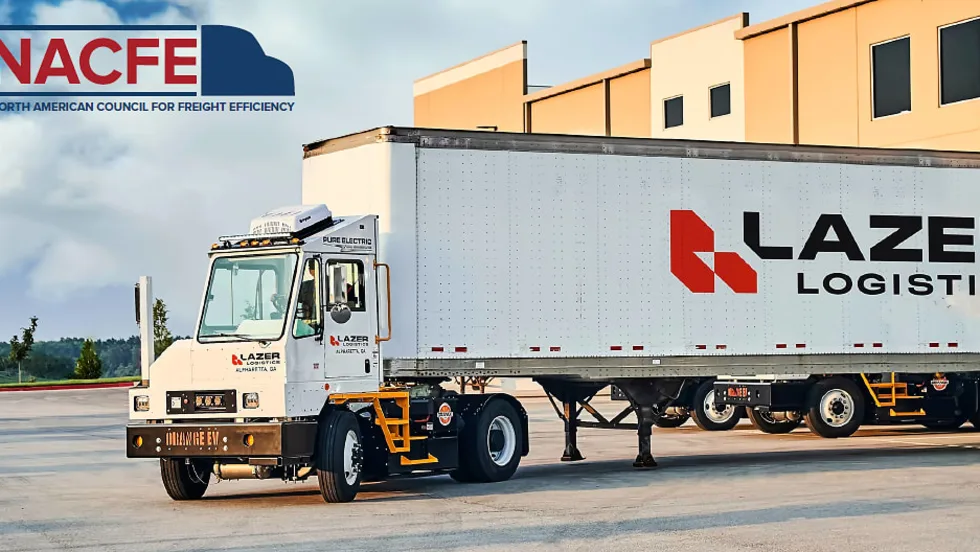
Electric Yard Tractors Move Beyond Pilots
Operating-cost savings have overtaken sustainability goals as the leading reason surveyed fleets are adopting battery-electric terminal tractors, according to new NACFE research.
Read More →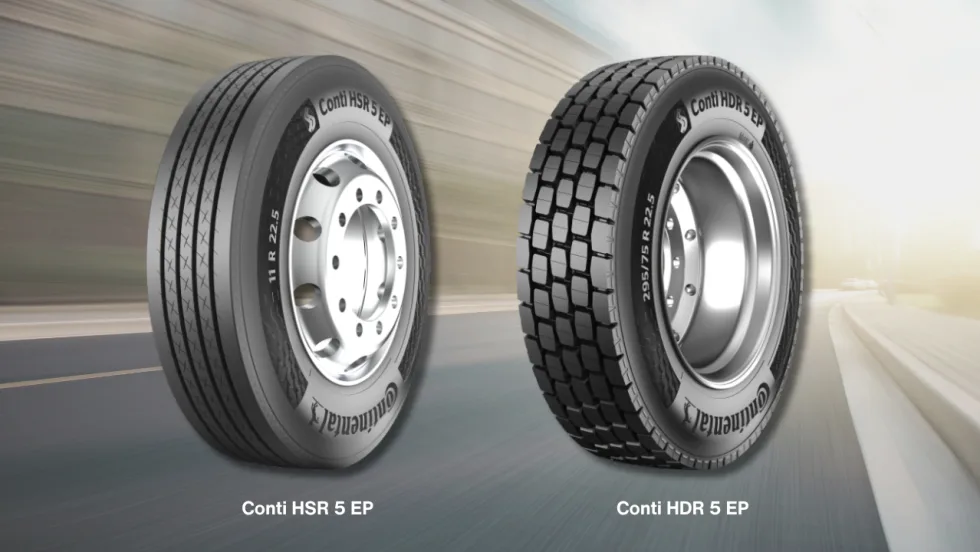
Continental Introduces New Regional Truck Tires
Continental says its new Generation 5 steer and drive tires for regional operations offer longer tread life, with estimated mileage gains of 22% and 19%, respectively.
Read More →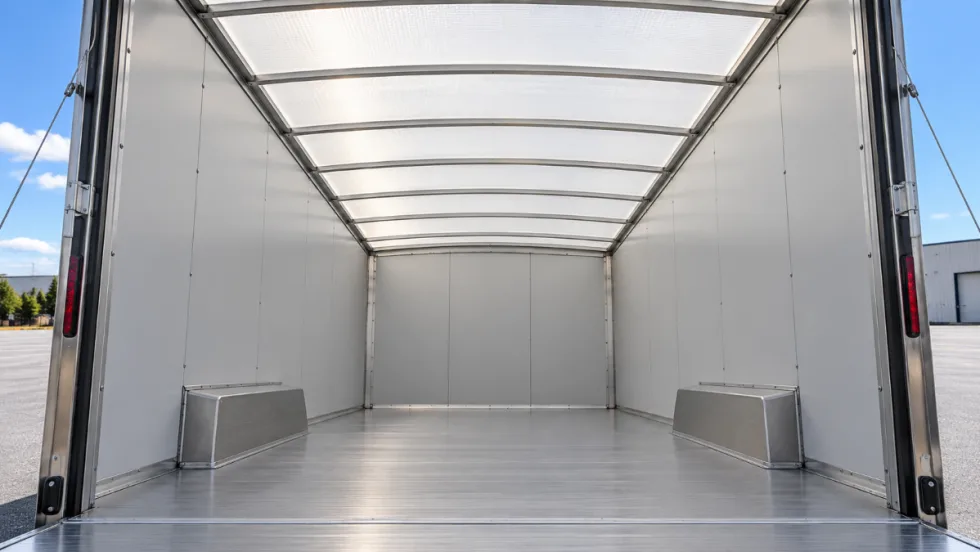
Tekmodo Introduces CargoBright Brand for Translucent Trailer Roofs
CargoBright is designed to diffuse daylight across the cargo area while performing as a working vehicle roof.
Read More →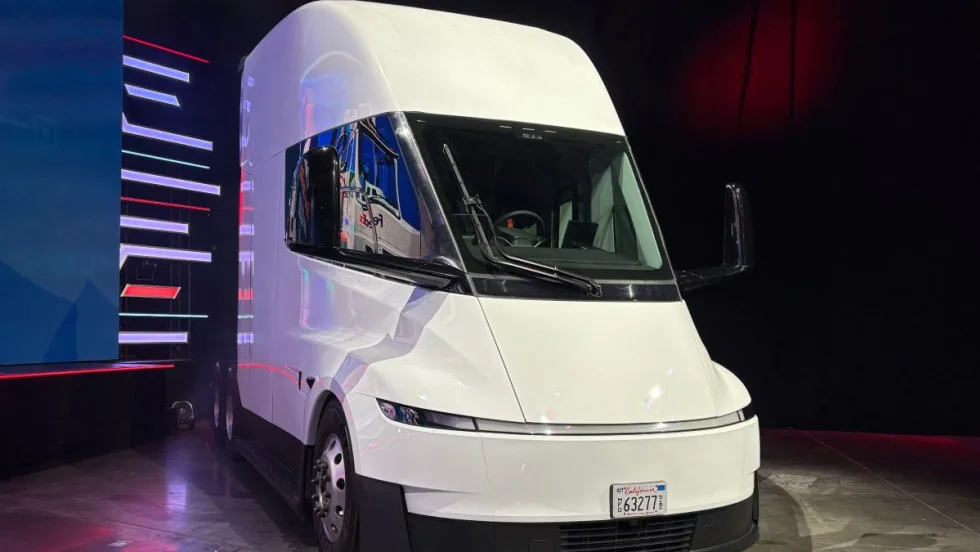
Fleet Economics Shape Electric Truck Outlook
ACT Research expects costs, charging infrastructure, and technology improvements to drive zero-emission commercial vehicle adoption as federal regulations and incentives retreat.
Read More →
Kodiak Targets Dallas–Houston for Driverless Trucks
The company says its autonomous trucks are completing the I-45 run without a safety observer taking control. It plans to remove the observer by the end of 2026.
Read More →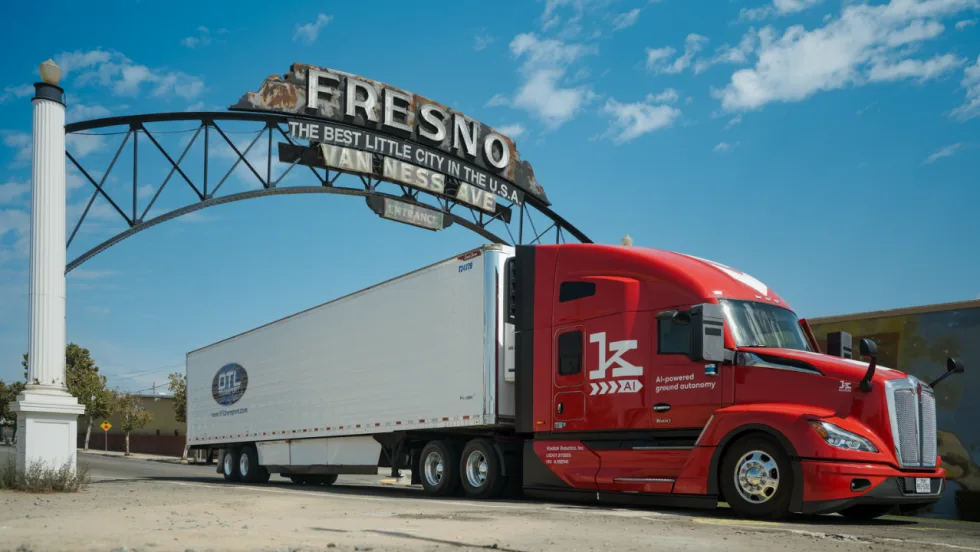
Kodiak Hauls Produce in California Autonomous Truck Pilot
Kodiak AI and DTL Transport have begun hauling produce between Fresno and Los Angeles under California’s new rules for testing heavy-duty autonomous trucks. A safety driver remains behind the wheel.
Read More →
Used-Truck Remarketing Math Is Changing
Used-truck value is no longer just a concern at trade-in. Decisions made throughout a truck’s first life can influence what it’s worth years later.
Read More →
How Volvo Updated Its D13 for EPA 2027 [Watch]
Volvo’s updated D13 promises lower emissions without sacrificing performance or fuel economy. Take a closer look at what changed inside the engine in this HDT Spotlight video.
Read More →
Michelin Tire Improves Efficiency and Durability for Regional Fleets
The Michelin X Multi Energy D2 is a regional haul drive tire engineered to help fleets improve fuel efficiency, durability and traction in demanding stop-and-go operations.
Read More →
ZF Expands Commercial Vehicle Push in North America
ZF is expanding its North American commercial-vehicle presence with new transmission applications, electrification, trailer technology and autonomous-driving systems.
Read More →