




Former FMCSA Chief Speaks out on HOS, EOBRs
Former Federal Motor Carrier Safety Administrator John Hill believes it's going to take Congressional action to put an end to the never-ending cycle of hours of service litigation and rewrites
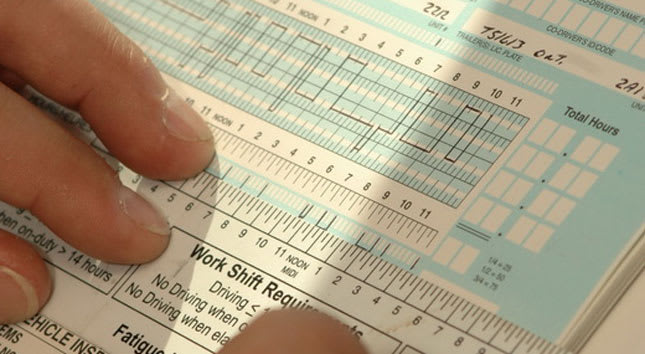
Former Federal Motor Carrier Safety Administrator John Hill believes it's going to take Congressional action to put an end to the never-ending cycle of hours of service litigation and rewrites.
"Frankly, folks, the hours of service rule is something that is going to be litigated for a long time," said Hill, speaking to the National Private Truck Council Tuesday.
Hill is now consulting with trucking companies as principle of The Hill Group. He was involved in the hours of service saga during the mid-2000s rewrites. Under his watch, he said, the agency could not justify the 10-hour driving time and changes to the 34-hour restart under the cost vs. benefits analysis required by law to be done by the White House Office of Management and Budget for major regulations.
"During my tenure I made several trips over to the White House to talk about hours of service rules because of the significant impact it would have on the economy," Hill said. "So there was tremendous concern about the implications of this rule, even in the midst of a vibrant economy."
So how is the FMCSA justifying the cost vs. benefits today? In January 2009, Hill explained, the value of a human life at the DOT changed from $3 million to $6 million. By doubling that value, the DOT was able to make the cost vs. benefits numbers work.
"If you go through this proposed rule, you will see a lot of the benefits that accrue to this rule are through driver health related issues," Hill said. "And I think there are some driver health issues in that rule. But I will tell you when I was at the agency, there was very little data correlating the cost to those driver health benefits. I'm sure there have been some improvements in terms of quantifying that data, but still, it's very scarce. So if the agency moves ahead with the hours of service rule and people bring suit against it, you can be sure they're going to go after the cost-benefit part of it."
Hill said it's going to take Congressional action to stop the cycle.
His experience with the agency has led Hill to the belief that it's the political powers that be who are pushing the buttons, not the regulatory appointees.
"I can assure you that [current FMCSA administrator] Anne Ferro is getting marching orders," Hill said. "Let me remind you she had been confirmed only one day, when the very next day, the DOT secretary announced an agreement with Public Citizen on a moratorium for the lawsuit and a rewrite of the hours of service rule. She had no input in that. I am sure it is difficult for her to work through this issue because there are people at the White House that are very sympathetic to labor."
"I do not think there will be a resolution to the hours of service rule until the politicians get involved and do something by statute," Hill predicted. "I know right now our representatives and senators are preoccupied with financial decisions and it's going to be difficult for them to even address the highway bill, but I believe it's going to be essential for people in Congress to issue some sort of moratorium."
Hill believes if Congress issued some sort of stay on changing the hours of service rules while the agency went ahead with its proposal for mandatory electronic onboard recorders to track driver hours, data could be collected that would back up the safety of the current hours of service. "Let that become the proving ground for highway safety in terms of HOS compliance."
In fact, Hill said, one of the things he regrets about his time as administrator is that he did not broker some sort of agreement between the trucking industry and Public Citizen and the other safety groups that have challenged the hours of service, which would have left the hours of service rules alone in exchange for mandatory EOBRs.
More Drivers

Trucker Path Expands Reserved Parking Network
Trucker Path has added close to 6,000 more truck parking spaces to its Trucker Path Reserved Parking Network with the addition of Safe Truck Parking.
Read More →
EEOC Sues Texas Trucking Company Over Driver Age Limits
The agency says Trancasa USA rejected applicants over 65 and applied tougher driving-record standards to those over 60.
Read More →
Nussbaum, Roehl Announce Second Driver Pay Increase This Year
This year has seen a swath of major truck driver pay increases as freight capacity has tightened.
Read More →
From One Generation to the Next: How Mentorship Builds Safer Truck Drivers
After three decades in trucking, Harold Perry shares what he's learned about driver safety, mentorship, and helping the next generation build confidence behind the wheel.
Read More →
Truck Drivers Need More Than Another Alert
Fleets have more visibility into truck health, safety events, and driver activity than ever. The next challenge is turning all that information into useful guidance for the person who has to decide what to do next.
Read More →
FMCSA Removes 110 Truck Driver Training Schools from Certified ELDT List
Federal regulators also are targeting more than 160 additional training providers and launching a nationwide audit of third-party CDL skills testers as part of a broader crackdown on trucking fraud.
Read More →
Hours of Service Pilot Programs: FMCSA Readies for 2027 Rollout
Two pilot programs could eventually reshape hours-of-service rules, giving truck drivers options to pause their 14-hour clock or use longer split sleeper rest periods.
Read More →
Medical Cards, English Proficiency Reshape Roadcheck Violations
Medical-card violations jumped to the top of the driver out-of-service list during CVSA’s 2026 International Roadcheck, while English-language proficiency violations appeared among the leading violations for the first time.
Read More →
Driver Trust Can Make or Break the Success of Fleet Safety Technology
New Teletrac Navman research suggests that onboarding, transparency about driver data, and positive feedback can play a significant role in how commercial drivers respond to safety and coaching technology.
Read More →
EEOC Sues KLLM Over Alleged Sex Discrimination in Driver Training
KLLM is facing a federal sex-discrimination lawsuit over policies the EEOC alleges put female truck driver trainees at a disadvantage.
Read More →