




Forecast: A Long Climb Out of Recession but a Busy Couple of Years for Trucking
It's going to take many years to rebuild the economy from the Great Recession, but there are positive signs for the near term, and the outlook is good for trucking over the next couple of years, says economist Noel Perry, senior consultant for FTR Associates
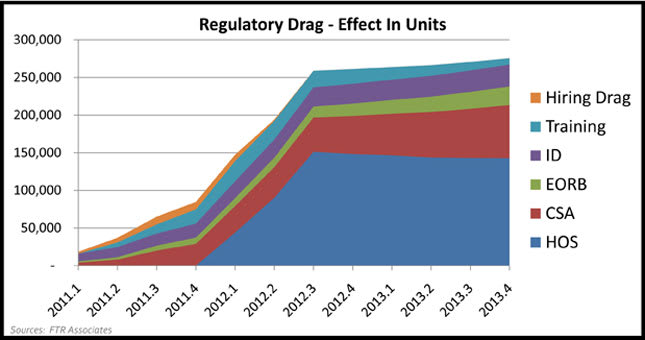
Pending reforms in the driver hours of service rules will drive a steep increase in productivity drag over the next several years.
It's going to take many years to rebuild the economy from the Great Recession, but there are positive signs for the near term, and the outlook is good for trucking over the next couple of years, says economist Noel Perry, senior consultant for FTR Associates.
Perry, speaking last week in a webinar hosted by FTR, said that housing, employment and debt are going to be causing friction in the economy for a while yet to come.
"The housing market will remain a drag on the economy for at least five years," Perry said. The excess housing inventory ran in the neighborhood of 2 million between 2001 and 2005, and then shot up to more than 4.5 million in 2008. It has since improved to around 3.5 million, but there's a long way to go before that inventory gets back to normal.
Unemployment in this recession is much worse than in past downturns, and it is recovering more slowly as well. And although the personal savings rate is now the highest it has been in a decade - 5 percent of disposable personal income - it still is well below what it has been in the past.
On the other hand, manufacturing has been growing as have retail sales - grounds for optimism in the near term, Perry said.
Manufacturing has been growing more rapidly than services over the past two years, although services are growing as well. "Manufacturing is leading the upturn, which means that freight is leading the upturn," he said.
Part of his optimism for the next couple of years is based on retail sales growing more strongly than they did in the comeback from the last recession. Also, exports are growing more rapidly than imports, which helps both the GDP and trucking, he said.
Economists are forecasting GPD growth to get above 3 percent this year, but Perry thinks that's a little conservative because it does not include the positives of retail sales and exports. He expects to see more volatility from quarter to quarter than forecasters are expecting - a condition that will contribute to capacity challenges for trucking.
His analysis includes a prediction of the impact of new and pending federal regulations on trucking productivity.
Regulatory Drag
Perry measures regulatory drag in terms of the additional drivers or tractors that will be required as a consequence of the rules. Starting this year, he sees the drag rising quickly to more than 250,000 drivers or tractors by the third period of 2012.
This increase will be driven principally by the effect of the proposed changes in the hours of service rules, which Perry sees costing the industry 5 percent in productivity.
Another rule in his analysis is the driver identification requirement that goes into effect this year - drivers have to present proof of citizenship when they apply for a commercial license. Perry figures that since around 5 percent of the population are illegal aliens, the same percentage will show up among truck drivers.
He also factored in the pending requirement for near-universal use of electronic onboard recorders, and the new CSA safety enforcement system being installed by the Federal Motor Carrier Safety Administration.
Other factors in the analysis are what he calls "hiring drag" - a slowdown in hiring attributable to the difficulty of finding people, and the effect of the need to train people in the new systems.
Perry expects that the market will adapt to this phenomenon by getting more productive - shippers will reduce waiting times, and carriers will move faster and improve their management of capacity.
The safety regulations do have benefits, but they don't necessarily show up in productivity measurements, Perry said. They are more likely to show up in the overall efficiency of the supply chain. "The net effect to the system is almost certainly positive," he said.
Capacity Questions
The industry has been able to keep up with rising demand over the past couple of years by using its excess capacity, as measured by miles per tractor, he said.
Coming out of the bottom of the downturn, fleets handled a lot more freight with the same resources. They had to pay more for miles and fuel, but they don't have to hire new drivers or buy any new equipment.
That is changing, though.
"Now we have taken out most of that excess capacity, so if a carrier wants to handle more freight - and we're talking about a 5 percent increase this year - he's going to have to hire more drivers and buy new equipment. And we're starting to see that."
The next question is rates. Fleets have been able to get more productive and make money without raising rates dramatically, but as freight begins to increase and regulatory drag kicks in, that will change.
"We might not get peak shortages (in capacity) like last time, but it's likely that shortages will last a lot longer. Prices will catch up to capacity."
More Fleet Management
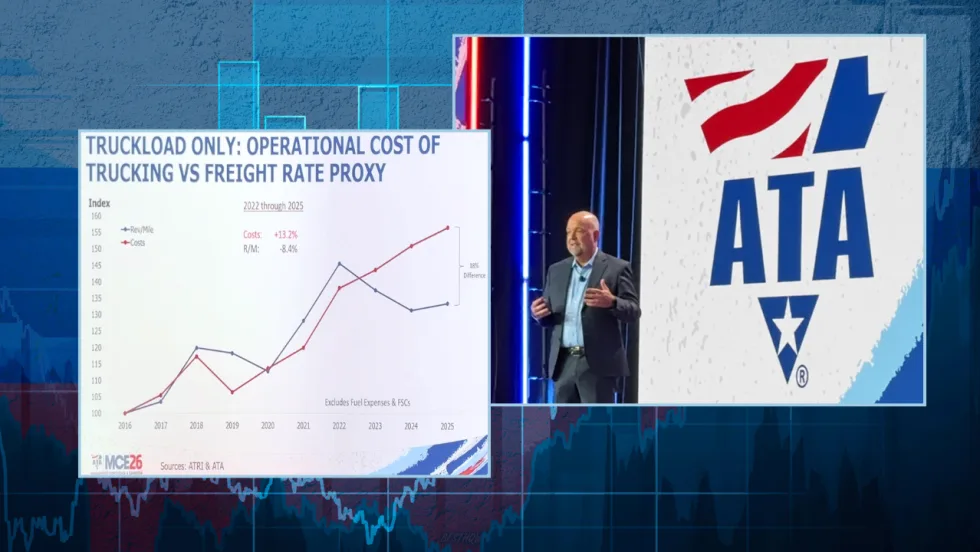
Why This Trucking Recovery Is Different
Freight demand remains sluggish, but rising costs and tougher enforcement have taken enough capacity out of the market to change the outlook for motor carriers.
Read More →
Platform Science Adds Dispatch and Safety Tools
Four additions to PS Fleet help fleets monitor loads, manage driver coaching, share truck locations and adjust video system settings.
Read More →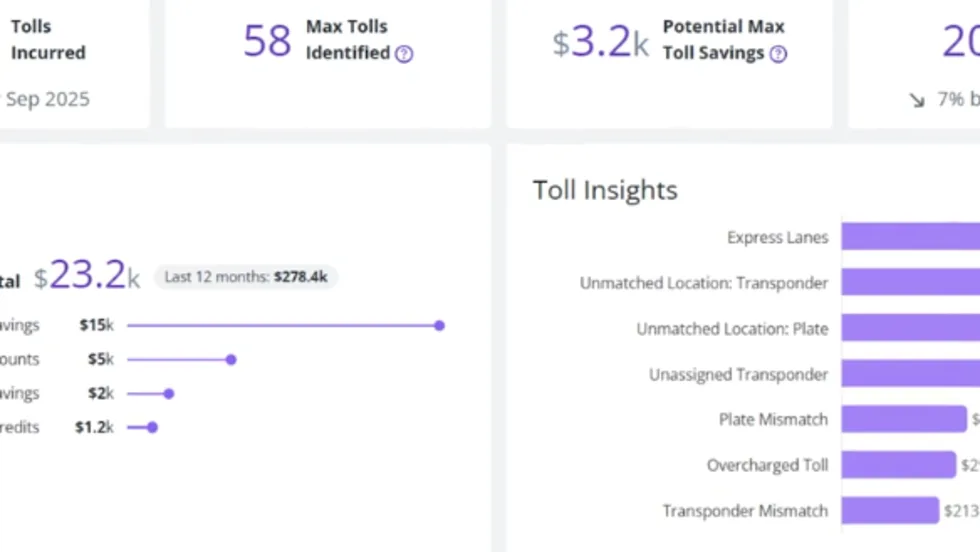
PrePass Intelligence Mines Fleet Bypass, Toll and Safety Data
PrePass Intelligence helps fleets measure bypass savings, flag potential toll overcharges, and spot suspicious transactions by combining data from separate systems.
Read More →
Motive Adds AI Agents for Fleet Operations
New tools automate follow-up on fleet data, from maintenance work orders to driver alerts, with two-way voice conversations planned for later this year.
Read More →
Can You Beat Our Trucking Trivia Challenge?
Test your truck knowledge with 19 trivia questions from Heavy Duty Trucking Exchange. Can you keep up with the fleet pros?
Read More →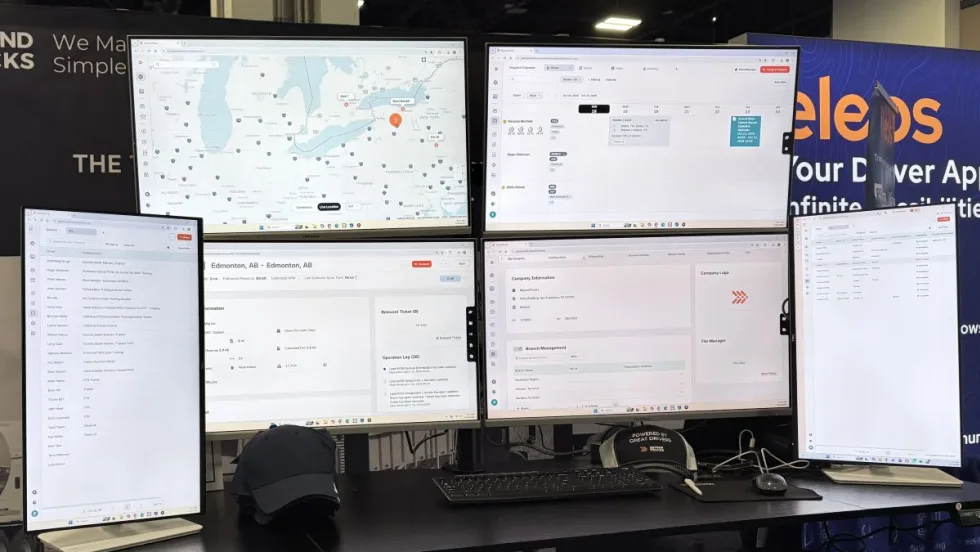
BeyondTrucks Adds Rules Checks to Dispatch
New Compatibility Engine checks driver qualifications, equipment requirements and fleet policies before loads are dispatched.
Read More →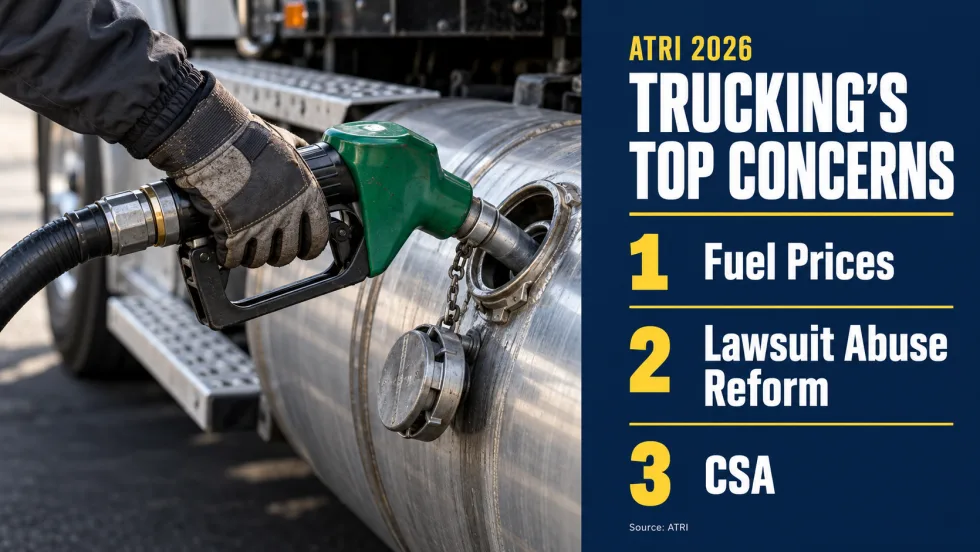
Diesel Prices Hijack Trucking’s Worry List
ATRI’s annual survey finds cautious optimism about freight, but diesel costs, litigation, and insurance continue to squeeze fleets. Drivers have different priorities on several issues.
Read More →
Nomination Deadline Extended for HDT Emerging Leaders
Just a few more days to nominate accomplished trucking fleet professionals under 40 who are making an impact and helping lead the industry forward for the HDT Emerging Leaders award. Deadline extended to October 20!
Read More →
What Will ATA’s New Leader Bring to Trucking's Table?
Incoming President and CEO Mark Colson’s record in Alabama offers clues about his priorities and approach following Chris Spear’s abrupt departure as the head of the American Trucking Associations.
Read More →
Volvo, Waabi Start Commercial Autonomous Operations in Texas
Volvo VNL Autonomous trucks, powered by the Waabi Driver, are hauling freight directly to third-party facilities for a customer in Texas.
Read More →