




Food Safety Rules Could Create Headaches for Carriers
Fleets that haul food products should take a proactive approach with their food service clients to ensure a smooth implementation of rules governing the transport of foods under the Food Safety Modernization Act, signed into law in 2011.

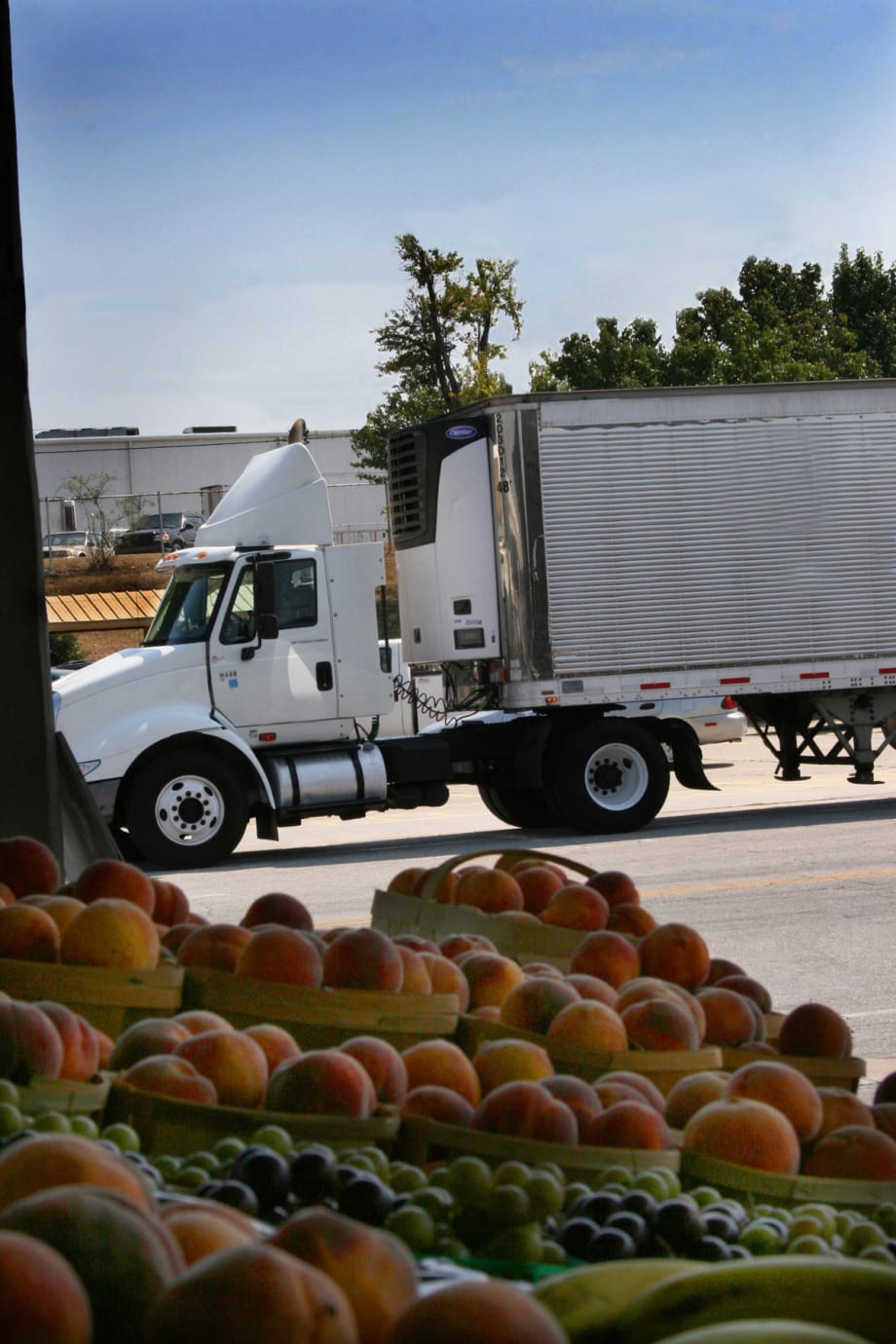
Fleets that haul food products should take a proactive approach with their food service clients to ensure a smooth implementation of rules governing the transport of foods under the Food Safety Modernization Act, signed into law in 2011.
The FSMA empowers the Food and Drug Administration to promulgate various rules designed to ensure the safety of the country’s food supply. According to Bud Rodowick, manager fleet performance, Thermo-King, the act is “the most expansive change to food safety laws since 1938” that gives sweeping new powers to the FDA.
Speaking during a forum on the law at the Truckload Carriers Association annual convention in Grapevine, Texas, last month, he said the law will allow the FDA “to start sending people to jail for violations.”
A key point, as far as carriers go, is that the law places the primary responsibility on food producers and processors, not carriers.
Where carriers come in, however, is that the law requires a rule on the sanitary transport of food and for producers and processors to maintain a food safety plan for food products which will include information on transportation, storage and distribution. The plan must also contain information on sanitation practices, including employee hygiene and other factors.
“You need to be proactive and get out front” on this, Rodowick said. “Find out where your shippers are in developing their plans and work with them.”
Carriers will have responsibilities under the Sanitary Transportation of Food rule, with that final rule expected to be published in 2016.
That proposed rule would require those who transport food to use sanitary transportation practices to ensure the safety of food. It will also establish criteria and practices for training, and record-keeping related to transporting food.
With some exceptions, the sanitary transport of food rule would apply to shippers, receivers, and carriers who transport food in the United States by motor vehicle or rail, whether or not the food is offered for or enters interstate commerce. It also applies to entities/persons outside the U.S., such as an exporter, who ships food to the United States in a container either by sea or air and arranges for the transfer of the container onto a truck or a rail car for transportation in the U.S.
Under the proposed rule, such a person or entity would be considered a shipper.
The rule contains specific criteria for the design and maintenance of vehicles and trailers to prevent contamination during transport. It also includes measures to ensure food is not contaminated during shipping, i.e., adequate temperature controls and separation of food items from non-food items in the same load.
The proposed rule also establishes procedures for exchanging information between carriers and shippers on prior cargos, cleaning of the equipment, temperature control between the shipper, carrier and receiver.
The proposed rule also will require carrier personnel involved in transporting food to be trained in sanitary transportation practices and for carriers to maintain documentation of the training.
Record-keeping will be required on maintenance of written procedures, equipment cleaning, prior cargos and temperature control.
Tracing the Freight
Product-tracing rules will be established for so-called “high-risk foods.” The FDA has not published a list of these foods, as the details on which foods are high-risk are still being hammered out, Rodowick said. He also noted that the agency will not recommend specific systems or software for tracing these foods. “At this stage, they’ll just want to see your tracing plan.”
John Penizotto, executive director business development, International Telematics, said much of the technology required to meet the record-keeping and tracing requirements in the proposed rule are already available. “The government won’t dictate how these records are kept,” he noted. He said some solutions might include:
Data loggers, as drivers may need to prove a load maintained proper temperature through the whole shipment.
Strip chart temperature records
Reefer OEM microprocessor data recorders.
GPS systems with temperature probes which would show a dot on a map with the temperature recorded.
One-way telematics systems that connects to the reefer’s microprocessor.
Two-way telematics systems that would allow fleet managers to control reefer operations remotely.
The FDA said the proposed rule would cover an estimated 83,609 businesses, including carriers that haul food and the facilities that ship food. The agency estimates the first year cost would be $149.1 million or an average of $1,784 per business with on-going annual costs at $30 million, or $360 per business.
The proposed rule on sanitary transportation of food can be found online at https://www.federalregister.gov/articles/2014/02/05/2014-02188/sanitary-transportation-of-human-and-animal-food#h-17. Comments are being accepted on the rule until May 30, 2014.
More Fleet Management

Geotab Links Fleet Card to Vehicle Data
The new card combines fuel discounts with telematics-based purchase controls. Geotab’s analysis also points to potential savings from choosing lower-priced fuel stops.
Read More →
How MFA Helps Protect Trucking Fleets
Multi-factor authentication adds protection when passwords are stolen. Here’s how it works and where fleets should start.
Read More →
How Better Freight Data Helps Trucking Teams Get Ahead of Disruption
Trucking and logistics teams have plenty of data. The problem is getting the right information in front of the right people soon enough to act. Better-connected data can help teams spot trouble earlier and make smarter decisions before small problems become big ones.
Read More →

Trimble: Taking Artificial Intelligence in Trucking Beyond Faster Tasks
At Insight 2026, Trimble executives argued that fleets may need to redesign workflows to get more from AI as it introduced new products and enhancements. AI’s value will depend on how fleets combine automation with their people's knowledge.
Read More →
Build a bulletproof fleet: Uniting ELDs and dash cams for total compliance
An ELD can prove compliance, but it cannot always prove what happened on the road. Discover how uniting accurate ELD data with AI-powered dash cam video can help your fleet strengthen compliance, defend against liability, protect drivers and reduce operational costs.
Read More →
Nominations Open for HDT Emerging Leaders
Heavy Duty Trucking is looking for accomplished trucking fleet professionals under 40 who are making an impact and helping lead the industry forward.
Read More →
Why Private Fleets Are Taking More Freight
Private fleets are putting their own trucks on demanding customers and high-cost lanes as companies seek greater control over service, costs, and capacity.
Read More →
Color Match Smarter: Tools That Restore & Perform
For fleet managers and collision repair professionals keeping heavy-duty trucks on the road, getting the color right the first time isn't just about appearance — it's about efficiency, turnaround time, and bottom-line results. Discover how today's digital color tools are transforming the repair process from guesswork to precision.
Read More →
FMCSA Pauses Biennial-Update Enforcement Amid Motus Transition
Carriers whose updates were due on or after June 1 have more time, while FMCSA works to stabilize its new registration system and warns of phishing sites impersonating its new carrier registration system, Motus.
Read More →
2026 Blueprint for Countering Smarter Supply Chain Theft
Cargo theft is no longer just the cost of doing business. It's a multi-billion-dollar criminal enterprise exploiting vulnerabilities across your fleet, drivers, and supply chain.
Read More →