




FMCSA To Issue Diabetes Exemptions
The Federal Motor Carrier Safety Administration has asked for public comments on a program that would allow insulin-using diabetics to operate commercial vehicles in interstate commerce
The Federal Motor Carrier Safety Administration has asked for public comments on a program that would allow insulin-using diabetics to operate commercial vehicles in interstate commerce.
Under current federal regulations, drivers with diabetes mellitus who require insulin to control their condition are not qualified for an interstate CDL. Many state have programs for diabetic drivers, but they are restricted to intrastate operation.
Efforts to change the federal rules go back to the early 1970s. A special conference in the late 1980s, attended by doctors, scientists and trucking representatives, recommended that insulin-using drivers be exempted from the regulations if they met certain medical and safety standards. The 1993 waiver program was initiated as a three-year study but was terminated when safety groups won a court battle to block a similar vision waiver program. Drivers already enrolled in the diabetes program were allowed to keep their waivers.
In 1998 Congress got the wheels turning again with a provision in the Transportation Equity Act of the 21st Century directing the U.S. Department of Transportation to study the feasibility of a program for diabetic drivers. FMCSA’s exemption program is based on the experience of states with similar programs, experience by other government agencies, a review of applicable studies here and in Europe, and the recommendations of a panel of experts in the treatment of diabetes.
The requirements would be strict. Applicants must have a valid intrastate CDL or a license (non-CDL) to operate a commercial motor vehicle. They must have operated a commercial vehicle as an insulin-using diabetic for the three years preceding the application.
Their driving records for those three years must be squeaky clean. No suspensions or revocations of any driving license (CDL or personal vehicle), no involvement in an accident where the applicant was cited for a moving violation in a commercial vehicle, no convictions for a disqualifying offense, no more than one serious traffic violation.
Applicants will have to provide complete medical histories and undergo thorough examinations by an endocrinologist and an ophthalmologist. They can’t have any other disqualifying conditions, including diabetes-related complications. They won’t qualify if they have had two or more hypoglycemic reactions in the past five years resulting in loss of consciousness, seizure, or impaired cognitive function which occurred without warning.
Drivers issued exemptions will be required to carry specifically prescribed medical supplies including a glucose monitor with memory. They will have to check glucose before starting to drive and every two to four hours while driving. If glucose falls above or below prescribed levels, they must stop driving and take appropriate action.
They will have to undergo annual exams by endocrinologists and ophthalmologist and will be required to provide FMCSA with records of daily glucose management. They will also be required to report any episodes of severe hypoglycemia or significant complications as well as any accidents or “adverse events,” whether or not they were diabetes related. Exemptions will be issued for two years. After that time, the drivers must re-apply.
FMCSA says it is not yet accepting applicants. Comments on the program are due Oct. 1. They can be mailed, faxed to (202) 493-2251 or submitted electronically via http://dmses.dot.gov/submit. Reference FMCSA-2001-9800. The docket, including the full proposal, can be found at http://dms.dot.gov.
More Drivers
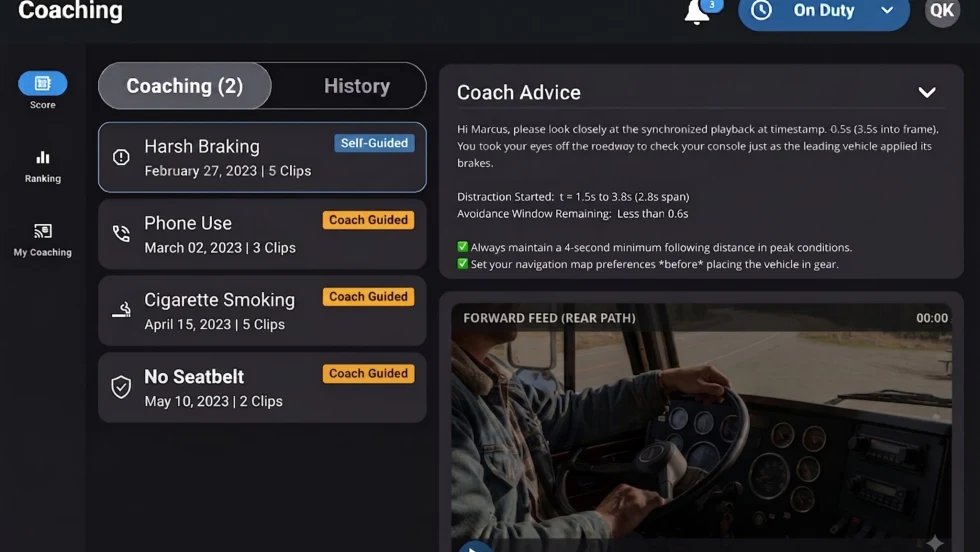
Platform Science Adds Dispatch and Safety Tools
Four additions to PS Fleet help fleets monitor loads, manage driver coaching, share truck locations and adjust video system settings.
Read More →
When Language Stops the Truck: The Return of ELP Out-of-Service Orders
English language proficiency rules for commercial drivers aren’t new, but renewed out-of-service enforcement has raised the stakes. Here’s what carriers need to know before a driver reaches a roadside inspection.
Read More →
Samsara Launches Custom AI Agent Builder
Agent Studio lets fleets create AI tools for hours-of-service monitoring, reporting and driver support, including agents that communicate by phone.
Read More →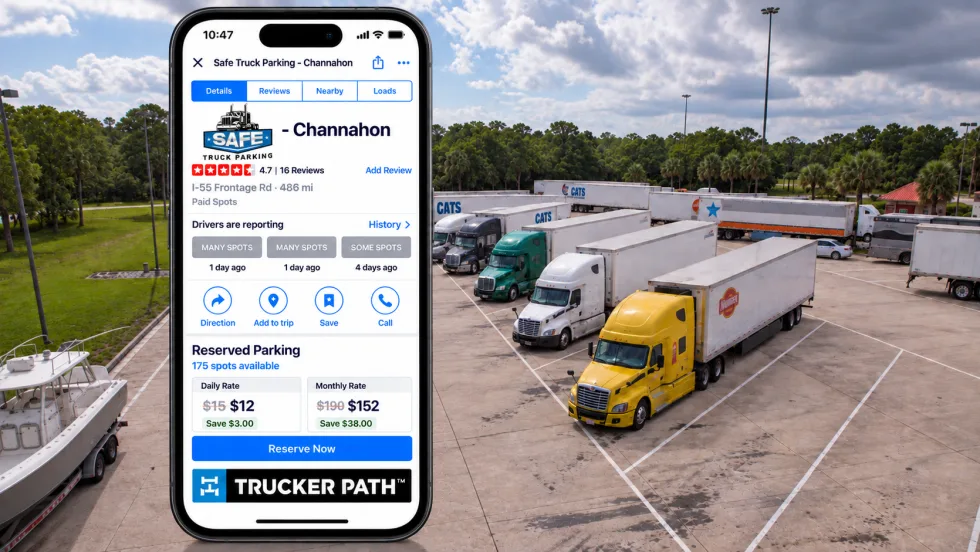
Trucker Path Expands Reserved Parking Network
Trucker Path has added close to 6,000 more truck parking spaces to its Trucker Path Reserved Parking Network with the addition of Safe Truck Parking.
Read More →
EEOC Sues Texas Trucking Company Over Driver Age Limits
The agency says Trancasa USA rejected applicants over 65 and applied tougher driving-record standards to those over 60.
Read More →
Nussbaum, Roehl Announce Second Driver Pay Increase This Year
This year has seen a swath of major truck driver pay increases as freight capacity has tightened.
Read More →
From One Generation to the Next: How Mentorship Builds Safer Truck Drivers
After three decades in trucking, Harold Perry shares what he's learned about driver safety, mentorship, and helping the next generation build confidence behind the wheel.
Read More →
Truck Drivers Need More Than Another Alert
Fleets have more visibility into truck health, safety events, and driver activity than ever. The next challenge is turning all that information into useful guidance for the person who has to decide what to do next.
Read More →
FMCSA Removes 110 Truck Driver Training Schools from Certified ELDT List
Federal regulators also are targeting more than 160 additional training providers and launching a nationwide audit of third-party CDL skills testers as part of a broader crackdown on trucking fraud.
Read More →
Hours of Service Pilot Programs: FMCSA Readies for 2027 Rollout
Two pilot programs could eventually reshape hours-of-service rules, giving truck drivers options to pause their 14-hour clock or use longer split sleeper rest periods.
Read More →