




FMCSA Schedule for Crash Accountability Research Due This Month
The Federal Motor Carrier Safety Administration is edging closer to action on weighing carrier fault in the CSA safety enforcement database. This month, the agency should announce a research schedule for figuring out how to separate at-fault crashes from not-at-fault crashes when it looks at a carrier's safety performance
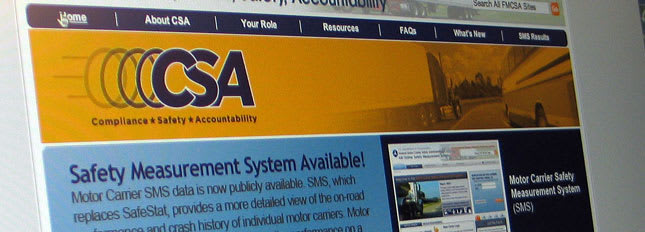
The Federal Motor Carrier Safety Administration is edging closer to action on weighing carrier fault in the CSA safety enforcement database. This month, the agency should announce a research schedule for figuring out how to separate at-fault crashes from not-at-fault crashes when it looks at a carrier's safety performance.
"The agency expects to publish a research schedule for a possible crash weighting initiative in July," a spokesman said in response to an email inquiry.
Right now, the Carrier Safety Measurement System does not distinguish fault. It rates a carrier's crash history in comparison to other carriers' history, presuming a certain degree of fault throughout the data.
For instance, if one company has 10 crashes and another has 5, the company with 10 crashes is considered likely to have more at-fault crashes. This has led to the conclusion that past crashes are a predictor of future crashes no matter who is at fault.
"We get reported to us each year over 100,000 crashes by large trucks," said Ralph Craft of the agency's analysis division in a recent presentation on safety data.
"Analysis of that data over time, dividing the data by carrier, shows that a good predictor of future crashes is the previous crash record of the carrier."
The implication of increased risk comes because the agency does not differentiate between at-fault and not at-fault. A crash in which the carrier is not at fault - say, when the truck is rear-ended while stopped at a stoplight - does not indicate that the carrier is more likely to have a crash in the future.
Trucking interests have long held that this melding of at-fault and not at-fault crashes is a flaw in the system, and the agency agrees.
At one point last spring, the agency was close to proposing a method for distinguishing fault, but it drew back out of concern that its approach was not going to be adequate.
Administrator Anne Ferro said her concerns had to do with using just the Police Accident Report and a carrier's statement to determine accountability.
She said that approach is too limited because it does not allow for comment from others impacted by the crash. These presumably could include victims, insurance companies, shippers and witnesses.
Rob Abbott, vice president of safety policy at American Trucking Associations, welcomed the news that the agency expects to release its research schedule this month.
"If true, we appreciate that FMCSA is answering our calls for a timeline to establish a crash accountability process," Abbott said in response to an email query.
At the same time, ATA wants the agency to act quickly.
"FMCSA had a plan drafted and ready for publication just a few months ago, but now may be charting a course to take many more months to answer some very straightforward issues," Abbott said.
"The agency should, at a minimum, release what it had planned to publish and solicit comments on the elements of it that have caused them to withhold the document from publication."
The agency has recently taken steps to underscore that the data do not assign fault.
Senior Transportation Specialist Bryan Price said the agency has added this caveat its CSA website:
"A motor carrier's crash assessment (Crash Indicator BASIC measure and percentile) and the list of crashes below represent a motor carrier's involvement in 24 months of reportable crashes without any determination as to responsibility."
Price said that similar language was added to the Safety and Fitness Electronic Records website and to Pre-Employment Screening responses that go back to carriers on individual drivers.
Related stories:
6/5/2012 ATA Pushes for FMCSA Response on Crash Accountability
6/28/2012 Study: No Correlation Between CSA BASIC Data and Crash Performance
6/13/2012 ATA Demands FMCSA Release Study Used to Develop CSA Scoring System.
3/12/2012 FMCSA Stops Plan to Determine Accountability in CSA Crash Data
More Drivers

EEOC Sues Texas Trucking Company Over Driver Age Limits
The agency says Trancasa USA rejected applicants over 65 and applied tougher driving-record standards to those over 60.
Read More →
Nussbaum, Roehl Announce Second Driver Pay Increase This Year
This year has seen a swath of major truck driver pay increases as freight capacity has tightened.
Read More →
From One Generation to the Next: How Mentorship Builds Safer Truck Drivers
After three decades in trucking, Harold Perry shares what he's learned about driver safety, mentorship, and helping the next generation build confidence behind the wheel.
Read More →
Truck Drivers Need More Than Another Alert
Fleets have more visibility into truck health, safety events, and driver activity than ever. The next challenge is turning all that information into useful guidance for the person who has to decide what to do next.
Read More →
FMCSA Removes 110 Truck Driver Training Schools from Certified ELDT List
Federal regulators also are targeting more than 160 additional training providers and launching a nationwide audit of third-party CDL skills testers as part of a broader crackdown on trucking fraud.
Read More →
Hours of Service Pilot Programs: FMCSA Readies for 2027 Rollout
Two pilot programs could eventually reshape hours-of-service rules, giving truck drivers options to pause their 14-hour clock or use longer split sleeper rest periods.
Read More →
Medical Cards, English Proficiency Reshape Roadcheck Violations
Medical-card violations jumped to the top of the driver out-of-service list during CVSA’s 2026 International Roadcheck, while English-language proficiency violations appeared among the leading violations for the first time.
Read More →
Driver Trust Can Make or Break the Success of Fleet Safety Technology
New Teletrac Navman research suggests that onboarding, transparency about driver data, and positive feedback can play a significant role in how commercial drivers respond to safety and coaching technology.
Read More →
EEOC Sues KLLM Over Alleged Sex Discrimination in Driver Training
KLLM is facing a federal sex-discrimination lawsuit over policies the EEOC alleges put female truck driver trainees at a disadvantage.
Read More →
FMCSA Moves to Codify English Language Requirements for Commercial Drivers
By changing regulations on English-language proficiency requirements for commercial drivers, rather than relying on a guidance memo, the FMCSA said future administrations won't be able to walk back the Trump administration's stricter enforcement with just a memo.
Read More →