




FMCSA Proposes Middle Approach to Cell Phone Restriction
The Federal Motor Carrier Safety Administration has chosen the middle path in its proposal to restrict cell phone use by commercial drivers. The proposal essentially says that truck and bus drivers could only use a hands-free phone while driving. It would prohibit a driver from reaching for, dialing or holding a mobile phone while the truck is moving
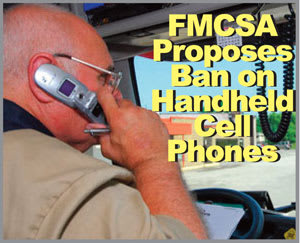
The Federal Motor Carrier Safety Administration has chosen the middle path in its proposal to restrict cell phone use by commercial drivers.
The proposal essentially says that truck and bus drivers could only use a hands-free phone while driving. It would prohibit a driver from reaching for, dialing or holding a mobile phone while the truck is moving.
The agency came to this proposal after looking at three other options. One was to do nothing, which was not acceptable politically or in terms of safety, given research showing the risks of distracted driving. It also looked at banning all use of mobile phones, even hands-free devices, for all drivers and for just bus drivers.
The advice the agency got from the National Transportation Safety Board and from its own Motor Carrier Safety Advisory Committee was to ban even hands-free devices.
The agency concluded, though, that "it is not clear if simply talking on a mobile telephone presents a significant risk."
It cited a study by the Virginia Tech Transportation Institute that found the risk of simply talking on a phone is relatively low compared to the risk of taking one's eyes off the road or hands off the wheel to reach for or dial a phone.
The act of reaching for an object increases the risk of a safety-critical event by three times, the agency said, referencing the VTTI study. Dialing a cell phone increases the risk by six times - primarily because it takes the driver's eyes off the road.
"Because of the physical, manual, and visual distractions and the data indicating a safety risk associated with the use of hand-held mobile telephones, FMCSA believes it is in the interest of public safety to propose, at a minimum, a restriction on hand-held mobile telephone use while driving a CMV," the agency said in its proposal.
The agency clearly states that this proposal is not intended to restrict the driver's use of a mobile phone when not driving.
The agency also is proposing stiff penalties for violations of the rule. Civil fines could go up to $2,750 for each offense. Two violations of a state or local law against hand-held phones in a three-year period could lead to a 60-day suspension. Three violations could lead to a 120-day suspension.
More Drivers

Samsara Launches Custom AI Agent Builder
Agent Studio lets fleets create AI tools for hours-of-service monitoring, reporting and driver support, including agents that communicate by phone.
Read More →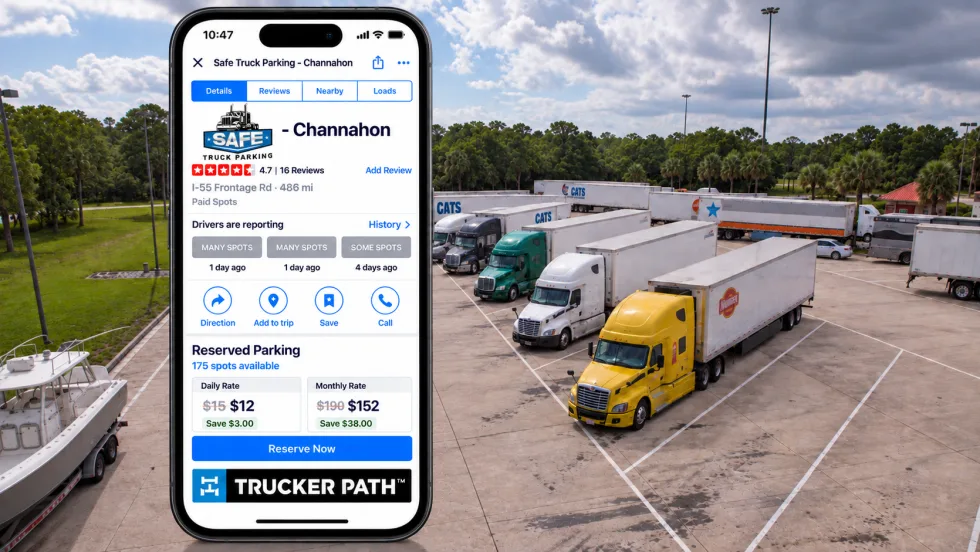
Trucker Path Expands Reserved Parking Network
Trucker Path has added close to 6,000 more truck parking spaces to its Trucker Path Reserved Parking Network with the addition of Safe Truck Parking.
Read More →
EEOC Sues Texas Trucking Company Over Driver Age Limits
The agency says Trancasa USA rejected applicants over 65 and applied tougher driving-record standards to those over 60.
Read More →
Nussbaum, Roehl Announce Second Driver Pay Increase This Year
This year has seen a swath of major truck driver pay increases as freight capacity has tightened.
Read More →
From One Generation to the Next: How Mentorship Builds Safer Truck Drivers
After three decades in trucking, Harold Perry shares what he's learned about driver safety, mentorship, and helping the next generation build confidence behind the wheel.
Read More →
Truck Drivers Need More Than Another Alert
Fleets have more visibility into truck health, safety events, and driver activity than ever. The next challenge is turning all that information into useful guidance for the person who has to decide what to do next.
Read More →
FMCSA Removes 110 Truck Driver Training Schools from Certified ELDT List
Federal regulators also are targeting more than 160 additional training providers and launching a nationwide audit of third-party CDL skills testers as part of a broader crackdown on trucking fraud.
Read More →
Hours of Service Pilot Programs: FMCSA Readies for 2027 Rollout
Two pilot programs could eventually reshape hours-of-service rules, giving truck drivers options to pause their 14-hour clock or use longer split sleeper rest periods.
Read More →
Medical Cards, English Proficiency Reshape Roadcheck Violations
Medical-card violations jumped to the top of the driver out-of-service list during CVSA’s 2026 International Roadcheck, while English-language proficiency violations appeared among the leading violations for the first time.
Read More →
Driver Trust Can Make or Break the Success of Fleet Safety Technology
New Teletrac Navman research suggests that onboarding, transparency about driver data, and positive feedback can play a significant role in how commercial drivers respond to safety and coaching technology.
Read More →