




FMCSA Proposes Changes to Drug, Alcohol Testing Rules
The Federal Motor Carrier Safety Administration has proposed amendments to its controlled substances and alcohol testing regulations that will bring them in line with new DOT rules
The Federal Motor Carrier Safety Administration has proposed amendments to its controlled substances and alcohol testing regulations that will bring them in line with new DOT rules.
Some of the proposed changes:
DOT’s new Public Interest Exclusion system would be added to the Federal Motor Carrier Safety Regulations. That program essentially blackballs service agents who are in serious noncompliance with drug and alcohol testing rules. The FMCSR changes would specifically prohibit carriers from using service providers on the PIE list.
New sections would encourage employers to develop programs and policies that let employees voluntarily admit to drug or alcohol problems without "DOT consequences." Such policies would shift more of the evaluation and treatment decisions to carriers, but could not be used to avoid testing or sidestep rules that require removal from safety-sensitive functions.
The term "designated management official" would be replaced with "designated employer representative" as the person authorized to remove employees from safety-sensitive duties and make other decisions regarding testing and evaluations.
Requirements for pre-employment alcohol testing, which was suspended by the courts and Congress, would be deleted. But FMCSA would add requirements for employers who choose to conduct pre-employment drug tests.
Employers would be required to maintain semi-annual lab statistical summaries of urinalysis instead of quarterly summaries.
Information about substituted or adulterated specimens would be included in reports and records along with positive tests and refusals to test.
Many of the proposed changes delete FMCSA sections in order to avoid duplication and possible inconsistency with DOT procedural rules contained in 49 CFR Part 40. These centralized rules cover recordkeeping, testing procedures, qualification of certain testing personnel, and other rules that are common to all transportation workers.
The proposal was published in the April 30 Federal Register, which can be accessed via the Internet at www.nara.gov/fedreg. Comments are due June 14, 2001.
More Drivers
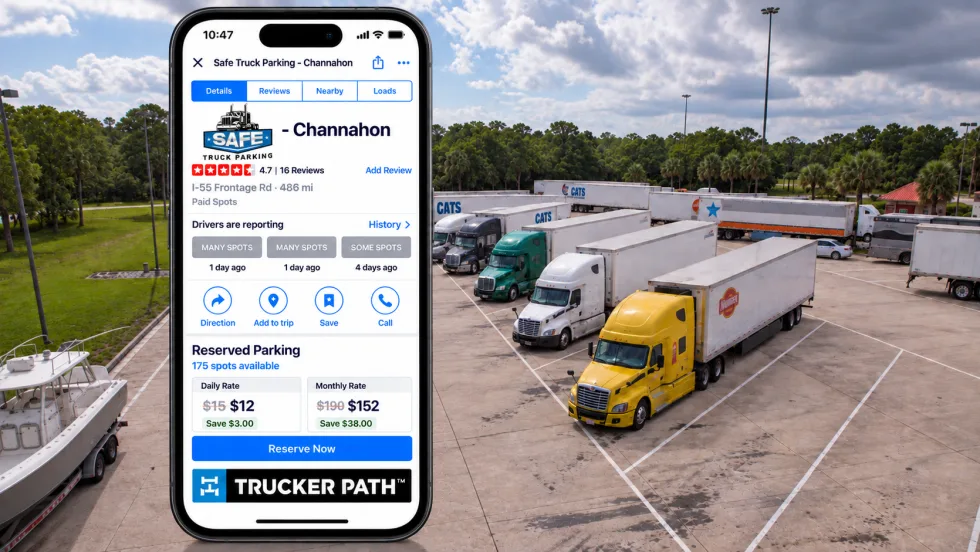
Trucker Path Expands Reserved Parking Network
Trucker Path has added close to 6,000 more truck parking spaces to its Trucker Path Reserved Parking Network with the addition of Safe Truck Parking.
Read More →
EEOC Sues Texas Trucking Company Over Driver Age Limits
The agency says Trancasa USA rejected applicants over 65 and applied tougher driving-record standards to those over 60.
Read More →
Nussbaum, Roehl Announce Second Driver Pay Increase This Year
This year has seen a swath of major truck driver pay increases as freight capacity has tightened.
Read More →
From One Generation to the Next: How Mentorship Builds Safer Truck Drivers
After three decades in trucking, Harold Perry shares what he's learned about driver safety, mentorship, and helping the next generation build confidence behind the wheel.
Read More →
Truck Drivers Need More Than Another Alert
Fleets have more visibility into truck health, safety events, and driver activity than ever. The next challenge is turning all that information into useful guidance for the person who has to decide what to do next.
Read More →
FMCSA Removes 110 Truck Driver Training Schools from Certified ELDT List
Federal regulators also are targeting more than 160 additional training providers and launching a nationwide audit of third-party CDL skills testers as part of a broader crackdown on trucking fraud.
Read More →
Hours of Service Pilot Programs: FMCSA Readies for 2027 Rollout
Two pilot programs could eventually reshape hours-of-service rules, giving truck drivers options to pause their 14-hour clock or use longer split sleeper rest periods.
Read More →
Medical Cards, English Proficiency Reshape Roadcheck Violations
Medical-card violations jumped to the top of the driver out-of-service list during CVSA’s 2026 International Roadcheck, while English-language proficiency violations appeared among the leading violations for the first time.
Read More →
Driver Trust Can Make or Break the Success of Fleet Safety Technology
New Teletrac Navman research suggests that onboarding, transparency about driver data, and positive feedback can play a significant role in how commercial drivers respond to safety and coaching technology.
Read More →
EEOC Sues KLLM Over Alleged Sex Discrimination in Driver Training
KLLM is facing a federal sex-discrimination lawsuit over policies the EEOC alleges put female truck driver trainees at a disadvantage.
Read More →