




The Federal Motor Carrier Safety Administration has published revisions to controlled substance and alcohol testing rules for commercial drivers.
The changes are intended to incorporate recent modifications by the U.S. Department of Transportation and to clarify certain requirements.
Employers. A revised definition clarifies that owner-operators and other self-employed persons are employers. FMCSA emphasized that the change doesn’t mean that carriers are no longer responsible for owner-operator compliance. In past guidances, the agency has determined responsibility on the basis of control. When an owner-operator is leased to a carrier, federal regulations say that the carrier has control of the driver and equipment. Thus carriers are responsible for compliance by leased owner-operators.
Many who commented on proposed rule changes apparently expressed concern that owner-operators not leased to carriers can easily fall through the cracks. The regulations say that owner-operators must join consortiums. Consortiums or third-party service agents may determine if an owner-operator should submit to a reasonable suspicion, post-accident, return-to-duty or follow-up tests. When authorized by DOT, they may also decide if an owner-operator has refused a required test. However, many service providers feel they should be given full authority, with the owner-operator’s consent, to serve as the designated employee.
FMCSA acknowledged concern and says it is exploring ways to deal with potential problems. At the request of Congress, for instance, it is currently studying a recommendation that medical review officers be required to report verified positive drug tests to the state that issued the driver’s CDL. Presumably, that would establish some traceable record when any driver, including an owner-operator, fails a test.
There have also been suggestions that consortiums or third-party service providers be required to inform FMCSA when an owner-operator fails an alcohol test or tests positive for controlled substance. But the agency largely dismissed that idea, noting that all employers should be treated similarly, regardless of size. Moreover, it said there is no solid evidence to indicate the need for rules that specifically address owner-operators.
Self-admission programs. DOT and FMCSA have established guidelines for employers who want to establish programs or policies that would encourage drivers to voluntarily admit drug or alcohol abuse. Such programs are an option, not a requirement. If implemented, they can’t be used as disciplinary tools (i.e. adverse action is prohibited.) Equally important, they can’t be used to avoid testing, evaluation and treatment, and return-to-duty testing.
Random testing. Revisions emphasize that every driver must have an equal chance of being selected for random tests. FMCSA said some employers are not testing drivers who aren’t available on the predetermined test date. Instead, they move on to the next driver on the list. But the use of alternates should be the exception, not the rule, it said, noting that most employers use quarterly testing cycles, thus should have ample time to test the drivers selected within that cycle.
Post-accident testing. New rules have separate sections for controlled substance and alcohol testing because, according to FMCSA, some employers mistakenly believed that the rule required a drug test or an alcohol test, but not both.
There is also confusion regarding post-accident testing when an citation isn’t issued at the time of the accident. A driver who is issued a citation within eight hours must be tested for alcohol if there is serious bodily injury or disabling vehicle damage. A driver who is issued a citation within 32 hours must be tested for controlled substances if there is bodily injury or disabling vehicle damage. If the accident results in a loss of life, the driver is tested even if he wasn't cited.
The tests should be done "as soon as practicable" following the accident. If an alcohol test isn't done within two hours of an accident, the employer must include an explanation in the file. The employer must stop trying to administer an alcohol test after eight hours, and the reason for not testing should be documented for the file. Efforts to administer a drug test must stop after 32 hours, and reasons for not testing must be documented in the file.
A driver who is subject to post-accident testing must remain readily available for testing or may be deemed by the employer to have refused to submit to testing.
The changes and discussions appeared in the Aug. 17 Federal Register, which can be accessed on the Internet at www.nara.gov/fedreg.
FMCSA Issues Revisions to Drug/Alcohol Test Rules
The Federal Motor Carrier Safety Administration has published revisions to controlled substance and alcohol testing rules for commercial drivers
More Drivers

Best Fleets to Drive For: Two Carriers Earn Overall Award for First Time
CarriersEdge announced the 2026 Best Fleets to Drive For overall winners, with Crawford Trucking, Fortigo Freight Services, and FTC Transportation receiving top awards.
Read More →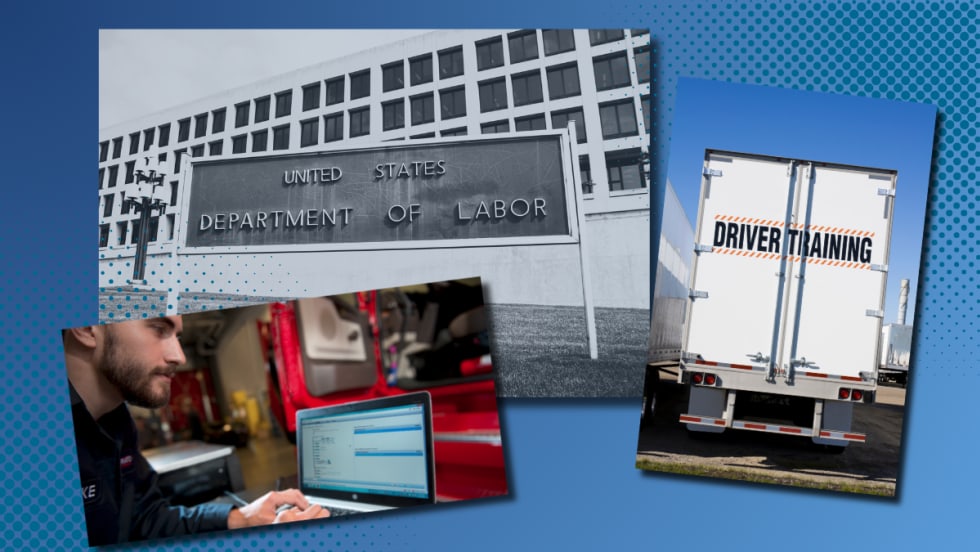
Federal Proposal Would Allow Pell Grants for Shorter-Term Job Training
The Department of Labor plans to expand Pell Grant eligibility to some shorter workforce training programs, a move the American Trucking Associations said will help strengthen commercial driver training schools and diesel technician training programs.
Read More →
Owner-Operator Model Gets Boost as DOL Proposes 2024 Independent Contractor Definition Reversal
For an industry that has watched this issue go back and forth for years, the independent contractor proposal marks the latest swing in the regulatory pendulum.
Read More →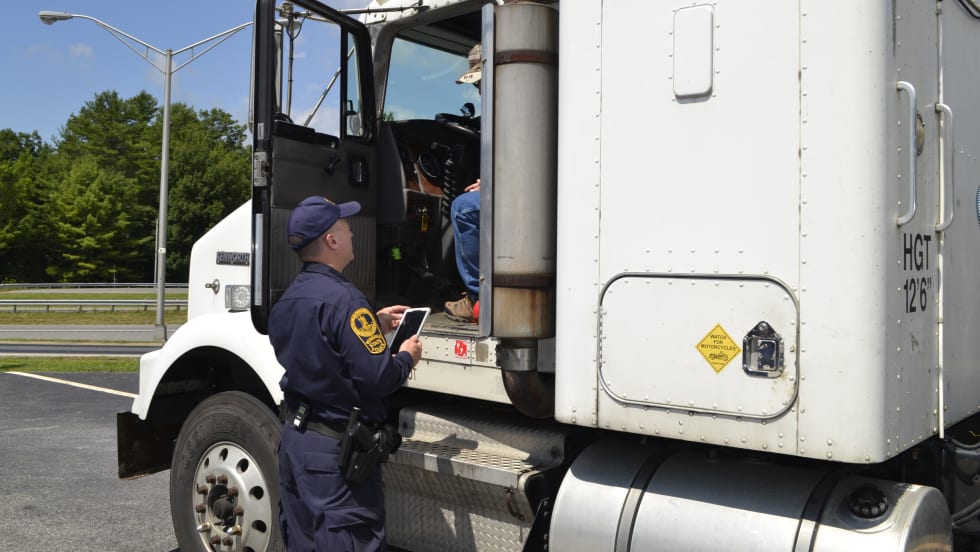
FMCSA Reinstates Field Warrior ELD to Registered Device List
One electronic logging device has been reinstated to the FMCSA's list of registered ELDs.
Read More →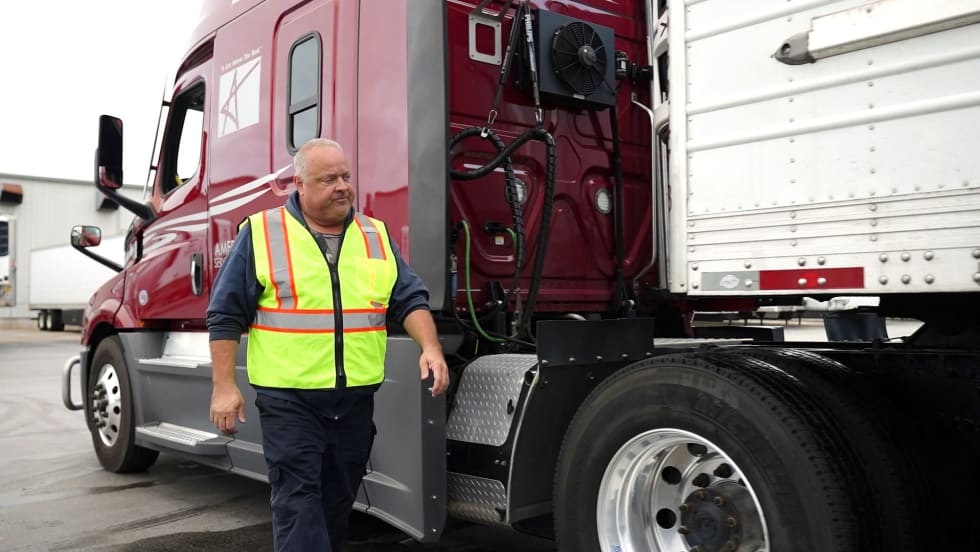
How One Company is Using Smart Suspension Technology to Reduce Driver Injuries and Improve Retention
America’s Service Line adopted Link’s SmartValve and ROI Cabmate systems to address whole-body vibration, repetitive strain, and driver turnover. The trucking fleet is already seeing measurable results.
Read More →
CarriersEdge Announces 2026 Best Fleets to Drive For
The 18th annual contest recognizing the best workplaces for truck drivers sees changes to Top 20, Hall of Fame
Read More →
FMCSA Targets 550+ ‘Sham’ CDL Schools in Nationwide Sting Operation
The Federal Motor Carrier Safety Administration issued more than 550 notices of proposed removal to commercial driver training providers following a five-day nationwide enforcement sweep. Investigators cited unqualified instructors, improper training vehicles, and failure to meet federal and state requirements.
Read More →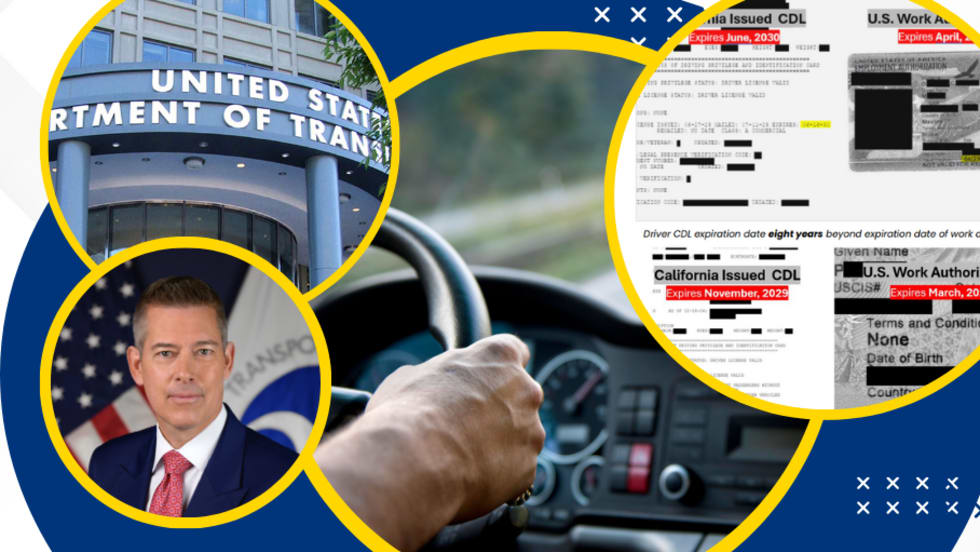
DOT Alleges Illinois Issued Illegal Non-Domiciled CDLs
Illinois is the latest state targeted and threatened with the loss of highway funding by the U.S. Department of Transportation in its review of states' non-domiciled CDL issuance procedures. The state is pushing back.
Read More →FMCSA Locks in Non-Domiciled CDL Restrictions
After a legal pause last fall, FMCSA has finalized its rule limiting non-domiciled commercial driver's licenses. The agency says the change closes a safety gap, and its revised economic analysis suggests workforce effects will be more gradual than first thought.
Read More →
Trucker Path Names Top Truck Stops for 2026
Truck driver ratings reveal the best chain and independent truck stops in the country.
Read More →