




FMCSA Asks for Input to Clarify Freight Broker Definition
Who's a freight broker? A bona fide agent? Is a dispatch service a broker? Is a load board? FMCSA wants to know.


FMCSA wants to know what makes a broker -- and what doesnt.
Photo: Deborah Lockridge
What, exactly, is a freight broker?
A page on the Federal Motor Carrier Safety Administration’s website defines it as “a person or an entity which arranges for the transportation of property by a motor carrier for compensation. A broker does not transport the property and does not assume responsibility for the property.”
Seems pretty straightforward — but in reality, it’s not. That’s why the Infrastructure Investment and Jobs Act, also known as the Bipartisan Infrastructure Law, passed late last year, requires the FMCSA to issue new guidance on the definition of brokers and bona fide agents — by Nov. 15, 2022.
The law also requires the agency to consider the impact of technology and the role of dispatch services in the freight transportation industry.
In a new rulemaking notice, FMCSA is requesting responses to a number of questions to help it determine those definitions.
Brokers are required to get operating authority and operate under federal regulations. But it appears that the rise of load boards, dispatching services, and load-matching technology are muddying the waters, in some cases leading to illegal double-brokering, lawsuits regarding who’s responsible in the case of a crash, and more.
Why the Confusion About Freight Brokers?
Federal regulations define “broker” slightly differently in different places.
In 49 U.S.C. 13102(2), it’s a “person, other than a motor carrier or an employee or agent of a motor carrier, that as a principal or agent sells, offers for sale, negotiates for, or holds itself out by solicitation, advertisement, or otherwise as selling, providing, or arranging for, transportation by motor carrier for compensation.”
But in 49 CFR 371.2(a) a broker is defined as a “person who, for compensation, arranges, or offers to arrange, the transportation of property by an authorized motor carrier. Motor carriers, or persons who are employees or bona fide agents of carriers, are not brokers within the meaning of this section when they arrange or offer to arrange the transportation of shipments which they are authorized to transport and which they have accepted and legally bound themselves to transport.”
FMCSA wants to know what evaluation criteria it should use when determining whether a business model/entity meets the definition of a broker. It also wants examples of operations that meet the definition of broker in 49 CFR 371.2 — and examples of operations that do not meet the definition.
Dispatch Services: Brokers or Bona Fide Agents?
FMCSA wants to know how the industry defines “dispatch service” and what role they play.
Some critics of the agency contend that the federal government raising the required broker bond amount in 2013 in an effort to drive bad brokers out of the industry had unintended consequences.
More than 9,000 intermediary businesses shut down when the new bond took effect. Some of them joined bigger brokerages as agents, operating under the larger brokerage's authority. But others simply kept operating without any bond. There was a rise in third-party agents calling themselves “dispatchers” and “dispatch services” instead of brokers.
Some “dispatch services,” FMCSA explains in its call for comments, cite another regulation pertaining to “bona fide agents” as the reason they do not obtain brokerage authority registration.
Federal Motor Carrier Safety Regulations 49 CFR 371.2(b) defines bona fide agents as “persons who are part of the normal organization of a motor carrier and perform duties under the carrier’s directions pursuant to a pre-existing agreement which provides for a continuing relationship, precluding the exercise of discretion on the part of the agent in allocating traffic between the carrier and others.”
Some dispatch services interpret this regulation as allowing them to represent more than one carrier yet not obtain broker operating authority registration. Others interpret this regulation to argue that a dispatch service can only represent one carrier without obtaining broker authority.
Technology and Freight Brokers
Another question FMCSA wants to address is the role of technology in today’s trucking industry and how the definition of broker applies.
Electronic bulletin boards match shippers and carriers for a fee, the agency notes. The fee is a membership fee to have access to the bulletin board information. FMCSA asks, should electronic bulletin boards be considered brokers and required to register with FMCSA to obtain broker operating authority? If so, when and why?
It also wants to know how technology has changed the nature of freight brokerage, and how these changes should be reflected, if at all, in FMCSA’s guidance.
More Fleet Management

What the U.S.-Canada Trade War Means for Trucking
Escalating U.S.-Canada tariffs could disrupt cross-border freight, reduce truck volumes, raise costs, and create new uncertainty for carriers on both sides of the border.
Read More →
What Are Trucking’s Top Concerns for 2026?
The American Transportation Research Institute wants to know what's worrying trucking fleet managers, drivers, and other stakeholders in its annual Industry Issues survey.
Read More →
American Trucking Associations Looks for a New Leader
ATA President and CEO Chris Spear abruptly left his job at the association on August 21, at a pivotal time for the trucking industry.
Read More →
Public Wi-Fi Cybersecurity Risks: How Truck Drivers and Fleets Can Protect Their Data
Public Wi-Fi can expose truck drivers and fleets to credential theft, malware, and other cyber threats. Here’s how to reduce the risk on the road.
Read More →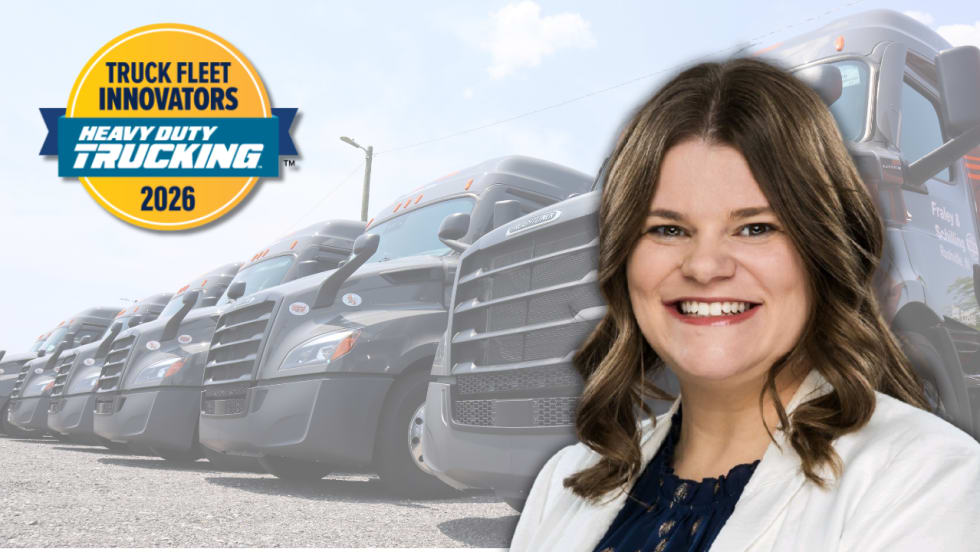
For Nicky Cupp, Fleet Innovation Starts With Frustration
HDT Truck Fleet Innovator Nicky Cupp turns everyday pain points at Fraley & Schilling into opportunities for better technology and smarter processes.
Read More →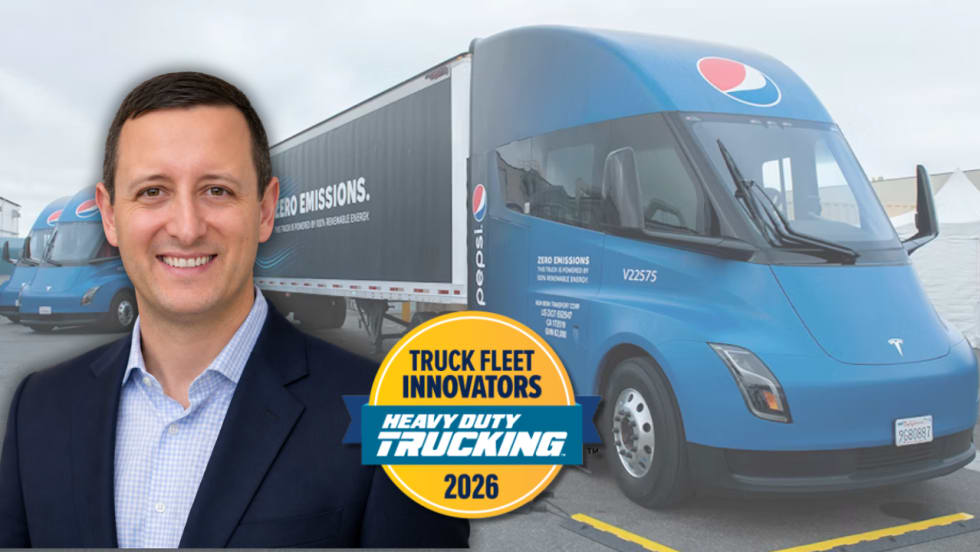
Adam Buttgenbach’s Approach to Electric Trucks: Start With Where They Fit
HDT Truck Fleet Innovator Adam Buttgenbach helped PepsiCo build one of North America’s largest EV fleets by focusing on where electric trucks make operational sense.
Read More →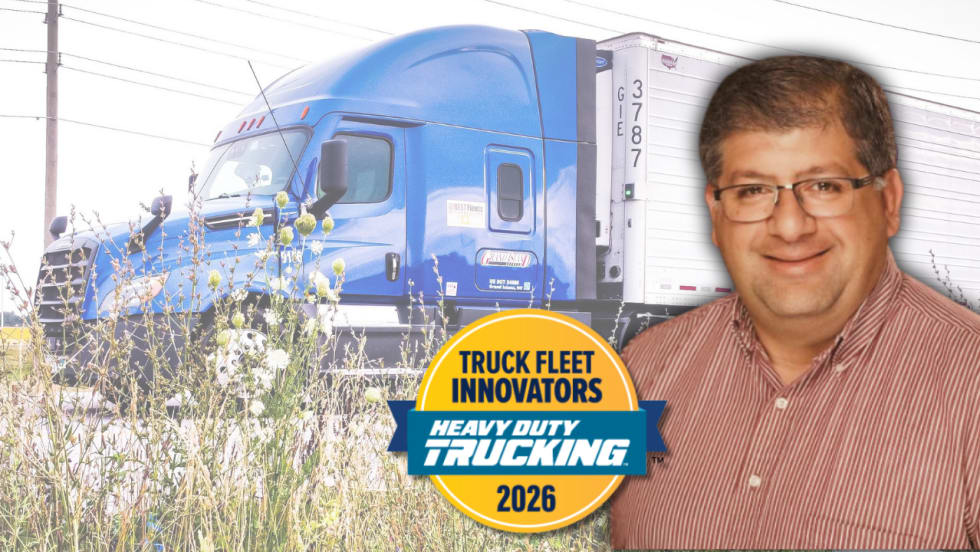
Deen Albert: Let Automation Do the Math, People Make the Decisions
HDT Truck Fleet Innovator Deen Albert makes sure people are still at the heart of operations at Grand Island Express, even while adopting artificial intelligence tools. AI-assisted dispatch helped boost revenue 25% with the same number of trucks.
Read More →
Trimble’s New AI Agent Takes Aim at Fleet Back-Office Busywork
Arc Agent works across Trimble TMS products to automate repetitive tasks such as freight orders, maintenance, invoices, fuel costs and more.
Read More →
How HDT’s 2026 Truck Fleet Innovators Are Rethinking Fleet Operations
Meet five trucking leaders who are challenging assumptions, solving operational problems, and putting innovative ideas to work.
Read More →
Tight Trucking Capacity Pushes Rates Higher Even as Freight Volumes Fall
“Spot rates moving ahead of contract rates have historically signaled a tightening market, but we haven’t seen a capacity-driven market quite like this one,” said DAT's Dean Croke.
Read More →