




Fleets Seek Immediate Hair-Testing Action by FMCSA
Rather than wait for a rulemaking, several major motor carriers have petitioned the Federal Motor Carrier Safety Administration for exemptions that would allow them to use hair-testing in lieu of urinalysis to comply with pre-employment drug testing regulations for truck drivers.

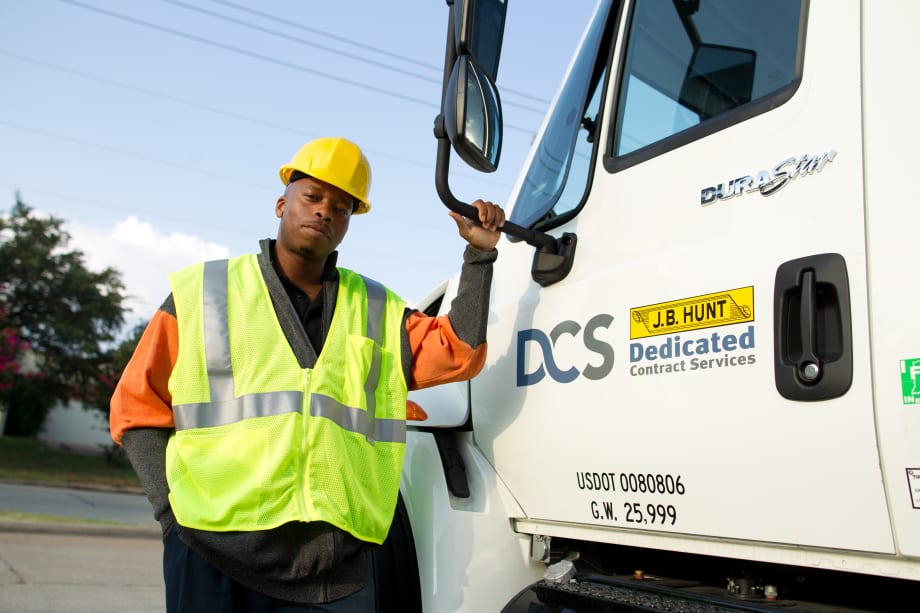
J.B. Hunt is one of several carriers petitioning the FMCSA to allow hair-testing results in lieu of urinalysis to comply with pre-employment drug testing regulations for truck drivers. Photo: Drivewyze
J.B. Hunt is one of several carriers petitioning the FMCSA to allow hair-testing results in lieu of urinalysis to comply with pre-employment drug testing regulations for truck drivers. Photo: Drivewyze
Rather than wait for a rulemaking, several major motor carriers have petitioned the Federal Motor Carrier Safety Administration for exemptions that would allow them to use hair-testing in lieu of urinalysis to comply with pre-employment drug testing regulations for truck drivers.
The petitioners are Maverick Transportation, Knight Transportation, J.B. Hunt Transport Services and Dupré Logistics, all members of the Alliance for Driver Safety & Security (aka the Trucking Alliance), along with two unaffiliated companies. While all of these businesses use hair-testing protocols, the Trucking Alliance estimates that fewer than 30 U.S. transportation/logistics firms employ hair testing for pre-employment drug testing.
The petitioners contend that if FMCSA grants exemptions to these companies, drug users could be “more readily identified” because these transport/logistics companies could then share failed hair-test results with other firms when they inquire about former drivers and applicants. Currently, federal regulations do not allow transportation companies to share these results.
While the FAST Act highway bill passed last year includes a pathway to permitting hair-testing, it is a winding and potentially long one. The provision authorizes hair-testing as an acceptable alternative to urinalysis in pre-employment screening for use of controlled substances and when conducting random testing for use of controlled substances if the operator was subject to hair-testing during pre-employment testing.
However, as the conference committee that signed off on the FAST Act stated at the time, “FMCSA has informed the conferees and the conferees agree that nothing in section 5402 authorizes the use of hair testing as an alternative to urine tests until the Department of Health and Human Services establishes federal standards for hair testing.”
That hairbrush is in the hands of HHS. In its press release on the petition, the Trucking Alliance argues that “HHS is expected to request more time to develop its guidelines” and after that “further steps will require the Department of Transportation and FMCSA to announce notices and rulemakings before a final rule enabling hair-testing as an alternative to urine testing is issued, a process that could take years.”
Rather than wait for a rule, the petitioners want exemptions to enable to share the results of the hair-testing they have already chosen to conduct in addition to the required urinalysis. “This petition clearly shows the loophole in FMCSA’s desire to keep drug users out of trucks,” Lane Kidd, managing director of the Trucking Alliance, told HDT.
“The agency already has its drug test protocols in place,” he continued. “All it must do is allow the results of hair-testing to be shared with other companies and to submit those results into the [upcoming drug/alcohol] clearinghouse. Otherwise, the worst drug abusers will be able to skirt the system. The agency has indicated that it will have the clearinghouse created by year’s end. So, that would also be an opportune time to do it and also give Administrator Darling a true mark for improving highway safety.”
Per the Trucking Alliance, although the hair tests cost the petitioners almost twice as much, about $75.00 per test vs. $35.00 for a urine exam, they are willing to spend more “because hair exams have proven more effective at identifying lifestyle drug users”. The petitioners also “object to being forced to also fund the redundant and less effective urine testing process along with [hair tests].”
“Maverick has had 108 people apply for truck driver positions who cleared the mandatory urine exam but failed our hair test,” said Steve Williams, president of the Trucking Alliance and Maverick Transportation Chairman and CEO. “We denied them employment, but they likely found work at other trucking companies, because we can’t share those positive hair test results with those businesses.”
“We have a responsibility to the general public that our industry’s drivers are drug- and alcohol-free,” he added. “But this loophole enables drug users to skirt the system.”
J.B. Hunt Transport said it has voluntarily conducted hair exams on CDL applicants for over 10 years and in that time, more than 4,700 applicants who passed the required urinalysis were “identified as lifestyle drug users by analysis of their hair samples.”
“There is no place for illegal drug use in the transportation industry,” said Greer Woodruff, J.B. Hunt’s senior vice president-- Safety and Security. “Hair tests substantially reduce the chance that lifestyle drug users are behind the wheel endangering the public.”
Asked to comment on the petition’s merits, Bill Sullivan, executive vice president of advocacy for the American Trucking Associations, told HDT that “ATA was pleased to help several trucking companies secure language in the FAST Act that permits hair-testing as an alternative to urinalysis, but unfortunately did not permit these types of exemptions.”
“These companies are pioneers of hair testing and are to be commended for their leadership,” he continued. “ATA will continue to work with DOT and the Department of Health and Human Services to implement the requirements put forth in the FAST Act in an expeditious and scientifically sound fashion and we will encourage adoption of this important safety policy as quickly as possible.”
David Heller, vice president of government affairs for the Truckload Carriers Association, also cheered the endeavor. “I applaud their efforts as there does need to be some urgency applied [to hair-testing] for a regulatory change. It’s a no-brainer—such a program would help the industry as a whole. This is a case of technology outpacing the regulatory process.”
Heller said that TCA would prefer to see an industry-wide rule on hair-testing, rather than company-by-company exemptions, as that would “give all carriers the option to participate.” He did acknowledge that such a rulemaking “would take a long time” especially because HHS must act on it first.
However, he stressed that any such rule should make hair-testing an optional means of complying with drug-testing requirements for driver applicants. “We do want to make sure it would become an ‘and/or’ option as hair-testing is more expensive [than urinalysis alone], Heller explained.
More Drivers

Truck Drivers Need More Than Another Alert
Fleets have more visibility into truck health, safety events, and driver activity than ever. The next challenge is turning all that information into useful guidance for the person who has to decide what to do next.
Read More →
FMCSA Removes 110 Truck Driver Training Schools from Certified ELDT List
Federal regulators also are targeting more than 160 additional training providers and launching a nationwide audit of third-party CDL skills testers as part of a broader crackdown on trucking fraud.
Read More →
Hours of Service Pilot Programs: FMCSA Readies for 2027 Rollout
Two pilot programs could eventually reshape hours-of-service rules, giving truck drivers options to pause their 14-hour clock or use longer split sleeper rest periods.
Read More →
Medical Cards, English Proficiency Reshape Roadcheck Violations
Medical-card violations jumped to the top of the driver out-of-service list during CVSA’s 2026 International Roadcheck, while English-language proficiency violations appeared among the leading violations for the first time.
Read More →
Driver Trust Can Make or Break the Success of Fleet Safety Technology
New Teletrac Navman research suggests that onboarding, transparency about driver data, and positive feedback can play a significant role in how commercial drivers respond to safety and coaching technology.
Read More →
EEOC Sues KLLM Over Alleged Sex Discrimination in Driver Training
KLLM is facing a federal sex-discrimination lawsuit over policies the EEOC alleges put female truck driver trainees at a disadvantage.
Read More →
FMCSA Moves to Codify English Language Requirements for Commercial Drivers
By changing regulations on English-language proficiency requirements for commercial drivers, rather than relying on a guidance memo, the FMCSA said future administrations won't be able to walk back the Trump administration's stricter enforcement with just a memo.
Read More →
Drivers Put Western Star Trucks to the Test at Star Nation Experience
Watch to get an inside look at the Western Star trucks, technology, and community behind the Star Nation Experience 2026!
Read More →
Trump Administration Looks to Put More Veterans Behind the Wheel
The Freedom Haulers program pulls together existing and expanded programs at several federal agencies to recruit veterans to drive commercial heavy-duty trucks and cut the red tape for them to get a CDL, training, and employment.
Read More →
Putting Mack’s Command Steer to the Test
A test drive of Mack’s Command Steer active steering system evaluates how it can make truck driving easier and less tiring.
Read More →