




Final EOBR Rule Will Expand Proposed Requirements
The final electronic onboard recorder rule will significantly expand the scope of the proposed rule, said John Hill, chief of the Federal Motor Carrier Safety Administration. "It's still not as far as a lot of people would like me to go,
The final electronic onboard recorder rule will significantly expand the scope of the proposed rule, said John Hill, chief of the Federal Motor Carrier Safety Administration.
"It's still not as far as a lot of people would like me to go,
but it's significantly more than what we had proposed," Hill said.
FMCSA has finished its work on the final rule and sent it for review by the White House Office of Management and Budget. It is scheduled to be released this year, but Hill said he does not know if OMB will meet that deadline.
Hill, speaking in Minneapolis yesterday at an EOBR conference sponsored by the Commercial Vehicle Safety Alliance, was referencing the portion of the proposal that requires habitual violators of the hours of service rules to use recorders.
Under the proposal, a carrier would have to use recorders if it violates the hours rule 10 percent or more of the time, as determined in two compliance reviews within a two-year period. This would affect only a minute portion of the national fleet. The agency estimated that fewer than 1,000 of the estimated 650,000 carriers it regulates would be covered.
Under federal law, Hill cannot discuss the details of the final rule until it has been released, but he did indicate that the mandatory requirement in the final rule will touch more than these few carriers.
He also said that this rule is probably the precursor to a universal EOBR mandate.
"I believe that this is the start of something that is going to become much bigger in the days ahead," he said. "I think that eventually you will see a universal mandate."
This will not happen right away and it will require a change in the law, he said. Current law requires FMCSA to justify its rules with a cost-benefit analysis, and Hill said a universal EOBR rule cannot pass that test.
"You can't put (EOBRs) on every truck in this country unless Congress says, write a rule and put it in every truck or every bus. And I don't know whether Congress is going to do that in these economic times."
The mandatory recorder requirement is just one of several key features of the proposed rule. The agency wants to encourage voluntary use of recorders by offering incentives, such as a lighter touch in a safety analysis, to fleets that use recorders. The proposal also spells out new performance standards for recorders, taking into account the many technological improvements that have been brought to market since the current voluntary rule was written in 1988.
More Drivers

EEOC Sues Texas Trucking Company Over Driver Age Limits
The agency says Trancasa USA rejected applicants over 65 and applied tougher driving-record standards to those over 60.
Read More →
Nussbaum, Roehl Announce Second Driver Pay Increase This Year
This year has seen a swath of major truck driver pay increases as freight capacity has tightened.
Read More →
From One Generation to the Next: How Mentorship Builds Safer Truck Drivers
After three decades in trucking, Harold Perry shares what he's learned about driver safety, mentorship, and helping the next generation build confidence behind the wheel.
Read More →
Truck Drivers Need More Than Another Alert
Fleets have more visibility into truck health, safety events, and driver activity than ever. The next challenge is turning all that information into useful guidance for the person who has to decide what to do next.
Read More →
FMCSA Removes 110 Truck Driver Training Schools from Certified ELDT List
Federal regulators also are targeting more than 160 additional training providers and launching a nationwide audit of third-party CDL skills testers as part of a broader crackdown on trucking fraud.
Read More →
Hours of Service Pilot Programs: FMCSA Readies for 2027 Rollout
Two pilot programs could eventually reshape hours-of-service rules, giving truck drivers options to pause their 14-hour clock or use longer split sleeper rest periods.
Read More →
Medical Cards, English Proficiency Reshape Roadcheck Violations
Medical-card violations jumped to the top of the driver out-of-service list during CVSA’s 2026 International Roadcheck, while English-language proficiency violations appeared among the leading violations for the first time.
Read More →
Driver Trust Can Make or Break the Success of Fleet Safety Technology
New Teletrac Navman research suggests that onboarding, transparency about driver data, and positive feedback can play a significant role in how commercial drivers respond to safety and coaching technology.
Read More →
EEOC Sues KLLM Over Alleged Sex Discrimination in Driver Training
KLLM is facing a federal sex-discrimination lawsuit over policies the EEOC alleges put female truck driver trainees at a disadvantage.
Read More →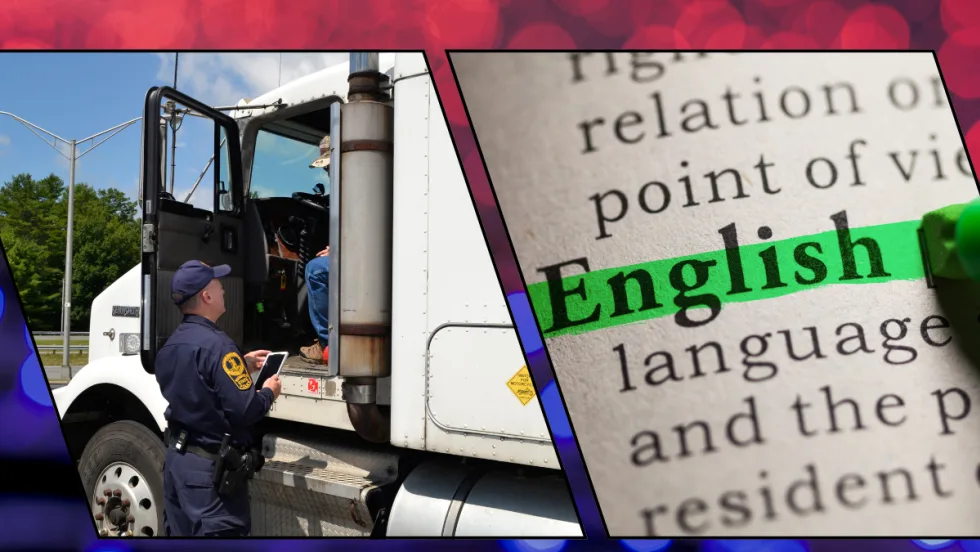
FMCSA Moves to Codify English Language Requirements for Commercial Drivers
By changing regulations on English-language proficiency requirements for commercial drivers, rather than relying on a guidance memo, the FMCSA said future administrations won't be able to walk back the Trump administration's stricter enforcement with just a memo.
Read More →