




Federal Reserve Lowers Key Interest Rate Again
Federal Reserve policy makers on Wednesday took the step of cutting interest rates even further to help spur the U.S. economy, but some say the move is a dangerous bet
Federal Reserve policy makers on Wednesday took the step of cutting interest rates even further to help spur the U.S. economy, but some say the move is a dangerous bet.
The Federal Open Market Committee lowered the federal funds rate by half a percent to 1.25%. This rate is what banks charge each other for overnight loans and is the Fed's primary way of influencing the economy.
As a result of the move, banks are expected to cut their prime lending rate accordingly to 4.25%, the lowest rate since 1959.
In a written statement, the Open Market Committee said it "continues to believe that an accommodative stance of monetary policy, coupled with still-robust underlying growth in productivity, is providing important ongoing support to economic activity. However, incoming economic data have tended to confirm that greater uncertainty, in part attributable to heightened geopolitical risks, is currently inhibiting spending, production, and employment. Inflation and inflation expectations remain well contained."
Fed officials say they believe that cutting interest rates "should prove helpful as the economy works its way through this current soft spot."
Reaction to the decision was mixed. Some analysts said the move will help the economy. Others questioned whether it will have much impact, considering interest rates have been low all year.
"The Fed is moving into dangerous territory," warned Newport Communications Senior Economist Jim Haughey. The cut means short-term credit rates will be approximately equal to the inflation rate. He says this is an extremely strong monetary stimulus.
"This had better be enough, because if rates fall below 1.5% we will be flirting with deflation. That is playing with fire," Haughey said. "The standard policy option to stimulate an economy at near zero inflation and credit costs is massive deficit spending to boost inflation in order to stop business losses and the resulting layoffs."
More Fleet Management

What Trucking Events are Happening in 2026?
Looking for trucking-related conventions, expos, and other events? Heavy Duty Trucking has developed this list of national and larger regional trucking shows and events.
Read More →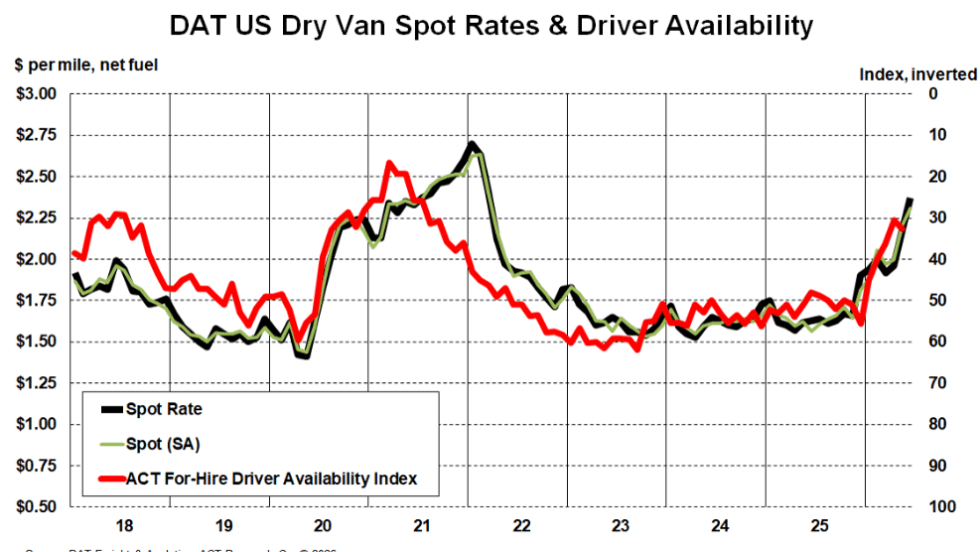
Truckload Rates Keep Rising as Tight Capacity Fuels Freight Market Recovery
Spot and contract rates continued climbing in May and June, not because freight demand is surging, but because fewer trucks and drivers are available.
Read More →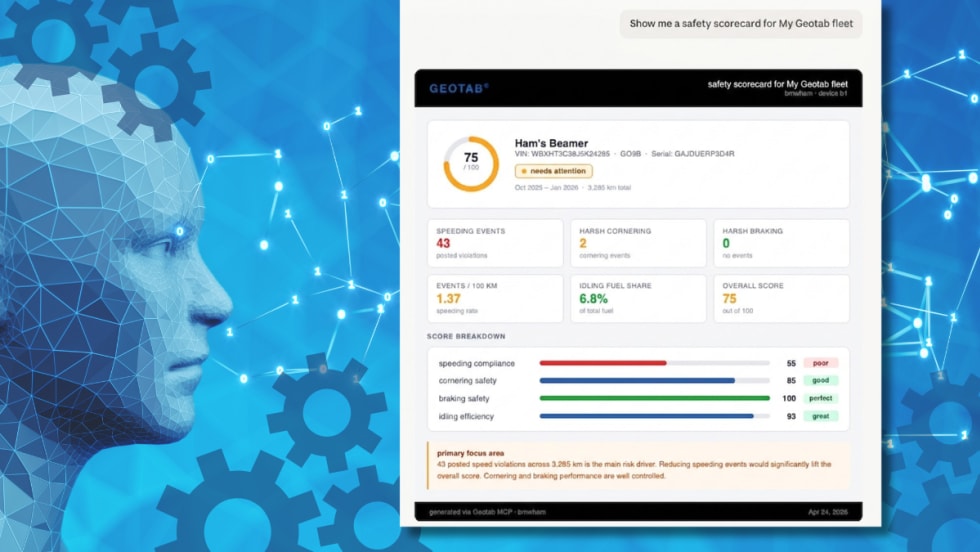
What Geotab's New AI Connector Means for Fleets
Fleets can now ask their usual AI assistants questions about maintenance, safety, fuel use, and vehicle performance, using their live Geotab data, and take action on the answers without leaving their preferred AI tool.
Read More →
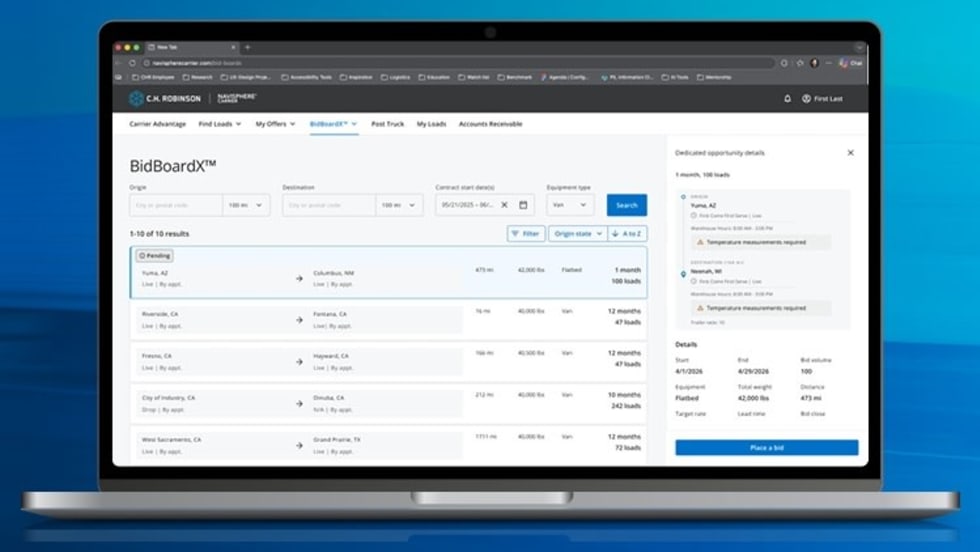
New C.H. Robinson Tool Opens Door to More Predictable Freight
BidBoardX lets carriers search, bid on, and secure committed freight opportunities through a single digital marketplace.
Read More →
New York City's Microhub Project is Delivering Results
Trucking, last-mile delivery companies, and environmental advocates like what they are seeing so far with New York's microhub program.
Read More →
Why Truck Detention Keeps Costing Fleets Time and Money
A 2024 ATRI study found detention affects nearly 40% of truckload stops and costs the industry more than $15 billion annually. Despite the toll on drivers, fleets, and supply chains, the problem remains stubbornly persistent.
Read More →
Time is Running Out to Apply for Exclusive HDT Event
Heavy Duty Trucking Exchange brings fleet managers and suppliers together for the deeper conversations that lead to ideas, partnerships, and solutions. Time is running out to apply for the September event.
Read More →
Amazon Launches Less-Than-Truckload Freight Offering for All Businesses
This launch is the latest addition to Amazon Supply Chain Services, a portfolio of supply chain capabilities from Amazon, including freight, distribution, fulfillment, and parcel shipping.
Read More →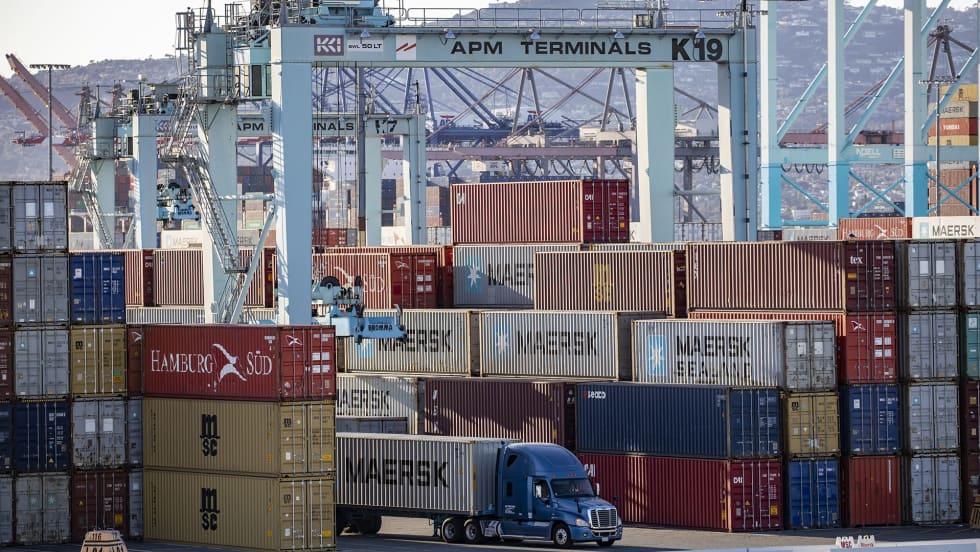
Import Cargo Volume to See Year-Over-Year Gain Again in June, Then Remain Below 2025 Levels Into Fall
After July, the report predicts a weakening in import volume as consumer uncertainty remains high and the impact of increasing inflation takes its toll.
Read More →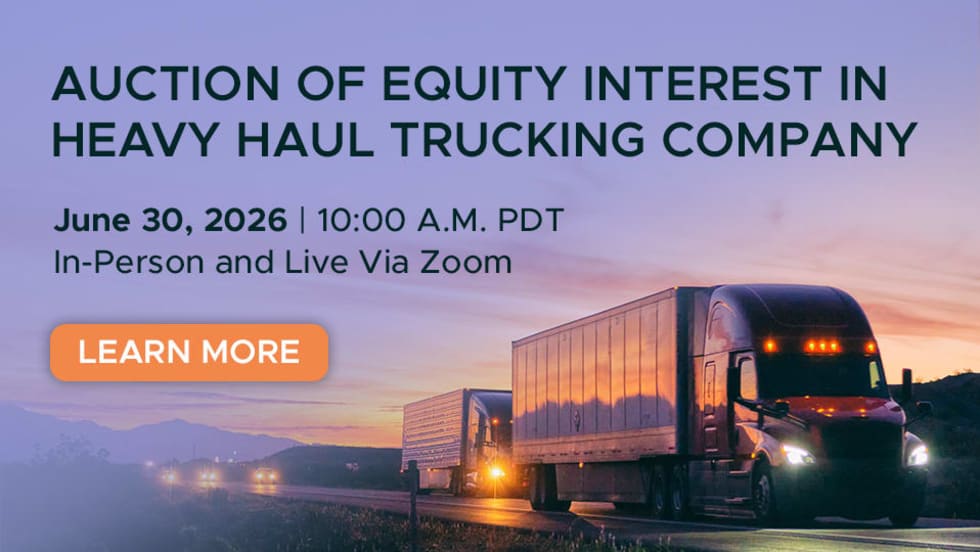
AUCTION OF EQUITY INTEREST IN HEAVY HAUL TRUCKING COMPANY!!
Mark your calendar: June 30, 2026 (10:00 a.m. PDT). A 37.5% ownership interest in MagnaTrans, LLC, a California limited liability company doing business as Magna Transportation Group, will be sold in an in-person and online auction to the highest bidder or bidders under Article 9 of the Uniform Commercial Code. The Rancho Cucamonga-based heavy haul and over-dimensional trucking company operates across California, Oregon, and Arizona.
Read More →